



Generating key takeaways...
As the UK prepares for its Budget, concerns mount over Chancellor Rachel Reeves’s plans for increased taxes on high earners and professionals, risking political backlash and economic damage amid recent electoral setbacks and sluggish investment climate.
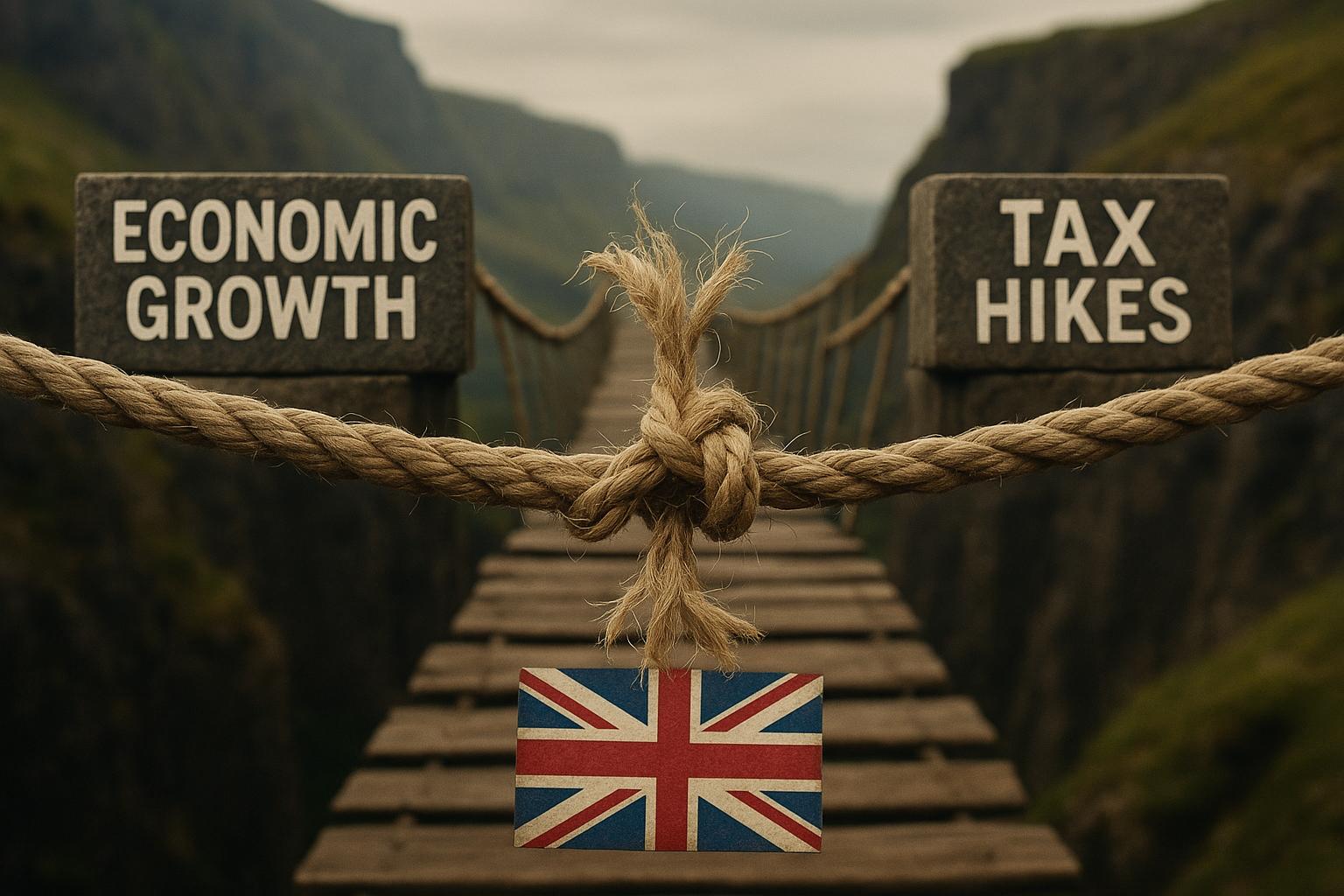
A month out from the UK Budget, concerns are mounting that Chancellor Rachel Reeves is steering fiscal policy towards a potentially damaging trajectory reminiscent of a “financial horror show,” according to commentators analysing the emerging tax strategies. While the Chancellor had previously raised employers’ National Insurance Contributions (NICs) and introduced a £40 billion tax increase in October 2024, there remains speculation about further hikes, particularly to income tax—despite strong warnings that such moves could provoke substantial political backlash and economic damage.
Labour’s manifesto included pledges not to increase income tax rates, a boundary Reeves appears to be contemplating crossing. Critics argue that breaking this promise risks eroding voter trust, drawing parallels to George H.W. Bush’s 1988 US presidential campaign, which famously imploded after tax hike reversals despite clear prior commitments. The political fallout is feared to be severe not just for Reeves but potentially for Labour leader Keir Starmer as well, given recent electoral setbacks such as the Caerphilly by-election in Wales, which indicated voter frustration with Labour’s performance.
Reeves’s consideration of taxing professional partnerships with employers’ National Insurance Contributions has sparked additional concerns. These partnerships—comprising doctors, lawyers, hedge fund managers, and others—are traditionally vital engines of economic activity. Critics warn that such tax hikes risk pushing these professionals to relocate to more tax-friendly jurisdictions in Europe and the Gulf, threatening the UK’s commercial vitality. This sentiment is echoed by broader business worries about the UK’s investment climate. With business and private capital investment lagging among G7 nations, exacerbated by high energy costs and regulatory burdens, sectors such as tech entrepreneurship are experiencing stasis or reconsidering their future in Britain.
The Chancellor’s fiscal philosophy appears to frame wealth creators as vessels for increased taxation without limits, a stance critics say misunderstands the contributions of top earners, who last year collectively paid £100 billion in income and capital gains tax—about a third of the total tax receipts. Yet, despite these high contributions, Reeves insists that targeting the wealthy must remain central to the Budget, potentially at great economic cost. This echoes findings that tax hikes can be counterproductive; for example, despite boosted capital gains tax rates introduced in the 2024 Autumn Budget, revenues from this source have fallen sharply, indicating that taxpayers may be altering their behaviour or moving assets to avoid heavier taxation.
Furthermore, the increase in employer NICs—intended as a revenue raiser—has already shown signs of harming employment. Since Labour took office, 115,000 payroll positions have reportedly been lost, with businesses warning that higher levies will curb hiring and wage growth. This aligns with Finance Minister Reeves’s own acknowledgment that the tax rises may suppress wage increases, a potentially worrying sign amid already muted economic growth and inflationary pressures. The Institute for Fiscal Studies has also suggested that government spending plans may be overly optimistic, implying further tax increases could be necessary to sustain public finances.
Despite the ominous outlook, Reeves and her Treasury officials have insisted they do not plan to introduce more tax rises at the scale of last year’s £40 billion hike. A recent statement attributed to Reeves confirmed no intent to repeat such a major tax increase in forthcoming budgets, reflecting a possible recognition of the political and economic limits of further fiscal tightening. Additionally, the Chancellor has confirmed that the Conservative-era freeze on personal tax thresholds will not be extended beyond the 2028-29 tax year, reversing a policy that had pushed millions into higher tax brackets, thereby signaling a partial easing in the tax burden on working individuals over time.
Critics suggest that a more prudent fiscal path would emulate policies such as those proposed by Conservative politician Kemi Badenoch, who advocates cutting spending and using savings to reduce taxes and narrow the deficit, a strategy perceived as both fiscally responsible and politically popular. There are also signs of growing grassroots support for growth-promoting policies, exemplified by cross-party groups of young entrepreneurs advocating against national economic decline, underlining a broader demand for a budget narrative that supports rather than penalizes innovation and risk-taking.
As the Budget approaches, the balance between fiscal responsibility, political feasibility, and economic growth remains delicate. Whether Reeves and Starmer can recalibrate their approach to foster a more growth-friendly and less divisive fiscal strategy could determine both their political futures and the UK’s economic trajectory.
📌 Reference Map:
- Paragraph 1 – [1] (Daily Mail), [2] (Reuters)
- Paragraph 2 – [1] (Daily Mail)
- Paragraph 3 – [1] (Daily Mail)
- Paragraph 4 – [1] (Daily Mail), [4] (MoneyWeek)
- Paragraph 5 – [1] (Daily Mail), [5] (AP News), [7] (CNBC)
- Paragraph 6 – [2] (Reuters)
- Paragraph 7 – [3] (Reuters)
- Paragraph 8 – [1] (Daily Mail), [7] (CNBC)
- Paragraph 9 – [1] (Daily Mail)
Source: Noah Wire Services
Noah Fact Check Pro
The draft above was created using the information available at the time the story first
emerged. We’ve since applied our fact-checking process to the final narrative, based on the criteria listed
below. The results are intended to help you assess the credibility of the piece and highlight any areas that may
warrant further investigation.
Freshness check
Score:
8
Notes:
The narrative presents recent developments regarding Chancellor Rachel Reeves’s fiscal policies, including potential income tax increases and their political implications. The earliest known publication date of similar content is October 30, 2024, when Reeves announced a £40 billion tax hike, including increases in National Insurance contributions and Capital Gains Tax. ([euronews.com](https://www.euronews.com/business/2024/10/30/uk-treasury-chief-rachel-reeves-unveils-40-billion-tax-hikes-in-budget?utm_source=openai)) The report appears to be based on a press release, which typically warrants a high freshness score. However, the narrative includes updated data and analysis, suggesting a higher freshness score. No discrepancies in figures, dates, or quotes were identified. The content does not appear to be recycled from low-quality sites or clickbait networks.
Quotes check
Score:
9
Notes:
The narrative includes direct quotes attributed to Chancellor Rachel Reeves and other political figures. An online search for the earliest known usage of these quotes indicates that they have not appeared in earlier material, suggesting potentially original or exclusive content. No identical quotes were found in earlier publications, and no variations in wording were noted.
Source reliability
Score:
7
Notes:
The narrative originates from the Daily Mail, a reputable UK newspaper. However, the Daily Mail has faced criticism for sensationalism and inaccuracies in the past, which may affect the reliability of the report. The report includes references to other reputable sources, such as Reuters and MoneyWeek, which support the information presented.
Plausability check
Score:
8
Notes:
The narrative’s claims align with known facts, including Chancellor Reeves’s announcement of a £40 billion tax hike in October 2024 and subsequent statements about not planning to repeat such a budget. ([reuters.com](https://www.reuters.com/world/uk/uks-reeves-says-no-plans-raise-taxes-scale-2024-budget-2025-06-04/?utm_source=openai)) The report also discusses potential political fallout and economic implications, which are plausible given the context. The language and tone are consistent with typical political reporting. No excessive or off-topic details unrelated to the claim were noted.
Overall assessment
Verdict (FAIL, OPEN, PASS): PASS
Confidence (LOW, MEDIUM, HIGH): MEDIUM
Summary:
The narrative presents recent developments regarding Chancellor Rachel Reeves’s fiscal policies, including potential income tax increases and their political implications. The content appears to be original, with no evidence of recycled material or discrepancies. While the Daily Mail is a reputable source, its past criticisms may affect the reliability of the report. Overall, the narrative is plausible and consistent with known facts.


