



Generating key takeaways...
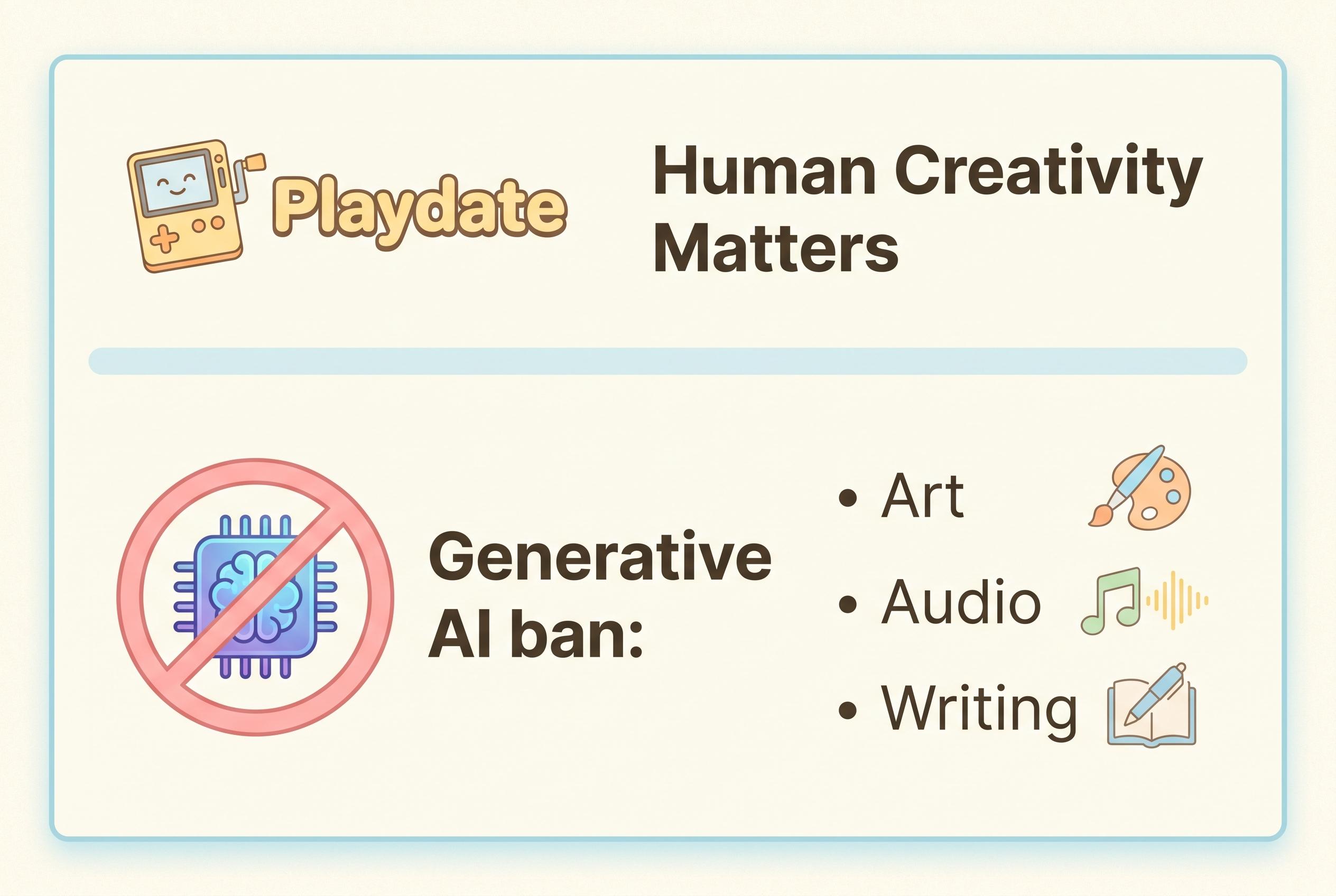
Panic has introduced a strict ban on using generative AI for art, audio, and writing in Playdate’s Catalog, marking a shift towards preserving human-made game content amid AI advancement debates.
Panic has tightened its rules for Playdate’s Catalog, saying it will no longer accept games that use generative AI in the creation of art, audio, music, text or dialogue. The policy takes effect this month, marking a clear line between machine-generated creative content and the kind of human-made work the company wants on its handheld’s storefront. According to Panic’s own guidance, the ban applies to tools such as ChatGPT, DeepSeek, Google Gemini, Stable Diffusion, DALL-E, Midjourney, MuseNet, Suno and Udio.
The company has also tried to draw a distinction between generative systems and ordinary game logic. Enemy routines and other custom-written behaviour are not covered by the restriction. Panic says developers should still be able to use AI-assisted coding tools for now, but they must disclose that use and explain how far it went, with examples including Lua debugging.
Existing Catalog titles that already contain generative AI will not disappear, but Panic says they will be marked and accompanied by an explanation of how AI was used. That approach allows the store to keep previously approved games available while making their production methods more visible to buyers.
The change comes after scrutiny of Wheelsprung, a Playdate Season 2 title that used GitHub Copilot and ChatGPT for coding and writing assistance, according to Game Developer and other reports. Panic has framed the new rules as a way to protect human creativity and preserve the identity of the platform, while also pointing developers towards the Playdate community if they need artists, musicians or writers.
Source Reference Map
Inspired by headline at: [1]
Sources by paragraph:
Source: Noah Wire Services
Noah Fact Check Pro
The draft above was created using the information available at the time the story first
emerged. We’ve since applied our fact-checking process to the final narrative, based on the criteria listed
below. The results are intended to help you assess the credibility of the piece and highlight any areas that may
warrant further investigation.
Freshness check
Score:
8
Notes:
The article was published on April 22, 2026, and reports on Panic Inc.’s recent policy change regarding generative AI in Playdate games. Similar reports from reputable sources like PC Gamer and Game Developer were published on April 17, 2026, indicating that the news is fresh and original. However, the article’s reliance on these sources raises concerns about potential source independence.
Quotes check
Score:
7
Notes:
The article includes direct quotes from Panic Inc.’s official statement. While these quotes are consistent with the company’s known positions, they cannot be independently verified without access to the original source. The lack of verifiable quotes from independent sources is a concern.
Source reliability
Score:
6
Notes:
Time Extension is a niche publication with limited reach. The article cites reputable sources like PC Gamer and Game Developer, but the heavy reliance on these sources without additional independent verification is a concern. The lack of direct quotes from Panic Inc. further diminishes the source’s reliability.
Plausibility check
Score:
9
Notes:
The policy change aligns with Panic Inc.’s previous statements and actions regarding generative AI. The decision to ban AI-generated content in Playdate games is consistent with industry trends and the company’s emphasis on human creativity. However, the lack of direct quotes from Panic Inc. raises questions about the authenticity of the reported statements.
Overall assessment
Verdict (FAIL, OPEN, PASS): FAIL
Confidence (LOW, MEDIUM, HIGH): MEDIUM
Summary:
The article reports on Panic Inc.’s recent policy change regarding generative AI in Playdate games. While the news is fresh and plausible, the article’s heavy reliance on reports from PC Gamer and Game Developer, without direct quotes from Panic Inc. or other independent sources, raises significant concerns about source independence and verification. The lack of independently verifiable quotes further diminishes the article’s credibility. Therefore, the overall assessment is a FAIL with MEDIUM confidence.


