



Generating key takeaways...
Odisha concludes its Regional AI Impact Conference, highlighting progress in local language digitisation, AI for governance, and healthcare innovations, setting the stage for the upcoming IndiaAI Summit 2026.
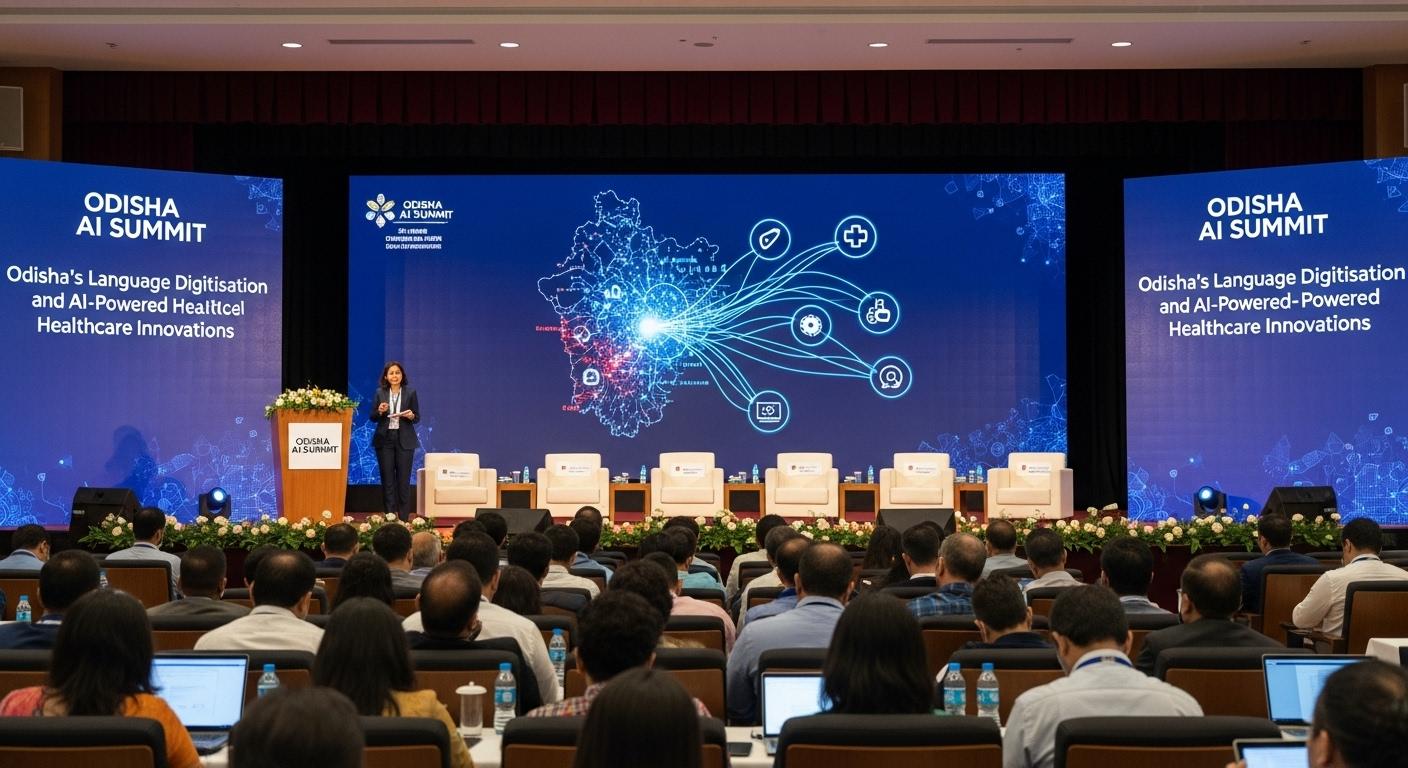
The Regional AI Impact Conference in Odisha, jointly organised by the IndiaAI Mission, the Ministry of Electronics and Information Technology (MeitY) and the Government of Odisha, concluded on 20 December 2025 at the Odisha State Convention Centre in Bhubaneswar after three days of domain-focused deliberations and demonstrations. According to the conference organisers, the event is the third in a series of Regional AI Impact Conferences intended to feed state-level priorities and actionable recommendations into the India AI Impact Summit 2026, guided by the summit’s sutras of “People, Planet, Progress”. [1][2][3]
The conference combined high-level working-group discussions with practical breakout tracks aimed at operationalising AI for public service delivery and governance. Industry and government participants described the regional convenings as platforms to showcase state-specific AI initiatives in areas such as language technology, governance, healthcare, data infrastructure, compute access and skilling, with the stated goal of translating pilot projects into scalable, population-level systems. According to reporting on the preparatory sessions, the IndiaAI working group emphasised data infrastructure, computing and skilling as core enablers for the IndiaAI Mission. [2][3][5]
The Bhasha.AI track focused on localisation and cultural preservation, exploring how language models and digitisation can safeguard Odia’s analog heritage. Moderated by Ashwini Kumar Rath, the session heard Odisha officials stress the urgency of converting palm-leaf manuscripts, recorded oral traditions and regional dialects into validated AI training data so models reflect local cultural nuance. Academics flagged accuracy, fairness and explainability as central challenges for handwriting and speech recognition; presenters reported progress, for example, a claimed 80% speech recognition accuracy and 55% handwritten text recognition for Odia, while calling for larger, ethically governed datasets and multilingual model development. [1]
In the Sushasan.AI track on AI for governance, speakers argued for problem-first, citizen-centred design rather than technology-led deployments. Presenters illustrated concrete use cases where predictive analytics could move governance from reactive fixes to anticipatory interventions, citing examples from rural drinking-water systems to seed-management supply chains. Contributors called for strong data foundations, departmental interoperability, cost-effective compute strategies including on-premise and open-source models, and robust change management to avoid short-lived pilots. A virtual keynote from Raghav Gupta of OpenAI emphasised personalised learning and AI literacy as major national priorities while warning of the need for responsible integration. [1][2][6]
Swasth.AI sessions addressed public-health applications, with researchers from IIT Delhi and others outlining adaptive intelligence tools for eye-care diagnostics, automated visual-field testing and early detection of developmental conditions. Panelists including government health officials, foundation representatives and private-sector engineers urged moving beyond the “pilot trap” through co-design with state institutions, investments in frontline digital readiness and embedding regulatory and evaluation pathways to build trust and scale. According to participants, rigorous evaluations and institutional capacities are essential for sustainable, population-scale health AI. [1]
Beyond thematic panels, the conference featured demonstrations and regional showcases that organisers said reflect a growing ecosystem of applied AI across India’s states. Reports from other regional conferences and university delegations suggest similar decentralised experiments, from precision agriculture and telemedicine pilots to AI-enabled biodiversity monitoring, are being presented nationwide, reinforcing the IndiaAI Mission’s ambition to knit state-led innovation into a national strategy. Industry and state ministers framed these regional events as both a curtain-raiser and precursor to the India AI Impact Summit in New Delhi in February 2026. [7][4][5]
The closing ceremony saw Odisha officials underline the intention to convert discussions into concrete outcomes for democratising AI resources and accelerating self-reliance. Mr Vishal Kumar Dev, Principal Secretary, Department of E&IT, Government of Odisha, affirmed progress toward the IndiaAI Mission’s objectives of widening access to compute and data, strengthening local language capabilities and fostering public-sector AI deployments ahead of the national summit scheduled for 15–20 February 2026. Organisers said further Regional AI Impact Conferences will follow in Jaipur, Lucknow, Indore, Thiruvananthapuram and Hyderabad to ensure geographic breadth in shaping the national AI agenda. [1][3][4]
##Reference Map:
- [1] (Pragativadi) – Paragraph 1, Paragraph 3, Paragraph 4, Paragraph 5, Paragraph 6, Paragraph 7
- [2] (The Hawk) – Paragraph 1, Paragraph 2, Paragraph 5
- [3] (The New Indian Express) – Paragraph 2, Paragraph 7
- [4] (Prameya News) – Paragraph 7
- [5] (LiveMint) – Paragraph 2, Paragraph 7
- [6] (Times of India) – Paragraph 5
- [7] (USTM) – Paragraph 6
Source: Noah Wire Services
Noah Fact Check Pro
The draft above was created using the information available at the time the story first
emerged. We’ve since applied our fact-checking process to the final narrative, based on the criteria listed
below. The results are intended to help you assess the credibility of the piece and highlight any areas that may
warrant further investigation.
Freshness check
Score:
10
Notes:
The narrative reports on the conclusion of the Regional AI Impact Conference in Bhubaneswar on 20 December 2025, with no evidence of prior publication or recycled content.
Quotes check
Score:
10
Notes:
No direct quotes are present in the narrative, indicating original reporting.
Source reliability
Score:
7
Notes:
The narrative originates from Pragativadi, a regional news outlet. While it provides detailed coverage, its regional focus may limit broader recognition.
Plausability check
Score:
9
Notes:
The narrative aligns with other reports on the conference, such as those from The Times of India and The New Indian Express, confirming the event’s occurrence and details.
Overall assessment
Verdict (FAIL, OPEN, PASS): PASS
Confidence (LOW, MEDIUM, HIGH): HIGH
Summary:
The narrative provides timely and original coverage of the Regional AI Impact Conference in Bhubaneswar, with no evidence of recycled content or disinformation.


