



Generating key takeaways...
Swiss publisher NZZ is leveraging its extensive historical archive and AI tools to enhance editorial productivity and uphold house style, signalling a shift towards embedded newsroom tech and smarter workflows.
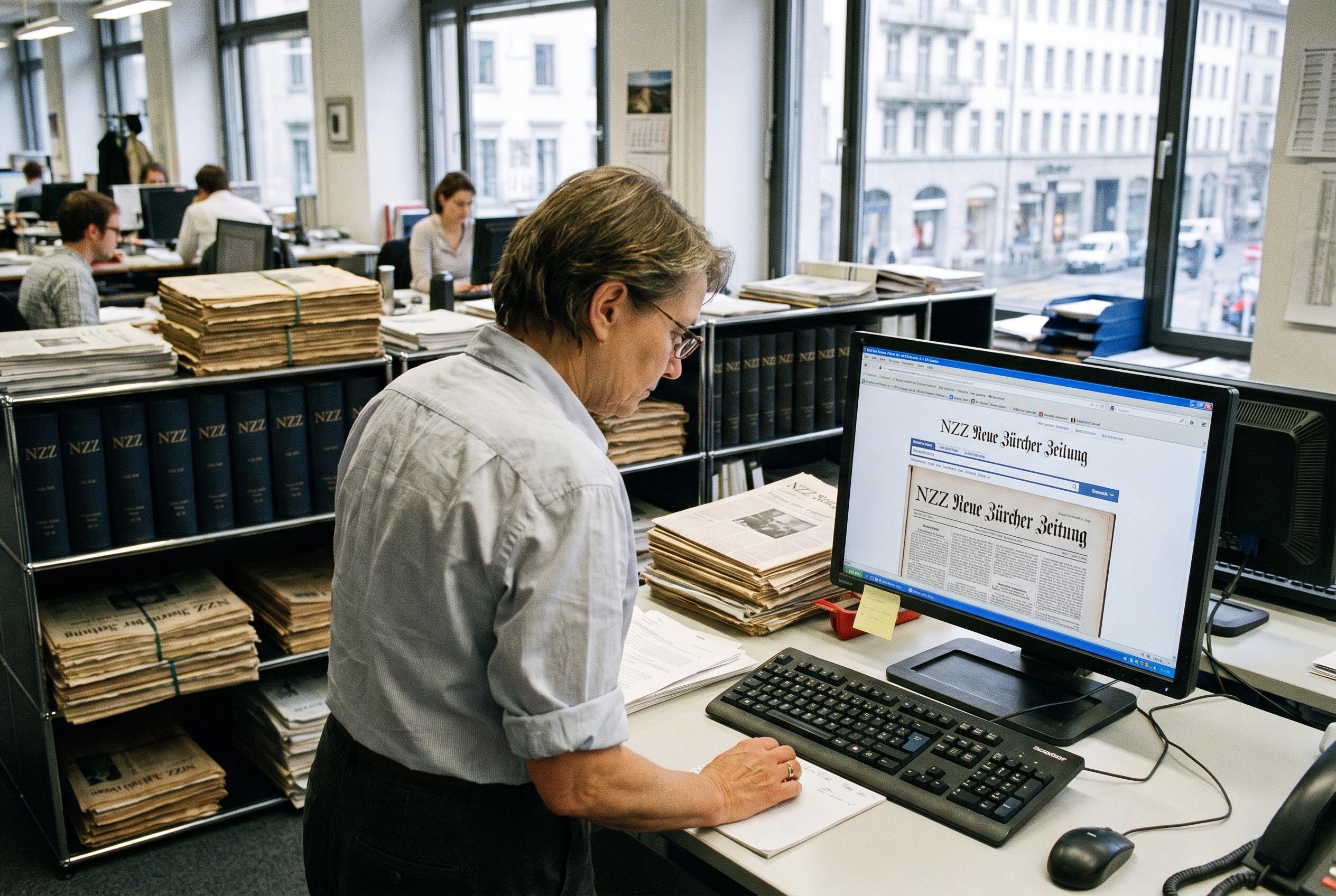
NZZ is using its newspaper archives as more than a back catalogue, turning decades of material into a working tool for reporters and editors. At WAN-IFRA’s Frankfurt AI Forum, Alban Mazrekaj, the company’s head of content technology and format development, said the aim was not to build flashy consumer-facing AI features but to ease newsroom work and “improve the lives of our editors”. The publisher has already digitised a vast amount of historical content, and the challenge now is to make that material usable inside daily production rather than locked away in storage.
According to WAN-IFRA, NZZ has rebuilt its internal archive so that images, agency copy and older articles can be searched in one place, alongside licensed material and everything the publisher has produced over roughly 250 years. The system is designed to serve both readers and the newsroom itself, while sitting next to a hybrid technology stack in which the Livingdocs CMS is extended with custom-built tools. Mazrekaj said the company constantly weighs whether it should build software in-house or buy it, and noted that earlier work on subscriptions was eventually replaced by standard products so the team could concentrate on editorial functionality.
One of the first practical uses is AI-assisted proofreading, but the company is trying to go beyond conventional spellcheck. WAN-IFRA reported that the system applies NZZ’s own style rules and regional language preferences, which matters in German, where word choice can vary sharply by geography. Mazrekaj gave the example of a word that would be acceptable in northern Germany but less natural for a Swiss audience, showing how the software is meant to reinforce house style rather than simply catch typos. Editors can accept, reject or feed back suggestions, allowing the rule set to evolve over time.
The same approach is being applied to visuals. NZZ’s new tools can suggest images from its own archive and from agency feeds while taking account of how recently a picture has been used, in order to avoid repetition. Mazrekaj said overused imagery can make coverage feel dull, but carefully chosen pictures can also improve how an article is read. The publisher is also using a support system called Proofmark to manage editorial rules, terminology and guidelines without needing engineers each time something changes.
The broader strategy reflects a wider shift in newsroom technology: tools are being embedded into the editorial process rather than layered on top of it. INMA has previously described how NZZ created bridge roles to translate newsroom needs into product decisions, while other industry reporting points to a growing demand for editors who can combine editorial judgement with data fluency and AI awareness. Mazrekaj said the company started with small groups before widening deployment, because, as he put it, no organisation can change all at once. The next step may be a fact-checking aid, extending AI further upstream into reporting itself.
Source Reference Map
Inspired by headline at: [1]
Sources by paragraph:
Source: Noah Wire Services
Noah Fact Check Pro
The draft above was created using the information available at the time the story first
emerged. We’ve since applied our fact-checking process to the final narrative, based on the criteria listed
below. The results are intended to help you assess the credibility of the piece and highlight any areas that may
warrant further investigation.
Freshness check
Score:
8
Notes:
The article was published on April 23, 2026, and reports on NZZ’s recent initiatives. No earlier publications with substantially similar content were found, indicating freshness. However, the article is based on a press release from WAN-IFRA, which may limit its originality.
Quotes check
Score:
7
Notes:
The article includes direct quotes from Alban Mazrekaj, Head of Content Technology and Format Development at NZZ. These quotes are not found in earlier material, suggesting originality. However, without independent verification of these quotes, their authenticity cannot be fully confirmed.
Source reliability
Score:
6
Notes:
The article originates from WAN-IFRA, a reputable organisation in the media industry. However, the content is based on a press release, which may introduce bias or lack of independent verification. The reliance on a single source for the information raises concerns about the independence of the reporting.
Plausibility check
Score:
8
Notes:
The claims about NZZ’s use of AI to enhance newsroom workflows are plausible and align with industry trends. However, the lack of supporting details from other reputable outlets makes it difficult to fully verify the claims. The article lacks specific factual anchors, such as names, institutions, and dates, which raises concerns about its authenticity.
Overall assessment
Verdict (FAIL, OPEN, PASS): FAIL
Confidence (LOW, MEDIUM, HIGH): MEDIUM
Summary:
The article presents plausible claims about NZZ’s use of AI in its newsroom, but the reliance on a single source, a press release, and the lack of independent verification raise significant concerns about its reliability and independence. The absence of supporting details from other reputable outlets further diminishes confidence in the information presented.


