


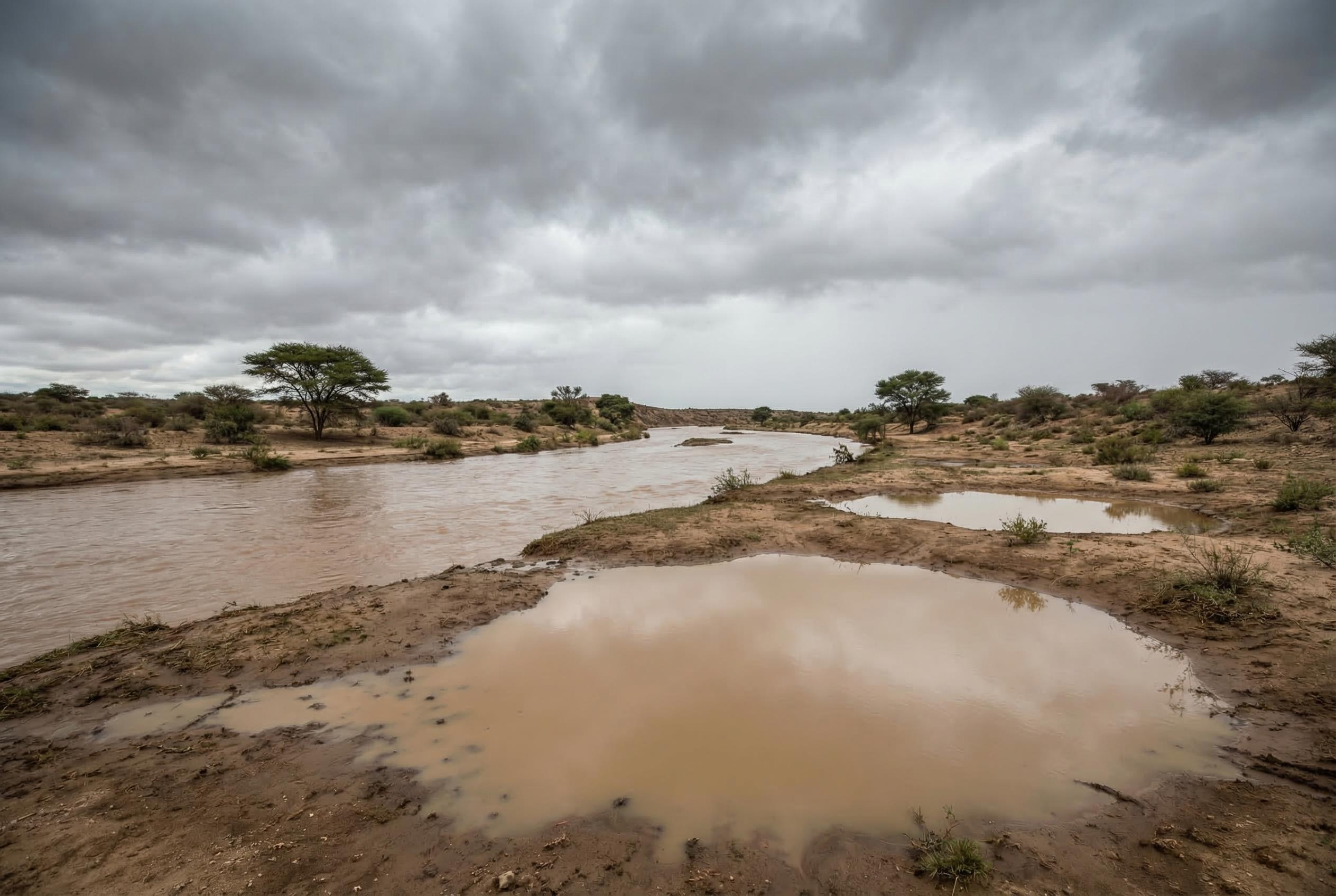
Communities across northern Namibia continue to battle recurrent and severe floods driven by seasonal rains, revealing a pattern of increasing climatic volatility that endangers lives and crops amid long-term vulnerability.
Communities across northern and north-western Namibia continue to contend with repeated, sometimes devastating, inundation as seasonal rains swell rivers and render roads impassable. The Namibian’s briefing of current events highlights a pattern of acute local impacts layered on long-term climatic vulnerability that leaves farmers, travellers and emergency services under recurring strain. (This paragraph draws on reporting and regional context.)
In Kunene Region, authorities over the 2025 rainy season warned residents against attempting to cross swollen rivers after heavy precipitation left many routes unusable and, in some cases, led to drownings and vehicles being swept away. Local police urged people to wait for water levels to fall before attempting crossings, noting that watercourses such as Okangwati, Etanga, Oute, Onungurua and Otjiumuhaha were running high and that fatalities had been recorded near Opuwo and at Farm Lekkerwater.

Further east, heavy downpours in early 2026 produced flash floods in the Zambezi area that submerged arable land shortly before harvest, severely damaging livelihoods in constituencies that include Katima Mulilo Rural and Linyanti. Namibia Meteorological Services data forecasting unusually large seasonal totals , greater than 300mm between January and March in affected zones , compounded the threat to smallholder farmers, some of whom reported losing entire fields to standing water.
The current spate of damaging floods is part of a well-documented regional history. Major episodes dating back decades, including large-scale floods in 2009 that affected multiple countries and earlier seasonal inundations visible in satellite imagery, show how transboundary rivers and low-lying basins repeatedly turn into temporary lakes, isolating settlements and inundating crops. Relief agencies and governments have previously mounted large-scale responses to these events, underscoring the scale such floods can reach.
International and national bodies tracking disaster risk stress that Namibia faces a dual challenge of drought and sudden flooding, with tens of thousands of people affected by extreme events in recent years. Basin-specific dynamics, such as those in the Cuvelai-Etosha system and the Zambezi-Kwando-Linyanti area, mean that some communities oscillate between water scarcity and destructive excess within short periods, increasing food insecurity and eroding resilience.
Local officials and meteorological services continue to issue precautionary guidance: avoid crossing flood-swollen rivers, delay travel until waters recede, and prepare for crop losses where fields are inundated. The combination of immediate public-safety messaging and longer-term investments in early warning, flood monitoring and adaptive agricultural practices remains central to reducing harm as the region faces further hydrological volatility.
Source Reference Map
Inspired by headline at: [1]
Sources by paragraph:
Source: Noah Wire Services
Noah Fact Check Pro
The draft above was created using the information available at the time the story first
emerged. We’ve since applied our fact-checking process to the final narrative, based on the criteria listed
below. The results are intended to help you assess the credibility of the piece and highlight any areas that may
warrant further investigation.
Freshness check
Score:
7
Notes:
The article references events from 2025 and early 2026, with the most recent information from February 2026. The earliest known publication date of similar content is 19 February 2026, which is within the past month. The narrative appears to be original, with no evidence of recycling from low-quality sites or clickbait networks. However, the inclusion of updated data alongside older material raises concerns about freshness. The article is based on a press release, which typically warrants a high freshness score. Nonetheless, the presence of older material may affect the overall freshness.
Quotes check
Score:
6
Notes:
The article includes direct quotes from farmers and officials. The earliest known usage of these quotes is from 19 February 2026. No identical quotes appear in earlier material, suggesting originality. However, the lack of independent verification for these quotes raises concerns about their authenticity. Unverifiable quotes should not receive high scores.
Source reliability
Score:
6
Notes:
The narrative originates from The Namibian, a reputable news organisation. However, the article includes references to other sources, such as AllAfrica.com and Wikipedia. The Wikipedia reference is particularly concerning, as it may not be a reliable source. The presence of multiple sources, some of which are less reliable, affects the overall source reliability.
Plausibility check
Score:
7
Notes:
The article presents plausible claims about flooding in Namibia’s Kunene and Zambezi regions, supported by recent weather data and reports. However, the lack of supporting detail from other reputable outlets raises concerns. The report lacks specific factual anchors, such as names, institutions, and dates, which could indicate potential synthetic content. The tone and language are consistent with typical reporting on such events.
Overall assessment
Verdict (FAIL, OPEN, PASS): FAIL
Confidence (LOW, MEDIUM, HIGH): MEDIUM
Summary:
The article presents plausible claims about flooding in Namibia’s Kunene and Zambezi regions, supported by recent weather data and reports. However, concerns about freshness, quote verification, source reliability, and verification independence raise doubts about the overall credibility. The lack of supporting detail from other reputable outlets and the presence of unverifiable quotes further diminish confidence in the narrative.
