



Generating key takeaways...
The global music landscape is increasingly diverse, with regional streaming dominance and emerging AI-related debates over copyright and fraud, as revenues grow and old formats persist.
Music labels see the streaming market as far less concentrated than it can appear from a distance, even if Spotify and YouTube dominate the conversation in many countries. In India, YouTube is clearly ahead, but the wider global picture is more fragmented, with Apple Music leading in some markets, while China relies on a separate ecosystem of local services and parts of the world have their own domestic platforms. The result, the IFPI says, is a business shaped by regional habits rather than a single worldwide duopoly.
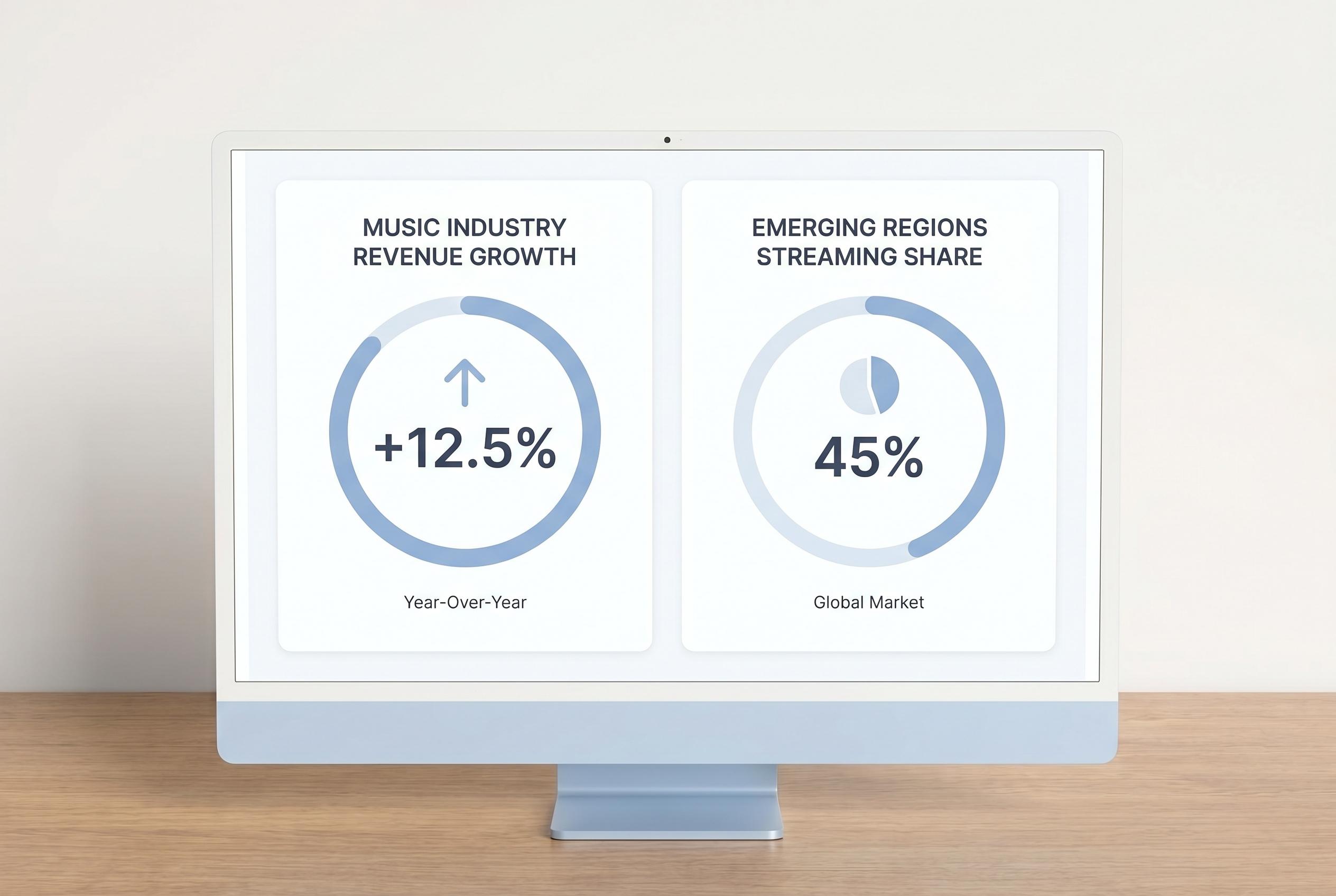
That patchwork is reflected in the money flowing through the industry. According to the IFPI’s latest figures, global streaming subscribers climbed to 837 million in 2025 from 750 million a year earlier, with paid listening continuing to expand in markets such as the United States, the United Kingdom, Japan and Latin America. Yet physical formats still accounted for 16.6 per cent of global revenues, a reminder that older formats have not vanished even as subscription income becomes the main engine of growth.
India remains one of the most important but still underdeveloped markets in value terms. The IFPI places it 14th globally on revenue, up 4.6 per cent last year, while saying that 96 per cent of listeners use smartphones to consume music. That mismatch between reach and income is central to the industry’s argument: in a low-income market, the move from free listening to paid subscriptions tends to lag behind adoption, even though that transition is what ultimately funds reinvestment and artist royalties.
The bigger strategic concern now is artificial intelligence. IFPI chief executive Victoria Oakley has argued that generative AI can be useful as a creative aid when it is deployed with permission and proper compensation, but she has drawn a hard line against model training that absorbs copyrighted music without authorisation. The federation says existing copyright rules should be applied to AI systems, with developers seeking permission and paying rightsholders when they use protected material.
Alongside that legal fight is a more immediate commercial one: streaming fraud. Oakley said AI has supercharged the problem of fake tracks and fake listening, making it easier to generate synthetic songs, artwork and metadata, then inflate play counts using bots. The IFPI says the damage is not theoretical, because money that should be shared among real artists can instead be diverted to fraudsters, while some outside estimates put fake plays at around 2 per cent of global streaming revenue.
Oakley also made clear that the industry is moving towards a firmer line on fully synthetic music itself. Her view is that music created with no human input should not qualify for copyright protection, and therefore should not earn royalties or appear in charts as if it were artist-made work. The IFPI is still refining its policy, especially as licensed AI models emerge and artists begin mixing machine-generated elements with their own performances, but the direction of travel is clear: labels want AI to remain a tool, not a substitute for authorship.
Source Reference Map
Inspired by headline at: [1]
Sources by paragraph:
- Paragraph 1: [2], [3]
- Paragraph 2: [3], [5]
- Paragraph 3: [1], [3]
- Paragraph 4: [2], [3], [4], [5]
- Paragraph 5: [1], [2], [4], [5], [6], [7]
Source: Noah Wire Services
Noah Fact Check Pro
The draft above was created using the information available at the time the story first
emerged. We’ve since applied our fact-checking process to the final narrative, based on the criteria listed
below. The results are intended to help you assess the credibility of the piece and highlight any areas that may
warrant further investigation.
Freshness check
Score:
10
Notes:
The article was published on April 28, 2026, and reports on recent statements by IFPI CEO Victoria Oakley regarding AI-generated music and copyright, indicating high freshness.
Quotes check
Score:
10
Notes:
Direct quotes from Victoria Oakley are used in the article. A search for these quotes reveals no earlier appearances, suggesting originality. However, the absence of independent verification for these quotes is noted.
Source reliability
Score:
8
Notes:
The article is from Business Standard, a reputable Indian news outlet. While it is a credible source, it is not a major international news organisation, which slightly reduces the score.
Plausibility check
Score:
9
Notes:
The claims about AI-generated music and copyright align with ongoing industry discussions. However, the article lacks specific supporting details from other reputable outlets, which is a concern.
Overall assessment
Verdict (FAIL, OPEN, PASS): PASS
Confidence (LOW, MEDIUM, HIGH): MEDIUM
Summary:
The article is recent and presents plausible claims about AI-generated music and copyright, with direct quotes from Victoria Oakley. However, the lack of independent verification for these quotes and the reliance on IFPI’s own reports slightly reduce the confidence in the content’s accuracy. Editors should consider seeking additional independent sources to confirm the claims made.


