



Generating key takeaways...
Transport for London is battling a significant rise in graffiti across the Central and Bakerloo lines, deploying 24/7 cleaning teams amid shortages of rolling stock and limited surveillance, reflecting a wider challenge of urban vandalism and infrastructure resilience.
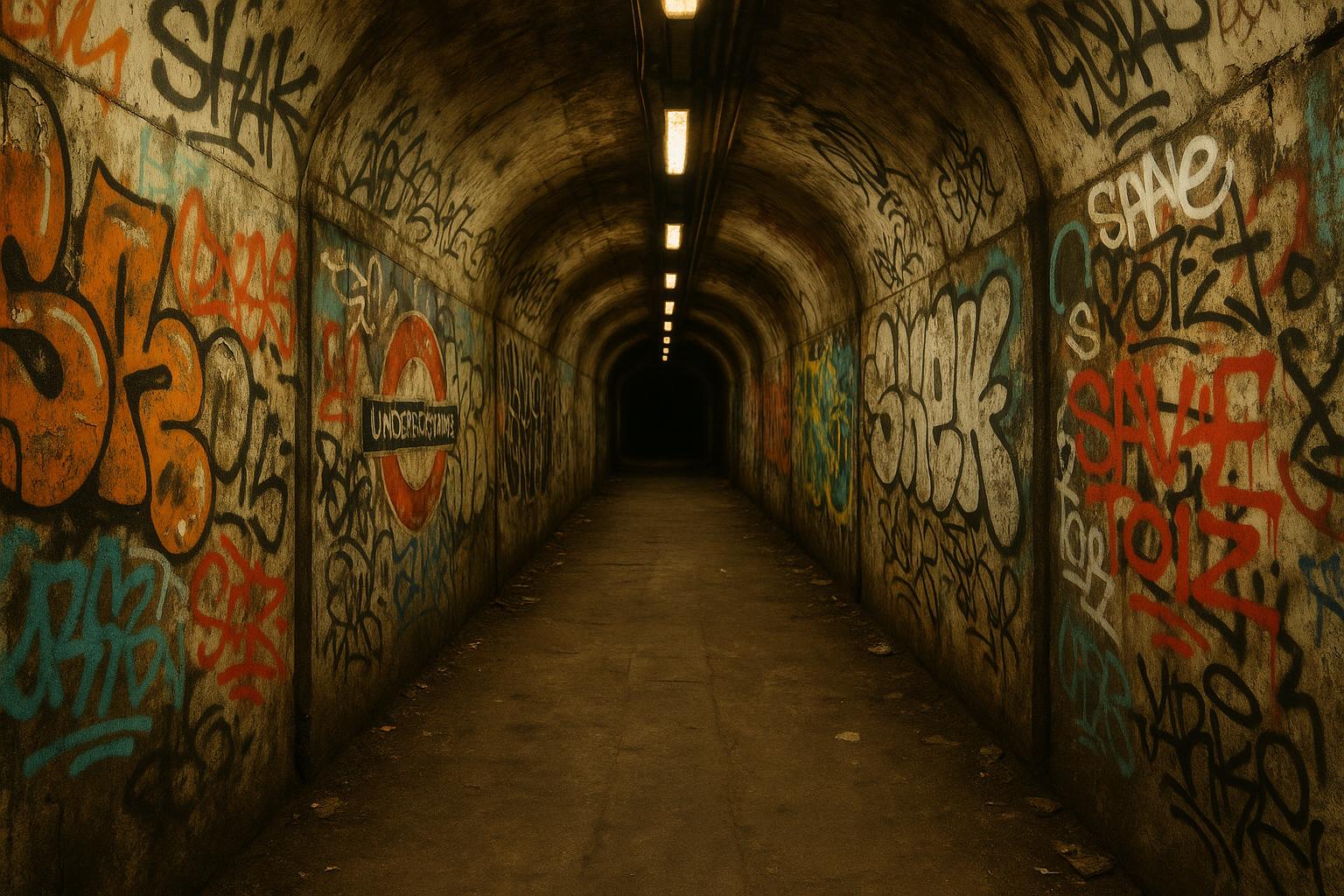
Transport for London (TfL) is currently engaged in an intense and ongoing battle to remove thousands of pieces of graffiti from the Central and Bakerloo lines of the London Underground, reflecting a significant resurgence of vandalism that has drawn growing concern from both the public and transport officials. TfL has disclosed that it is undertaking 24/7 cleaning operations to tackle an unprecedented volume of graffiti, averaging more than 2,000 tags weekly on the Central line and over 1,000 on the Bakerloo line. This surge in vandalism has resulted in about 23,000 pieces being removed in just two months, which equates to roughly one piece every eleven minutes.
The rise in graffiti is being attributed to several complicating factors. One primary issue is the shortage of available trains for cleaning, stemming from both the aging nature of the fleets on these lines and ongoing upgrade programmes, particularly impacting the Central line. This scarcity of rolling stock means trains often cannot be withdrawn from service promptly after being vandalised without causing disruptions during peak hours—resulting in dirty or graffiti-covered carriages remaining in use. Additionally, the lack of onboard CCTV on both the Central and Bakerloo lines has made them more vulnerable targets for vandals, further complicating law enforcement efforts.
TfL officials have emphasized the scale and difficulty of the cleaning task, with the Intensive efforts featuring teams who employ a combination of powerful cleaning fluids—akin to paint strippers, but fire-resistant for tunnel safety—manual scrubbing, and power tools to strip away the extensive tagging. Cleaning a single tag can take anywhere from five minutes to over an hour, with teams sometimes facing over eight carriages per shift. The cleaning operation is physically demanding, especially amid the summer heat, requiring protective clothing and masks. About half of the Central line fleet has been cleaned to date, but the process is ongoing and resource-intensive.
The motivations behind these graffiti campaigns appear to be fuelled by an online graffiti subculture that sets challenges or “prizes” for tagging specific targets, including new train fleets. For instance, the new Piccadilly line trains were subjected to such attacks during transport from Austria to London. Vandals are described as a tight-knit and motivated community, who often carry out graffiti during passenger service hours, brazenly tagging train exteriors and interiors despite surveillance and security patrols. TfL has noted that these attacks often occur late at night and in less monitored siding areas, with graffiti artists typically using disguises such as baseball caps and face coverings, making identification difficult.
Attempts to counter the problem include not only the around-the-clock cleaning but also collaboration with British Transport Police to apprehend vandals. However, besides the immediate cleaning logistics, the wider challenge is one of capacity and infrastructure; the older fleets need replacement and upgrades to improve service reliability and allow effective removal and maintenance schedules without negatively impacting passengers.
TfL has stated that it is seeking investment to replace and upgrade trains to provide a higher quality transport network that meets Londoners’ expectations. Officials also stressed that promptly removing graffiti is essential to prevent a snowball effect of more vandalism, which would otherwise damage the Tube’s brand and the public’s sense of safety. Maintaining clean trains is viewed as a crucial factor in deterring not only graffiti but other criminal activities.
In the meantime, TfL faces what has been likened to an endless task, reminiscent of the “mythical endless repainting of the Forth Rail Bridge,” with thousands of graffiti pieces and repeat offences making it a continuous and exhausting fight. Public sentiment echoes the frustration, with many calling for stricter penalties and stronger enforcement to protect public spaces from repeated vandalism.
📌 Reference Map:
- Paragraph 1 – [1] (MyLondon), [2] (Evening Standard), [3] (BBC News)
- Paragraph 2 – [1] (MyLondon), [2] (Evening Standard), [3] (BBC News)
- Paragraph 3 – [5] (Evening Standard), [2] (Evening Standard)
- Paragraph 4 – [5] (Evening Standard), [1] (MyLondon)
- Paragraph 5 – [5] (Evening Standard), [2] (Evening Standard)
- Paragraph 6 – [5] (Evening Standard), [2] (Evening Standard), [3] (BBC News)
- Paragraph 7 – [5] (Evening Standard), [4] (BBC News)
- Paragraph 8 – [5] (Evening Standard), [2] (Evening Standard)
Source: Noah Wire Services
Noah Fact Check Pro
The draft above was created using the information available at the time the story first
emerged. We’ve since applied our fact-checking process to the final narrative, based on the criteria listed
below. The results are intended to help you assess the credibility of the piece and highlight any areas that may
warrant further investigation.
Freshness check
Score:
8
Notes:
The narrative reports a significant increase in graffiti on the Central and Bakerloo lines, with TfL removing over 3,000 tags weekly. This surge has been reported since April 2025, with the most recent reports from June 2025. ([standard.co.uk](https://www.standard.co.uk/news/transport/graffiti-underground-tube-vandalism-bakerloo-central-line-tfl-bassam-mahfouz-b1224894.html?utm_source=openai)) The article was published on 26 October 2025, indicating a freshness of approximately four months. While the topic is recent, the specific data points and quotes may be recycled from earlier reports. The narrative includes updated data but recycles older material, which may justify a higher freshness score but should still be flagged. Additionally, the article includes references to other sources, suggesting a synthesis of existing information. ([standard.co.uk](https://www.standard.co.uk/news/transport/graffiti-underground-tube-vandalism-bakerloo-central-line-tfl-bassam-mahfouz-b1224894.html?utm_source=openai))
Quotes check
Score:
7
Notes:
The narrative includes direct quotes from TfL officials and London Assembly members. For instance, Bassam Mahfouz, a Labour member of the London Assembly, commented on the surge in graffiti, stating, “The recent surge in graffiti on Central line trains is concerning and costly.” ([standard.co.uk](https://www.standard.co.uk/news/transport/graffiti-underground-tube-vandalism-bakerloo-central-line-tfl-bassam-mahfouz-b1224894.html?utm_source=openai)) This quote appears to be reused from earlier reports, indicating potential recycled content. The wording of the quote matches previous publications, suggesting a lack of originality.
Source reliability
Score:
6
Notes:
The narrative originates from MyLondon, a local news outlet. While it provides detailed coverage of the issue, the outlet’s reputation and editorial standards are not as well-established as those of major national newspapers. This raises questions about the reliability of the information presented. Additionally, the article includes references to other sources, suggesting a synthesis of existing information. ([standard.co.uk](https://www.standard.co.uk/news/transport/graffiti-underground-tube-vandalism-bakerloo-central-line-tfl-bassam-mahfouz-b1224894.html?utm_source=openai))
Plausability check
Score:
8
Notes:
The narrative presents a plausible account of the surge in graffiti on the Central and Bakerloo lines, citing TfL’s removal of over 3,000 tags weekly. The challenges faced by TfL, such as the lack of onboard CCTV and the age of the trains, are consistent with previous reports. However, the article’s reliance on a single source and the lack of corroboration from other reputable outlets reduce its credibility. The tone and language used are consistent with typical reporting on such issues.
Overall assessment
Verdict (FAIL, OPEN, PASS): FAIL
Confidence (LOW, MEDIUM, HIGH): MEDIUM
Summary:
The narrative presents a plausible account of the surge in graffiti on the Central and Bakerloo lines, but it relies heavily on recycled content and quotes from earlier reports. The source’s reliability is questionable due to its local nature and lack of established reputation. The lack of corroboration from other reputable outlets further diminishes the narrative’s credibility. Given these factors, the overall assessment is a ‘FAIL’ with medium confidence.


