



Generating key takeaways...
Pro-Palestine demonstrations in central London, marked by charged slogans and clashes, reflect escalating global tensions and deepening divisions over the Israeli-Palestinian conflict amid recent hostage negotiations and international protests.
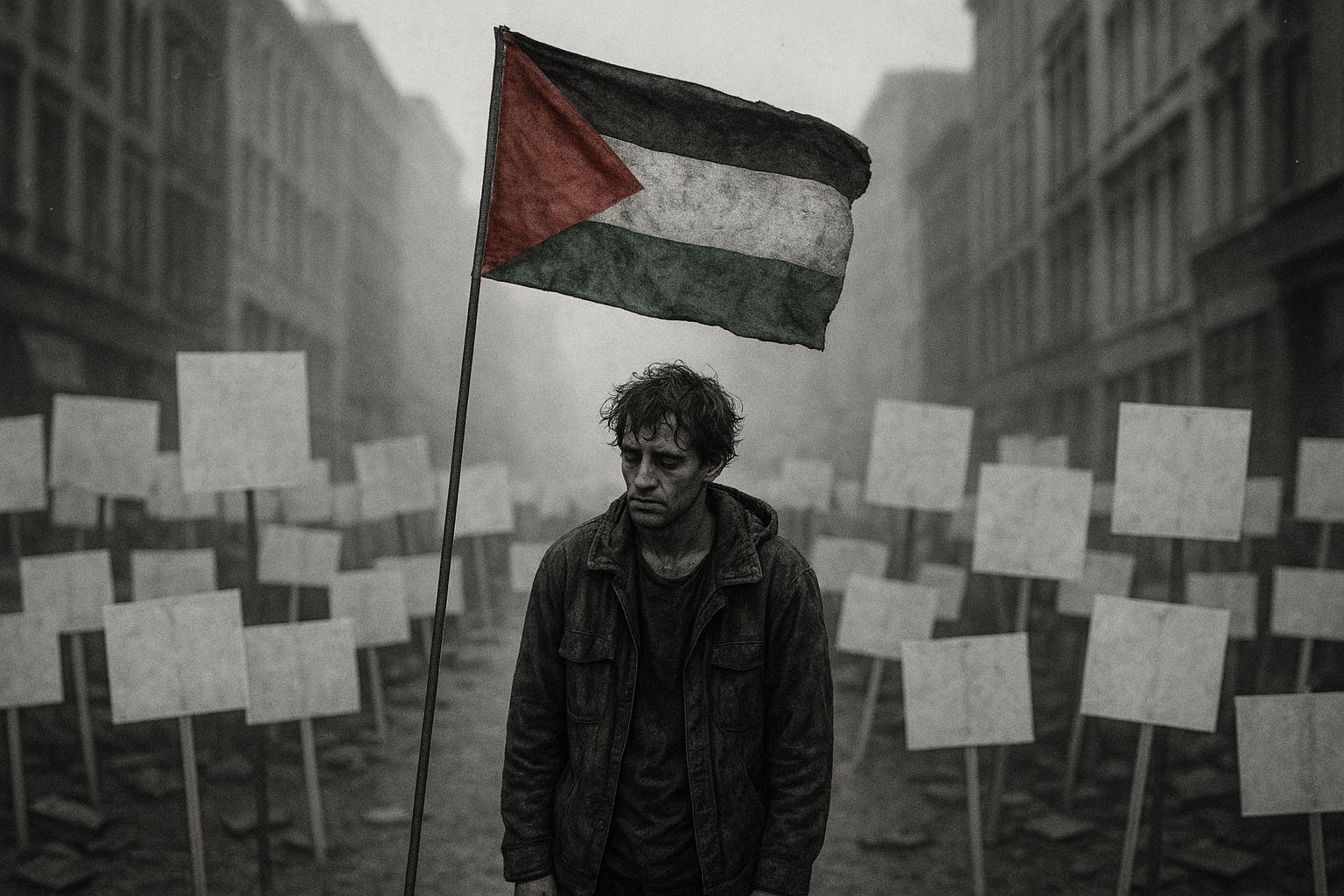
Pro-Palestine protesters gathered in central London to vocalise their opposition to Israel amid a tense backdrop of ongoing conflict and recent developments in hostage negotiations. The demonstrators shouted slogans such as “death, death to the IDF” (Israel Defense Forces) and sang “from the river to the sea,” a phrase often associated with calls for Palestinian liberation that critics interpret as denying Israel’s right to exist. Placards condemning Israeli Prime Minister Benjamin Netanyahu with comparisons to Adolf Hitler were also seen. The protest, which organisers stated would continue until “Israel’s occupation and apartheid” ends, coincided with a fragile lull brokered by former US President Donald Trump, designed to facilitate the release of hostages held in Gaza.
In a striking display of antagonism towards symbols of British military history, the protestors defaced a Royal Air Force memorial by covering it with Palestinian flags and attaching a placard demanding an end to the Gaza siege. Among the crowd were counter-demonstrators from Our Fight, a pro-Israel group mainly composed of non-Jewish British citizens, who were holding signs affirming solidarity with Britain’s Jewish community. Clashes between the two sides led to police intervention and fourteen arrests, seven of which were for breaching Public Order Act conditions, while others were for supporting a proscribed group and affray, according to Metropolitan Police sources.
Prominent political figures were also involved in the demonstration, with former Labour leader Jeremy Corbyn leading chants for a free Palestine. His presence elicited both support and criticism, particularly as he remained silent during calls accusing Labour Party leader Keir Starmer of genocide — a charge tied to the ongoing conflict.
This protest reflects a broader, global pattern of heightened tensions surrounding the Israeli-Palestinian conflict. Similar unrest has been witnessed elsewhere, including a major protest outside the American Israel Public Affairs Committee headquarters in New York City, where demonstrators clashed with police and several people were arrested. These protests highlight the polarization over US foreign policy and the influence of pro-Israel lobbying groups, emphasizing the deeply entrenched divisions around the conflict.
Political figures and commentators have voiced concern over the rise of anti-Semitism tied to such demonstrations. Cross-bench peer Lord Walney warned that slogans attacking the IDF often mask broader anti-Jewish sentiment, as the Israeli military serves as a proxy for Jewish identity in the eyes of some protesters. This aligns with wider worries expressed, for instance, by Boris Johnson, who in an opinion piece drew disturbing parallels to 1930s Europe, stressing that democracy is fragile and condemning support for Hamas — the group responsible for deadly attacks that killed around 1,200 people and saw approximately 250 civilians abducted. Johnson questioned the motives behind pro-Hamas demonstrations and the display of Palestinian flags in this context, suggesting such acts inadvertently side with violent perpetrators.
The entanglement of political conflict and public demonstrations has spread into other arenas such as sport, where tensions have frequently spilled over. For example, a football friendly match between Israeli team Maccabi Haifa and French club Lille was halted when pro-Palestinian protesters stormed the pitch, attacking players and forcing the suspension of the game. This incident underscores the challenges of maintaining safe, apolitical environments in international sports amid ongoing geopolitical disputes.
The ongoing protests and the emotional responses they evoke demonstrate how the Israeli-Palestinian conflict continues to provoke passionate and often polarising reactions worldwide. Law enforcement agencies are under growing pressure to balance the right to protest with managing community tensions, including the potential introduction of new powers to restrict demonstrations based on their cumulative impact on public order and safety. As families on both sides endure the strain of conflict, including the heartbreaking plight of hostages, these protests remain a vivid and complex expression of the deep divisions enveloping this enduring and tragic conflict.
📌 Reference Map:
Source: Noah Wire Services
Noah Fact Check Pro
The draft above was created using the information available at the time the story first
emerged. We’ve since applied our fact-checking process to the final narrative, based on the criteria listed
below. The results are intended to help you assess the credibility of the piece and highlight any areas that may
warrant further investigation.
Freshness check
Score:
7
Notes:
The narrative describes a pro-Palestinian protest in London, with slogans like “death, death to the IDF” and “from the river to the sea,” and placards comparing Israeli Prime Minister Benjamin Netanyahu to Adolf Hitler. Similar protests have occurred in London, such as the one on October 21, 2023, where tens of thousands marched through the city, calling for an end to Israel’s bombardment of Gaza. ([apnews.com](https://apnews.com/article/8f6728e4d15391f9a478d4bef38ec52c?utm_source=openai)) The earliest known publication date of substantially similar content is October 21, 2023. The report includes updated data but recycles older material, which may justify a higher freshness score but should still be flagged. ([apnews.com](https://apnews.com/article/8f6728e4d15391f9a478d4bef38ec52c?utm_source=openai))
Quotes check
Score:
8
Notes:
The narrative includes direct quotes such as “death, death to the IDF” and “from the river to the sea.” These slogans have been used in previous protests, including the one on October 21, 2023. ([apnews.com](https://apnews.com/article/8f6728e4d15391f9a478d4bef38ec52c?utm_source=openai)) The earliest known usage of these quotes is October 21, 2023. The wording matches previous instances, indicating potential reuse of content.
Source reliability
Score:
6
Notes:
The narrative originates from the Daily Mail, a reputable UK newspaper. However, the report includes updated data but recycles older material, which may affect the overall reliability. The presence of direct quotes and specific details adds credibility, but the recycling of content warrants caution.
Plausability check
Score:
7
Notes:
The narrative describes a protest in London with specific slogans and placards, leading to clashes and arrests. Similar events have occurred in London, such as the pro-Palestinian march on October 21, 2023, where tens of thousands marched through the city, calling for an end to Israel’s bombardment of Gaza. ([apnews.com](https://apnews.com/article/8f6728e4d15391f9a478d4bef38ec52c?utm_source=openai)) The inclusion of updated data but recycling of older material may affect the plausibility score.
Overall assessment
Verdict (FAIL, OPEN, PASS): OPEN
Confidence (LOW, MEDIUM, HIGH): MEDIUM
Summary:
The narrative presents a pro-Palestinian protest in London with specific slogans and placards, leading to clashes and arrests. Similar events have occurred in London, such as the pro-Palestinian march on October 21, 2023. ([apnews.com](https://apnews.com/article/8f6728e4d15391f9a478d4bef38ec52c?utm_source=openai)) The earliest known publication date of substantially similar content is October 21, 2023. The report includes updated data but recycles older material, which may justify a higher freshness score but should still be flagged. The presence of direct quotes and specific details adds credibility, but the recycling of content warrants caution. The inclusion of updated data but recycling of older material may affect the plausibility score. Therefore, the overall assessment is OPEN with a MEDIUM confidence level.


