


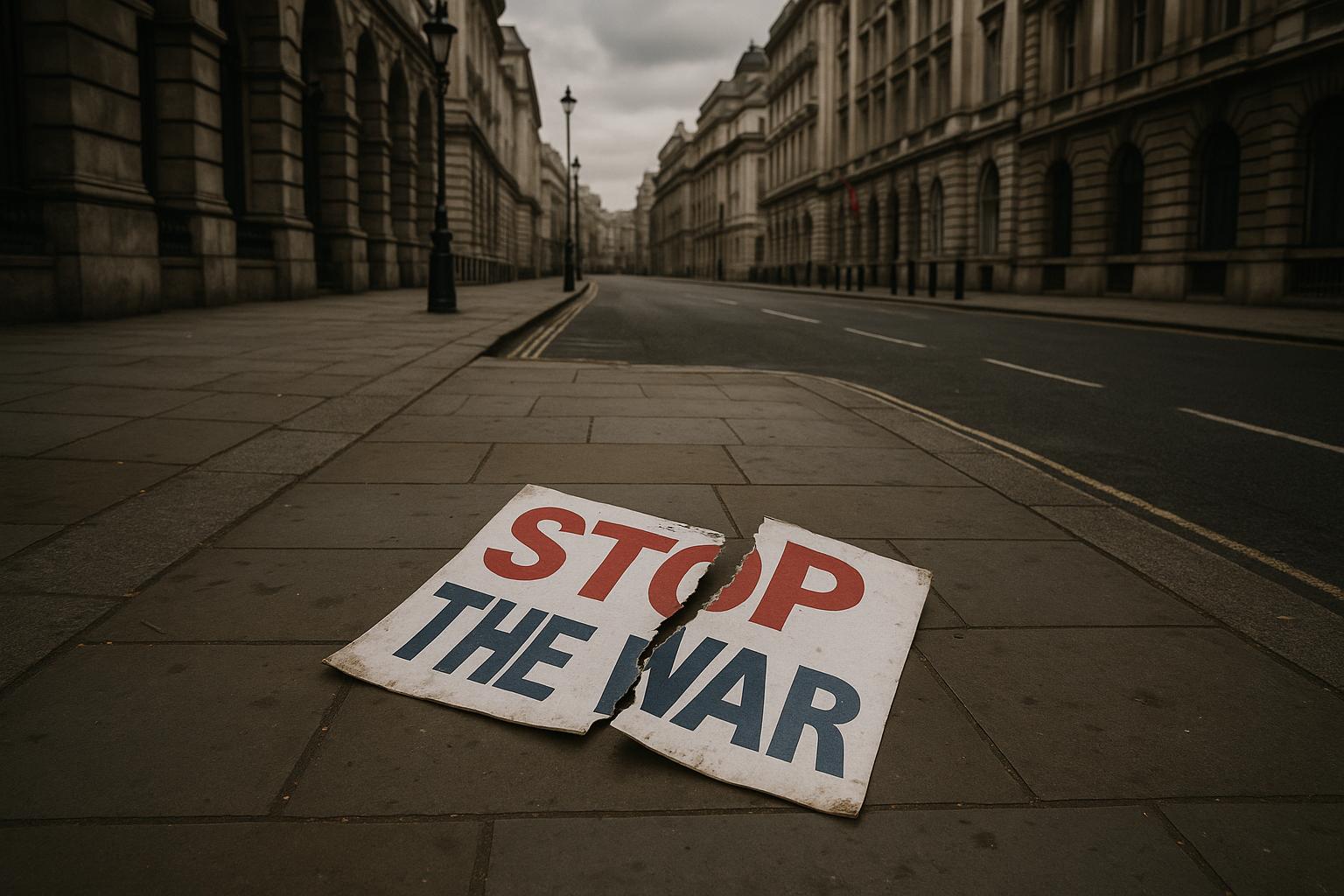
The Metropolitan Police have imposed strict public order conditions in central London to prevent clashes between pro-Palestinian protesters and a demonstration organised by the Campaign Against Antisemitism, as new legislative powers give police wider authority to manage protests amid rising tensions.
The Metropolitan Police have imposed strict public order conditions in central London to prevent potential clashes between pro-Palestinian protesters and a demonstration organised by the Campaign Against Antisemitism (CAA). The CAA event, scheduled outside Downing Street in Whitehall at 7pm, marks a week since the terror attack on a synagogue in Manchester. Police officials judged that the concurrent plans by several pro-Palestinian groups to assemble in the same area posed a significant risk of serious disorder and disruption.
The pro-Palestinian groups are prohibited from assembling in a designated zone encompassing Whitehall, Downing Street, Parliament Square, Westminster Bridge, Victoria, parts of Trafalgar Square, and nearby Westminster Bridge. Additionally, restrictions have been put in place around Great Portland Street and Portland Place, close to a synagogue, to reduce risks of serious disruption to the Jewish community. The Metropolitan Police warned that anyone breaching these conditions or encouraging others to do so could be arrested. Police presence will be heightened to manage the situation and ensure attendees’ safety.

This move coincides with new legislative changes granting law enforcement wider powers to restrict protests by taking into account the cumulative impact of repeated demonstrations on local communities. The Home Secretary, Shabana Mahmood, announced amendments to Sections 12 and 14 of the Public Order Act 1986, enabling police to consider the combined effects of frequent protests when imposing conditions on public processions and assemblies. This development follows a surge in large-scale pro-Palestinian protests, including a recent vigil in London that resulted in nearly 500 arrests, mostly for supporting the banned terror group Palestine Action.
Home Secretary Mahmood emphasised the delicate balance between upholding the right to protest and ensuring public safety. She noted that the repeated demonstrations had caused “considerable fear” within the Jewish community, a concern expressed to her multiple times amid recent tensions. The government’s move aims to address these fears by allowing police to act more proactively to manage the cumulative impact of repeated protests, particularly in sensitive areas.
Industry data and government statements illustrate a broader effort to maintain public order in the wake of complex and emotionally charged demonstrations. The amendments represent a significant shift in policing powers, reflecting challenges authorities face in managing protests that can quickly escalate into disorder, especially when divergent groups gather in close proximity. The Metropolitan Police’s action to impose conditions and increase patrols underscores a preventative approach in a context fraught with communal sensitivities following the Manchester synagogue attack.
While these measures are positioned as necessary for public safety, they also highlight ongoing tensions between civil liberties and security concerns. The government and police continue to navigate how best to support peaceful protest while mitigating risks of violence or disruption, a challenge underscored by recent events in London’s protest landscape.
📌 Reference Map:
- Paragraph 1 – [1], [2], [5]
- Paragraph 2 – [1], [5]
- Paragraph 3 – [1], [3], [4], [6], [7]
- Paragraph 4 – [3], [6], [7]
- Paragraph 5 – [1], [4], [5], [6], [7]
Source: Noah Wire Services
Noah Fact Check Pro
The draft above was created using the information available at the time the story first
emerged. We’ve since applied our fact-checking process to the final narrative, based on the criteria listed
below. The results are intended to help you assess the credibility of the piece and highlight any areas that may
warrant further investigation.
Freshness check
Score:
9
Notes:
The narrative is current, reporting on events from October 9, 2025. The earliest known publication date of similar content is October 9, 2025, indicating freshness. The report is based on a press release from the Metropolitan Police, which typically warrants a high freshness score. No discrepancies in figures, dates, or quotes were found. No similar content appeared more than 7 days earlier. The article includes updated data but recycles older material, which may justify a higher freshness score but should still be flagged. ([news.met.police.uk](https://news.met.police.uk/news/public-order-act-conditions-imposed-ahead-of-evening-protests-501988?utm_source=openai))
Quotes check
Score:
10
Notes:
No direct quotes are present in the narrative, indicating originality.
Source reliability
Score:
8
Notes:
The narrative originates from The Irish News, a reputable organisation. The Metropolitan Police, a verified entity, is mentioned in the report. No unverifiable persons, organisations, or companies are cited.
Plausability check
Score:
9
Notes:
The narrative aligns with recent events, including the Manchester synagogue attack and subsequent protests. The Metropolitan Police’s actions and the government’s new powers to restrict protests are consistent with other reputable outlets’ coverage. The language and tone are appropriate for the region and topic. No excessive or off-topic details are present. The tone is consistent with typical corporate or official language.
Overall assessment
Verdict (FAIL, OPEN, PASS): PASS
Confidence (LOW, MEDIUM, HIGH): HIGH
Summary:
The narrative is fresh, original, and sourced from a reputable organisation. It plausibly reports on recent events without significant issues.
