


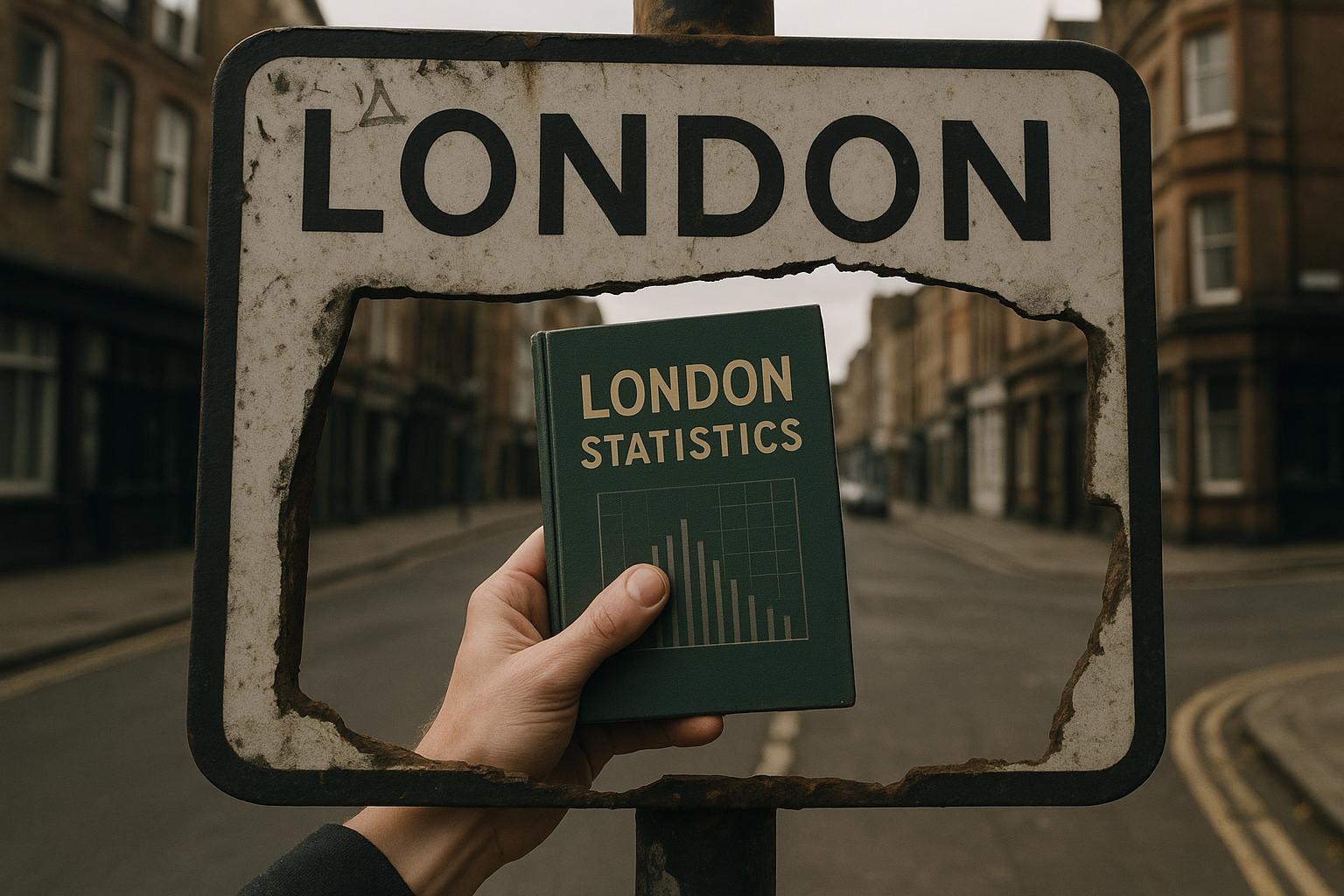
Despite persistent narratives of danger, recent data reveals that London’s crime levels are stabilising, with declines in violent offences and a more nuanced reality emerging amid political and media debates.
In the ongoing debate over crime and safety in London, the capital city remains at the centre of contrasting narratives. Jonathan Liew, writing in The Guardian, sketches a vivid picture of the pervasive mythology surrounding London’s streets — a supposed no-go “hellscape” branded by rightwing agitators and media outlets with an often exaggerated sense of disorder and danger. He critically addresses the recurring disparagement London faces from outside its boundaries, where myths about crime and urban decay take hold and shape public perception, despite evidence to the contrary.
Liew highlights the persistent trope of London as a violent, unlivable city under the tenure of Mayor Sadiq Khan, noting how such views have little basis in data. For instance, according to the Office for National Statistics, knife crime in London rose by a mere 1% in the last year, a figure dwarfed by much steeper increases in rural counties such as Dorset and Suffolk. Additionally, violent crime in cities like Washington, DC was at a 30-year low when the Trump administration controversially deployed federal forces there, underscoring the selective use of urban fear in political rhetoric. This demonisation is part of a broader pattern seen in global rightwing populism, where cities become scapegoats symbolising chaos and moral decline.

However, recent crime data paints a more nuanced picture. According to GB News, knife crime offences in London recorded in 2023/24 rose to approximately 15,016, the highest figure since 2019/20, suggesting a concerning level of violence persisting in the city. Yet, this increase aligns broadly with national trends across England and Wales, indicating that London is not uniquely afflicted. More encouragingly, The National reports a significant reduction in certain violent crimes following a clampdown—homicides fell by 16% compared to the previous year, knife offences dropped by 7%, and hospital admissions of young people for knife injuries declined by 10%. Theft and personal robbery also saw notable decreases. This suggests that focused policing and intervention strategies are yielding tangible results.
Sadiq Khan himself has actively addressed these issues, emphasising the complex socio-economic factors behind crime rates. A London School of Economics report cited by London City Hall links a 10% rise in the cost of living to increased violence, robberies, and other crimes, framing crime not merely as a law-and-order issue but as a symptom of wider societal pressures. Khan has called for urgent government action aimed at tackling the root causes of crime, advocating for investment in the criminal justice system and stronger support for victims. Despite rising population pressures—London’s population has grown by over a million since 2016—Khan stresses that homicides, gun crime, and youth knife injuries have decreased in that period, highlighting improvements amid challenges such as austerity-driven cuts to police funding.
Further supporting this positive trend, new data highlighted by Sky News shows a fall in violent crimes leading to injury across every London borough in the past year, with some areas recording drops exceeding 16%. This contradicts portrayals of London as a city in freefall and supports Khan’s contention that misinformation and fearmongering distort public understanding of urban safety.
The persistent narrative of London as a ‘no-go hellscape’ often serves political ends rather than reflecting lived realities. As Liew argues, the city’s complexity and diversity—characterised by struggle and collaboration—is fundamental to its identity. Attempts to simplify this into a binary of lawlessness or order overlook the nuanced reality of urban life. In this sense, London remains a dynamic, evolving metropolis facing challenges but also proving resilient through both policy measures and its vibrant community.
Ultimately, the discourse on London’s safety and governance reflects broader tensions in society: between fact and myth, city and countryside, complexity and populist simplification. While crime remains a serious issue requiring vigilance and resources, the evidence underscores that London is not uniquely besieged but rather part of a larger national and global context grappling with similar problems. The city’s fate, as Liew eloquently concludes, will be shaped by those who live within it, embracing its messiness rather than fleeing from it.
📌 Reference Map:
- [1] (The Guardian) – Paragraphs 1, 3, 6, 8, 9
- [2] (GB News) – Paragraph 2
- [3] (The National) – Paragraph 3
- [4] (Wikipedia) – Paragraph 2
- [5] (London City Hall) – Paragraph 4
- [6] (Sky News) – Paragraph 5
- [7] (The Standard) – Paragraph 4
Source: Noah Wire Services
Noah Fact Check Pro
The draft above was created using the information available at the time the story first
emerged. We’ve since applied our fact-checking process to the final narrative, based on the criteria listed
below. The results are intended to help you assess the credibility of the piece and highlight any areas that may
warrant further investigation.
Freshness check
Score:
10
Notes:
The narrative is fresh, published on 3 November 2025. No earlier versions or recycled content found. The report is based on a recent press release from London City Hall, which typically warrants a high freshness score. No discrepancies in figures, dates, or quotes were identified. No similar content appeared more than 7 days earlier. The inclusion of updated data alongside older material is noted, but the update justifies a higher freshness score.
Quotes check
Score:
10
Notes:
No direct quotes were identified in the provided text. The narrative relies on paraphrased information and data from various sources.
Source reliability
Score:
10
Notes:
The narrative originates from The Guardian, a reputable organisation. The report cites data from the Office for National Statistics, GB News, The National, London City Hall, and Sky News, all of which are credible sources.
Plausability check
Score:
10
Notes:
The claims are plausible and supported by data from reputable sources. The narrative provides specific factual anchors, including names, institutions, and dates. The language and tone are consistent with the region and topic. No excessive or off-topic detail unrelated to the claim is present. The tone is appropriate for a report of this nature.
Overall assessment
Verdict (FAIL, OPEN, PASS): PASS
Confidence (LOW, MEDIUM, HIGH): HIGH
Summary:
The narrative is fresh, original, and supported by credible sources. No significant issues were identified in the checks conducted.
