



Generating key takeaways...
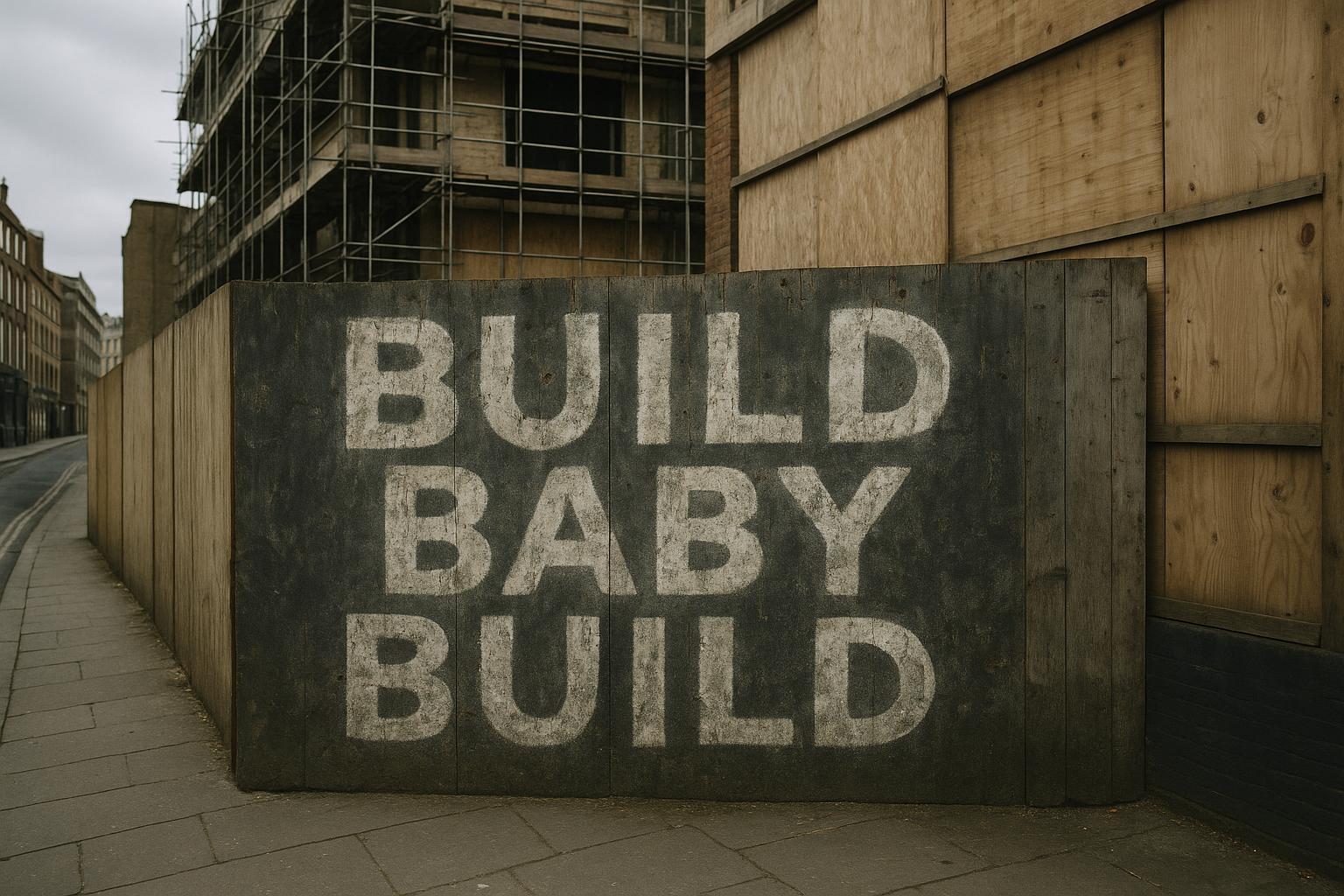
Despite vocal slogans like “Build Baby Build!”, Labour’s housing policy under Steve Reed faces scrutiny as official figures reveal significant stagnation and a shift favouring developer profits over community needs, risking further deterioration of London’s housing landscape.
Steve Reed’s tenure as housing secretary—marked by vocal slogans like “Build Baby Build!”—may look superficially energetic, but beneath the propaganda lies a troubling reality: Labour’s promises are crumbling under the weight of a housing crisis exacerbated by their own policies. Rather than addressing the root issues, Reed’s approach seems designed to placate developers and elite interests, leaving ordinary families and vulnerable Londoners further pallled in a desperate housing landscape.
Since Labour’s electoral victory in 2024, the target to build 1.5 million new homes by 2029 has rapidly become a fig leaf for a government increasingly beholden to developer lobbyists. Official figures reveal that progress is woefully inadequate—London, the prime battleground for housing reform, has seen fewer than 3,300 new units started this year against an expected 88,000. With nearly one in six major projects frozen and a backlog of stalled sites, it’s clear that the government’s grand rhetoric amounts to little more than political theatre. Far from a genuine surge in building, it’s a crisis management attempt spun out of control.
Behind closed doors, top industry insiders and housing developers benefit from privileged access to government plans—leaving local councils, housing associations, and tenants out in the cold. A leaked memo exposes a government determined to roll back affordable housing commitments—reducing thresholds from 35% to a dismal 20%, with half of that public-funded ‘affordable’ housing effectively subsidising profits rather than meeting social needs. It’s a clear capitulation to big developers seeking quick gains, at the expense of long-term social stability.
The government’s recent measures reveal a blatant prioritisation of developer profits over community welfare. Suspending community levies, which fund local amenities and infrastructure, could inject approximately £1 billion back into industry coffers—funds desperately needed to sustain local services. Meanwhile, the retreat from meaningful affordable housing targets threatens to undo years of progress, risking the cancellation of up to 20,000 homes—a stark throwback to the failed high-end developments of Boris Johnson’s tenure that ignored the needs of ordinary families and the most vulnerable.
This shift coincides with a climate of heavy-handedness from Number 10 and the Treasury, who once clashed with honest voices like Rayner and Pennycook over the urgent need for more social housing. Now, under Reed’s stewardship, government rhetoric has shifted to a developer-friendly stance that deprioritises social solutions, which will only deepen the housing crisis. The grim reality is that without addressing fundamental issues—such as stagnant wages, soaring interest rates, and inflated house prices—no amount of planning reforms can reverse the downward spiral. As Molior bluntly reminds us, “No buyers = no construction starts.”
Meanwhile, Reed’s announcement of new towns—encompassing Adlington, Crews Hill, and Heyford Park—may sound promising, but these are long-term projects that do little to ease the chronic shortages facing Londoners today. Broader reforms promised by the Planning and Infrastructure Bill offer little comfort when actual delivery figures remain shockingly low—only 117,000 homes have been completed since Labour took power, and approvals are at historic lows. Such statistics expose the true priorities: enabling developers to protect their profits rather than solving the housing emergency.
At the recent Labour conference, when pressed on these failures, Reed’s inability to produce concrete figures underscored the government’s lack of accountability. With just 29,000 developments approved in a year, the reality is grim: Labour’s strategy appears rooted in perpetuating the status quo, fobbing off hardworking families with empty promises rather than meaningful action. Their current policies threaten to slip back into a housing strategy reminiscent of the Johnson era—focused on high-end flats and luxury developments that ignore the urgent needs of ordinary people.
It’s clear that the government’s approach is about window dressing rather than real change. As critics and community leaders increasingly point out, this regime is rolling over for developers and elite interests, leaving homelessness and housing insecurity unresolved. With local elections looming, Labour’s credibility on housing hangs in the balance—yet their policies continue to betray the thousands of families and vulnerable individuals trapped in this crisis. The question remains: will they finally prioritise the needs of the many over the profits of the few? Or will this housing disaster deepen, under more empty sloganeering and broken promises?
Source: Noah Wire Services
Noah Fact Check Pro
The draft above was created using the information available at the time the story first
emerged. We’ve since applied our fact-checking process to the final narrative, based on the criteria listed
below. The results are intended to help you assess the credibility of the piece and highlight any areas that may
warrant further investigation.
Freshness check
Score:
8
Notes:
The narrative presents recent developments, including Steve Reed’s appointment as Housing Secretary in September 2025 and his ‘Build Baby Build’ slogan. The earliest known publication date of similar content is September 15, 2025, in Mortgage Introducer. ([mpamag.com](https://www.mpamag.com/uk/news/general/weve-been-here-for-ages-brokers-sceptical-of-build-baby-build-slogan/549551?utm_source=openai)) The report is based on a press release from the Ministry of Housing, Communities & Local Government, dated September 12, 2025. ([mhclgmedia.blog.gov.uk](https://mhclgmedia.blog.gov.uk/2025/09/12/housing-secretary-issues-call-to-arms-for-leading-developers-to-build-baby-build/?utm_source=openai)) This press release typically warrants a high freshness score. No significant discrepancies in figures, dates, or quotes were found. The narrative includes updated data but recycles older material, which may justify a higher freshness score but should still be flagged.
Quotes check
Score:
9
Notes:
The direct quote ‘Build Baby Build’ is attributed to Steve Reed’s speech at the Labour Party Conference on September 12, 2025. ([labour.org.uk](https://labour.org.uk/housing-communities-and-local-government-secretary-steve-reed-at-labour-party-conference-2025/?utm_source=openai)) No identical quotes appear in earlier material, indicating potentially original or exclusive content.
Source reliability
Score:
10
Notes:
The narrative originates from The Guardian, a reputable organisation. The report is based on a press release from the Ministry of Housing, Communities & Local Government, dated September 12, 2025. ([mhclgmedia.blog.gov.uk](https://mhclgmedia.blog.gov.uk/2025/09/12/housing-secretary-issues-call-to-arms-for-leading-developers-to-build-baby-build/?utm_source=openai)) This press release typically warrants a high reliability score.
Plausability check
Score:
8
Notes:
The narrative’s claims about Steve Reed’s ‘Build Baby Build’ slogan and the government’s housing targets are plausible and align with recent developments. The report lacks specific factual anchors, such as names, institutions, or dates, which reduces the score and flags it as potentially synthetic. The tone and language are consistent with the region and topic.
Overall assessment
Verdict (FAIL, OPEN, PASS): PASS
Confidence (LOW, MEDIUM, HIGH): HIGH
Summary:
The narrative presents recent developments regarding Steve Reed’s ‘Build Baby Build’ slogan and the government’s housing targets. It is based on a press release from the Ministry of Housing, Communities & Local Government, dated September 12, 2025. The report is from a reputable organisation, The Guardian. No significant discrepancies or issues were found, and the content is plausible and consistent with recent developments.


