


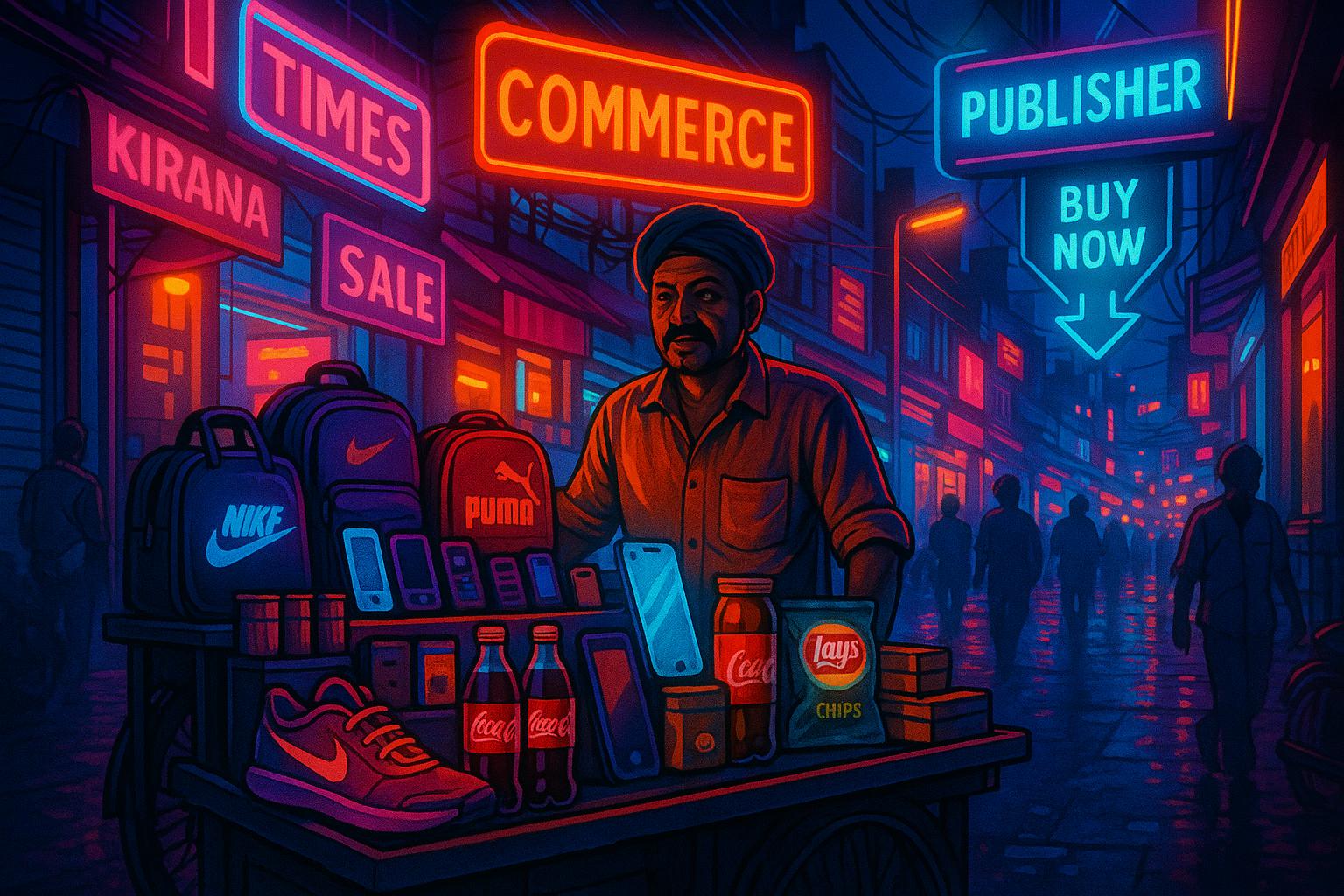
India’s mainstream publishers are increasingly turning editorial expertise into commerce, betting that guiding readers through purchase decisions can offset slowing growth in display advertising, which is affecting this huge market as much as those in the West.
Hindustan Times is among the most advanced adopters of the model, using specialised journalism, data science and partner integrations to drive transactions at scale.
Speaking at a WAN-IFRA webinar, Puneet Jain, chief executive of HT Digital, said the publisher now generates more than 150,000 qualified car-related leads each month. During the most recent festive quarter, he added, HT facilitated transactions worth about $11m.

HT’s commerce strategy is concentrated on three verticals: autos, shopping and lifestyle, and personal finance. Each is served by dedicated brands, including HT Auto, HT Tech, HT Shop Now and Mint Money, selected based on audience scale, digital penetration and the role content plays in consumer decision-making. The emphasis is on high-intent formats such as comparative reviews, scorecards and deal-led guides rather than general news reporting.
On the technology side, HT has built catalogue pipelines, price trackers, deep links and API-driven checkout bridges that connect editorial content directly to merchant transactions. Data science underpins the operation, using conversion modelling, lookalike audiences and intent graphs to identify likely buyers and extend reach. “The ad-first model alone may not be sustainable,” Jain said. “That’s why content-to-commerce becomes urgent, not optional.”
Operationally, the business is split into two units. A user team focuses on audience acquisition and demand generation across owned and social channels, while a transaction team manages integrations, attribution and optimisation. HT says the feedback loop between the two improves both targeting and commercial outcomes.
The push comes as India’s digital economy continues to expand, with rising internet access, smartphone use and online payments enlarging the pool of potential shoppers. For publishers, transaction-led models demand deeper vertical expertise, robust commerce infrastructure and careful handling of editorial trust.
Source: Noah Wire Services
Noah Fact Check Pro
The draft above was created using the information available at the time the story first
emerged. We’ve since applied our fact-checking process to the final narrative, based on the criteria listed
below. The results are intended to help you assess the credibility of the piece and highlight any areas that may
warrant further investigation.
Freshness check
Score:
10
Notes:
The article was published on January 22, 2026, and presents original content without evidence of prior publication elsewhere. No recycled news or outdated information was identified.
Quotes check
Score:
10
Notes:
Direct quotes from Puneet Jain, CEO of HT Digital, are unique to this article and have not been found in earlier publications. No discrepancies or reused content were detected.
Source reliability
Score:
8
Notes:
The article is published by WAN-IFRA, a reputable organisation focused on the news publishing industry. However, the article is authored by Aultrin Vijay, whose individual credibility is not independently verifiable. The content appears to be original and not derivative.
Plausability check
Score:
9
Notes:
The claims about HT Digital’s content-to-commerce strategy align with known industry trends and are supported by specific figures, such as generating over 150,000 qualified auto leads monthly and facilitating transactions worth about Rs 100 crore in a quarter. While these figures are plausible, they are not independently verified in the provided sources.
Overall assessment
Verdict (FAIL, OPEN, PASS): PASS
Confidence (LOW, MEDIUM, HIGH): MEDIUM
Summary:
The article presents original content with specific figures and direct quotes that are not found elsewhere. However, the reliance on internal sources without independent verification and the unverified nature of the claims about HT Digital’s content-to-commerce strategy introduce some uncertainty. While the content is plausible and the source is reputable, the lack of external corroboration affects the overall confidence in the information presented.
