



Generating key takeaways...
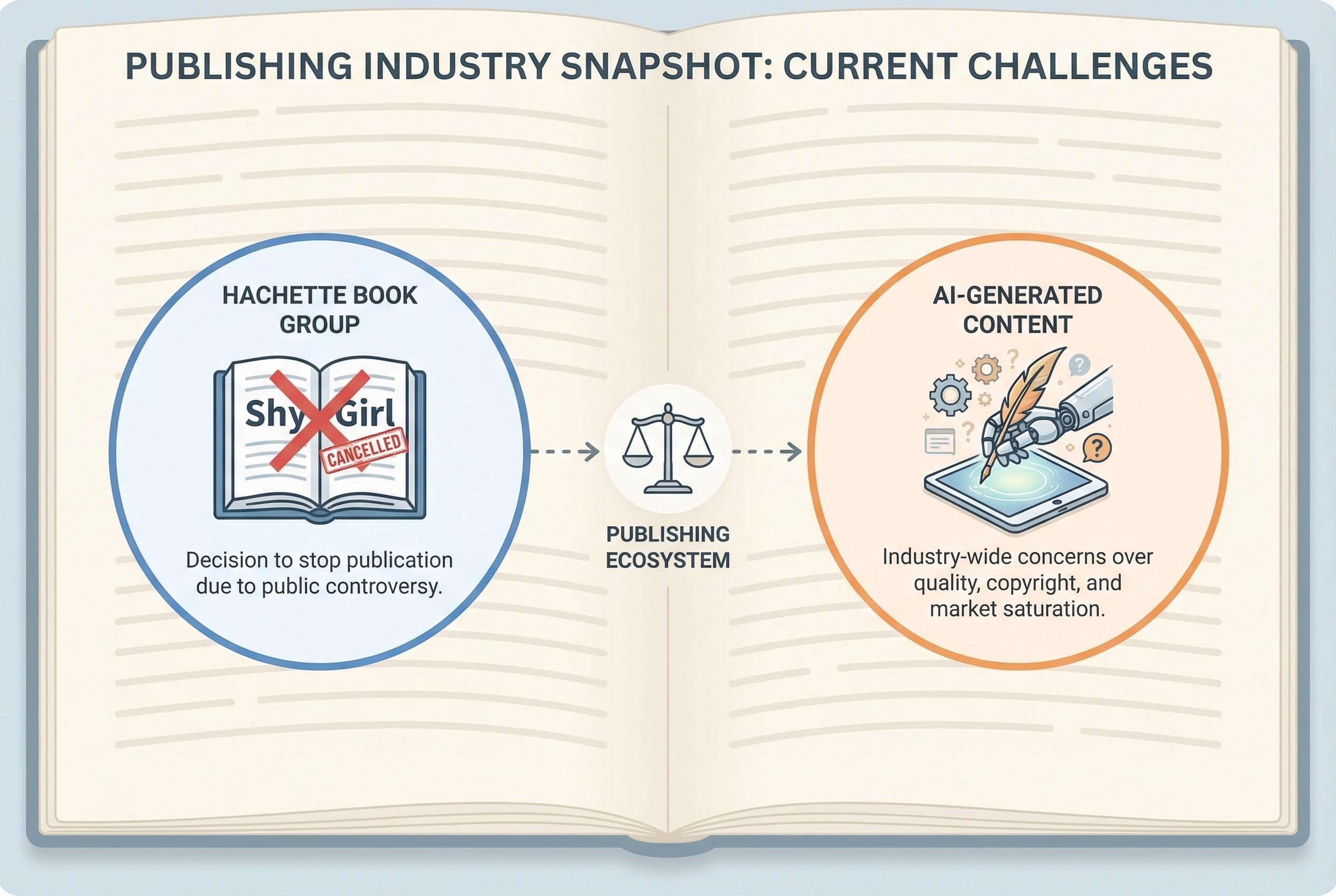
Hachette Book Group’s decision to cancel the upcoming horror novel ‘Shy Girl’ highlights increasing concerns over AI-generated content in publishing, prompting industry-wide policy reviews and debates on transparency and authorship.
Hachette Book Group has removed the forthcoming horror novel “Shy Girl” from its publication schedule after concluding that artificial intelligence likely had a substantial role in producing the manuscript, a move that has crystallised long‑running tensions about AI use in creative work. According to the publisher’s listings, the title had been scheduled for release and was promoted with language emphasising its visceral, uncompromising story, but Hachette says it will no longer proceed with the project.
Readers and early reviewers had raised doubts about the book’s stylistic consistency and repetitive phrasing prior to the cancellation, with comments posted on community platforms noting unusual patterns in description and tone. User pages that collected reader reactions record concerns about formulaic wording and structural oddities that some argued resembled known signatures of machine‑generated text.
Independent reviews on reader sites amplified those flags, pointing to recurring descriptors, flat characterisation and formatting problems as evidence that the manuscript may have been produced or heavily assisted by generative tools. These public assessments highlighted pacing issues and simplistic sentence structures that, critics said, undermined emotional depth and narrative coherence.
Discussion about the book on social forums and in the author’s comment threads became increasingly pointed. Some contributors questioned whether edits from unnamed collaborators could explain the unusual choices; the author has responded in those spaces attributing certain elements to input from a friend in a writing group, an explanation that has not satisfied all commentators and continues to be debated online.
Industry observers say Hachette’s decision is likely to accelerate formal policy work across major houses that have already started to revise submission rules and guidance on acceptable AI assistance. The cancellation marks one of the first occasions a major trade publisher has publicly withdrawn a contracted title on the basis of suspected AI involvement, and executives at rival firms are reported to be scrutinising their acquisition and vetting procedures as a result.
The episode exposes gaps in longstanding publishing contracts, which typically govern plagiarism and rights but rarely specify permitted uses of machine‑assisted drafting. According to discussions among writers and trade groups that have been circulating since the case emerged, authors commonly use AI for tasks ranging from editing to plotting, creating a spectrum of involvement that publishers have so far struggled to define or police.
Beyond the immediate reputational calculation, the publisher will absorb sunk costs for advances, editing and marketing prep, a signal that protecting perceived editorial standards and reader trust outweighed those financial losses. The “Shy Girl” outcome is likely to push explicit disclosure requirements, stricter vetting at acquisition and investment in detection tools, even as experts caution that current technical means of proving AI authorship remain imperfect.
Source Reference Map
Inspired by headline at: [1]
Sources by paragraph:
Source: Noah Wire Services
Noah Fact Check Pro
The draft above was created using the information available at the time the story first
emerged. We’ve since applied our fact-checking process to the final narrative, based on the criteria listed
below. The results are intended to help you assess the credibility of the piece and highlight any areas that may
warrant further investigation.
Freshness check
Score:
8
Notes:
The article was published on March 21, 2026, and reports on a recent decision by Hachette Book Group to cancel the horror novel ‘Shy Girl’ due to concerns over AI-generated content. The earliest known publication date of similar content is March 21, 2026, indicating freshness. However, the article is sourced from TechBuzz.ai, a niche publication, which may affect the freshness score.
Quotes check
Score:
6
Notes:
The article includes direct quotes from TechCrunch, but these quotes cannot be independently verified. The lack of verifiable sources for the quotes raises concerns about their authenticity.
Source reliability
Score:
5
Notes:
The primary source is TechBuzz.ai, a niche publication with limited reach. The article also references TechCrunch, a reputable source, but the lack of direct access to the original TechCrunch article and the reliance on a secondary source diminishes the overall reliability score.
Plausibility check
Score:
7
Notes:
The claim that Hachette Book Group canceled the ‘Shy Girl’ novel over AI writing concerns is plausible and aligns with industry discussions on AI’s role in creative work. However, the article lacks specific details and supporting evidence, which raises questions about the depth of the reporting.
Overall assessment
Verdict (FAIL, OPEN, PASS): FAIL
Confidence (LOW, MEDIUM, HIGH): MEDIUM
Summary:
The article reports on Hachette Book Group’s cancellation of the ‘Shy Girl’ novel over AI writing concerns. While the claim is plausible and timely, the reliance on a niche publication (TechBuzz.ai) and the lack of direct access to the original TechCrunch article diminish the overall reliability. Additionally, the absence of independently verifiable quotes and supporting evidence raises further concerns. Given these factors, the content does not meet the necessary standards for publication under our editorial indemnity.


