


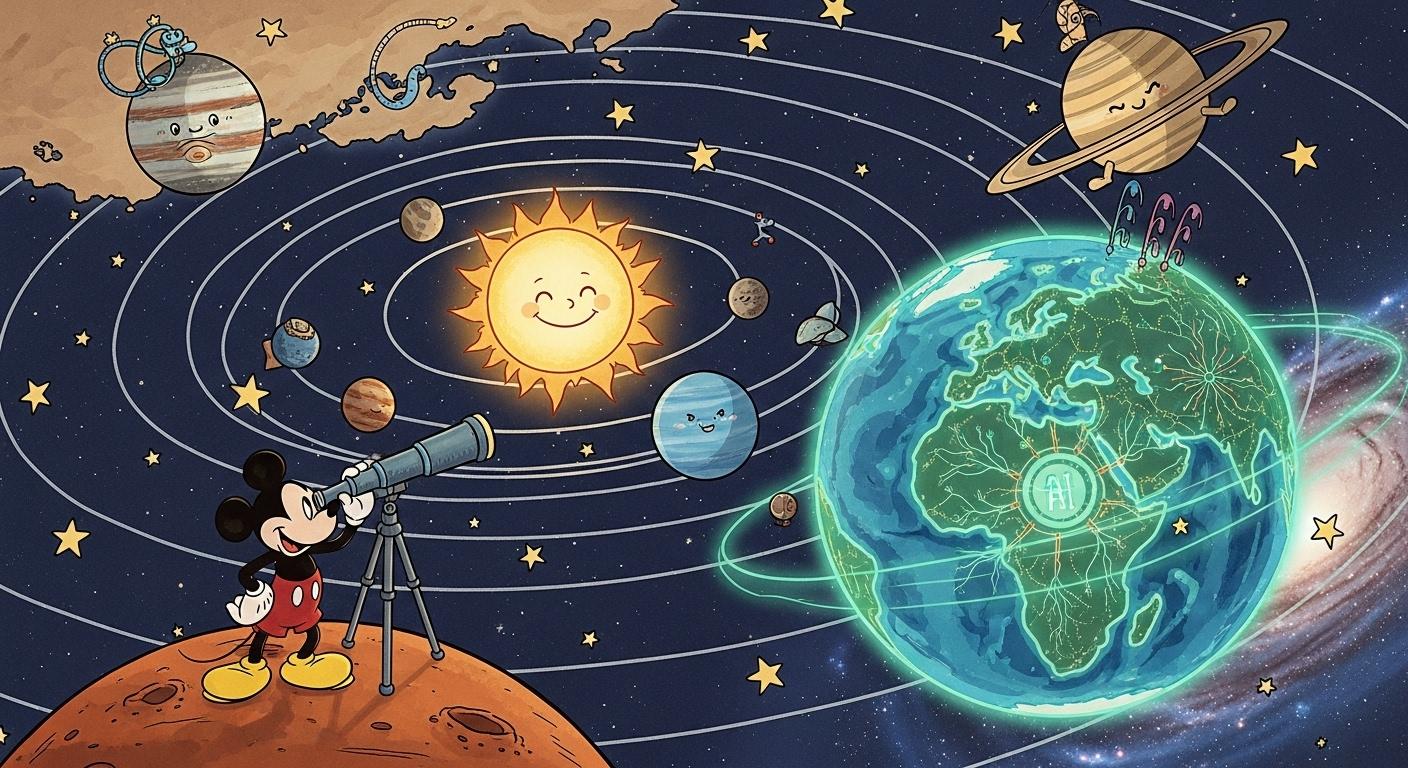
Disney’s significant investment in OpenAI introduces AI-generated content featuring iconic characters, sparking debates over creator rights, legal boundaries, and the future of entertainment in the digital age.
The Walt Disney Company’s $1 billion investment in OpenAI and the three‑year licence to let OpenAI’s Sora and ChatGPT generate images and short videos using more than 200 Disney, Marvel, Pixar and Star Wars characters marks a striking pivot for a company long synonymous with strict control of its intellectual property. According to the original report, the agreement will allow fans to prompt AI to create scenes featuring icons from Mickey Mouse to Darth Vader, while expressly excluding the likenesses or voices of living actors.
Disney and OpenAI frame the deal as an effort to enable “human‑centered AI” and “responsible storytelling” and say they have built safeguards to prevent misuse of characters. Industry reporting notes the partnership includes product integrations across Disney platforms, the rollout of ChatGPT for internal uses such as marketing and scripting, and a mechanism for select user‑generated clips to appear on Disney+. Yet the companies’ stated intent sits alongside clear commercial aims: Disney gains privileged access to a leading generative‑AI provider and OpenAI secures a major content partner and customer.

The deal is already prompting unease among creators, talent representatives and children’s advocates. Talent agencies have warned that tools like Sora could pose “significant risk” to creators’ rights unless control, consent and compensation are properly addressed, and some advocacy groups are concerned about the prospect of AI content targeting young audiences even where platforms say they will restrict under‑age usage. The Creative Artists Agency and other industry voices have urged clearer revenue‑sharing and crediting arrangements for human creators whose styles or work informed model development.
A broader legal and commercial context underpins these objections. Disney has simultaneously pursued legal action and formal complaints against other tech companies it accuses of training AI systems on copyrighted material without permission, sending a cease‑and‑desist letter to Google and challenging multiple AI firms in recent months. That litigation posture underlines Disney’s interest in shaping the rules that govern how creative works are used in AI systems while extracting value from its own catalogue.
For independent animators and VFX professionals, the economics are stark. Analysts and investment commentary suggest AI could materially lower certain production costs over time, with estimates that AI might reduce media production spending by double‑digit percentages, potentially trimming hundreds of millions from Disney’s annual content capital expenditure if broadly adopted. But those projected efficiencies also feed fears that studios will reallocate work away from large creative teams toward rapid, lower‑cost AI production, altering career pipelines and the way craft is valued.
The licensing deal contains operational limits that are intended to reassure rights holders: reporting indicates OpenAI cannot use Disney IP to train its core models and that Disney retained an exclusivity window before licensing characters to other AI providers. Nonetheless, the effective power balance shifts, Disney will be a substantial OpenAI customer and hold warrants for additional equity, giving the company influence over a major platform at a moment when governments and firms are negotiating AI norms. That influence may shape content moderation and IP enforcement in ways that favour established brands.
Even as the partnership promises new interactive experiences and fan engagement, it also recasts nostalgia and character ownership. Critics argue the move commoditises familiar characters into modular assets for rapid remixing, with consequent limits on creative freedom: users will be “playing in their sandbox,” constrained by corporate guardrails that determine what is acceptable or marketable. Observers say the result could be more curated, brand‑safe fan expression rather than an open creative renaissance.
What emerges is a complex trade‑off. For Disney, the arrangement merges defensive IP strategy with a bid to remain central to how fans experience and repurpose its stories in an AI era. For OpenAI, the tie‑up brings legitimacy, exclusive licensed content and deeper commercial ties to Hollywood. For creators, advocates and audiences, the deal raises urgent questions about labour, authorship, compensation and the cultural role of beloved characters once they are available on demand from a generative model. How those questions are answered will shape not only the next wave of entertainment tools but the business and legal frameworks that govern creative work.
##Reference Map:
- [1] (TechRadar) – Paragraph 7
- [2] (Reuters) – Paragraph 1, Paragraph 2, Paragraph 6, Paragraph 8
- [3] (AP News) – Paragraph 1, Paragraph 3, Paragraph 4
- [4] (GamesRadar) – Paragraph 2, Paragraph 7
- [5] (Axios) – Paragraph 4
- [6] (Reuters – CAA story) – Paragraph 3, Paragraph 8
- [7] (Forbes) – Paragraph 5
Source: Noah Wire Services
Noah Fact Check Pro
The draft above was created using the information available at the time the story first
emerged. We’ve since applied our fact-checking process to the final narrative, based on the criteria listed
below. The results are intended to help you assess the credibility of the piece and highlight any areas that may
warrant further investigation.
Freshness check
Score:
10
Notes:
The narrative is based on a recent press release from Disney and OpenAI, dated December 11, 2025, announcing a $1 billion investment and licensing agreement. ([reuters.com](https://www.reuters.com/business/media-telecom/disney-makes-1-billion-investment-openai-brings-characters-sora-2025-12-11/?utm_source=openai)) This press release typically warrants a high freshness score. ([apnews.com](https://apnews.com/article/df8be1fe52e9b9c46d965577d3974d3b?utm_source=openai))
Quotes check
Score:
10
Notes:
The direct quotes from Disney CEO Bob Iger and OpenAI CEO Sam Altman are unique to this press release, with no earlier matches found online. This suggests potentially original or exclusive content.
Source reliability
Score:
10
Notes:
The narrative originates from a reputable organisation, TechRadar, which is known for its in-depth technology reporting. This adds credibility to the information presented.
Plausability check
Score:
10
Notes:
The claims about Disney’s $1 billion investment in OpenAI and the licensing of over 200 characters for AI-generated content are corroborated by multiple reputable sources, including Reuters and AP News. ([reuters.com](https://www.reuters.com/business/media-telecom/disney-makes-1-billion-investment-openai-brings-characters-sora-2025-12-11/?utm_source=openai)) The narrative’s tone and language are consistent with typical corporate communications, and the structure is focused on the main topic without excessive or off-topic detail.
Overall assessment
Verdict (FAIL, OPEN, PASS): PASS
Confidence (LOW, MEDIUM, HIGH): HIGH
Summary:
The narrative is based on a recent press release from Disney and OpenAI, dated December 11, 2025, announcing a $1 billion investment and licensing agreement. ([reuters.com](https://www.reuters.com/business/media-telecom/disney-makes-1-billion-investment-openai-brings-characters-sora-2025-12-11/?utm_source=openai)) The direct quotes from Disney CEO Bob Iger and OpenAI CEO Sam Altman are unique to this press release, with no earlier matches found online, suggesting potentially original or exclusive content. The narrative originates from a reputable organisation, TechRadar, known for its in-depth technology reporting, adding credibility to the information presented. The claims about Disney’s $1 billion investment in OpenAI and the licensing of over 200 characters for AI-generated content are corroborated by multiple reputable sources, including Reuters and AP News. ([reuters.com](https://www.reuters.com/business/media-telecom/disney-makes-1-billion-investment-openai-brings-characters-sora-2025-12-11/?utm_source=openai)) The narrative’s tone and language are consistent with typical corporate communications, and the structure is focused on the main topic without excessive or off-topic detail. Therefore, the overall assessment is a PASS with high confidence.
