


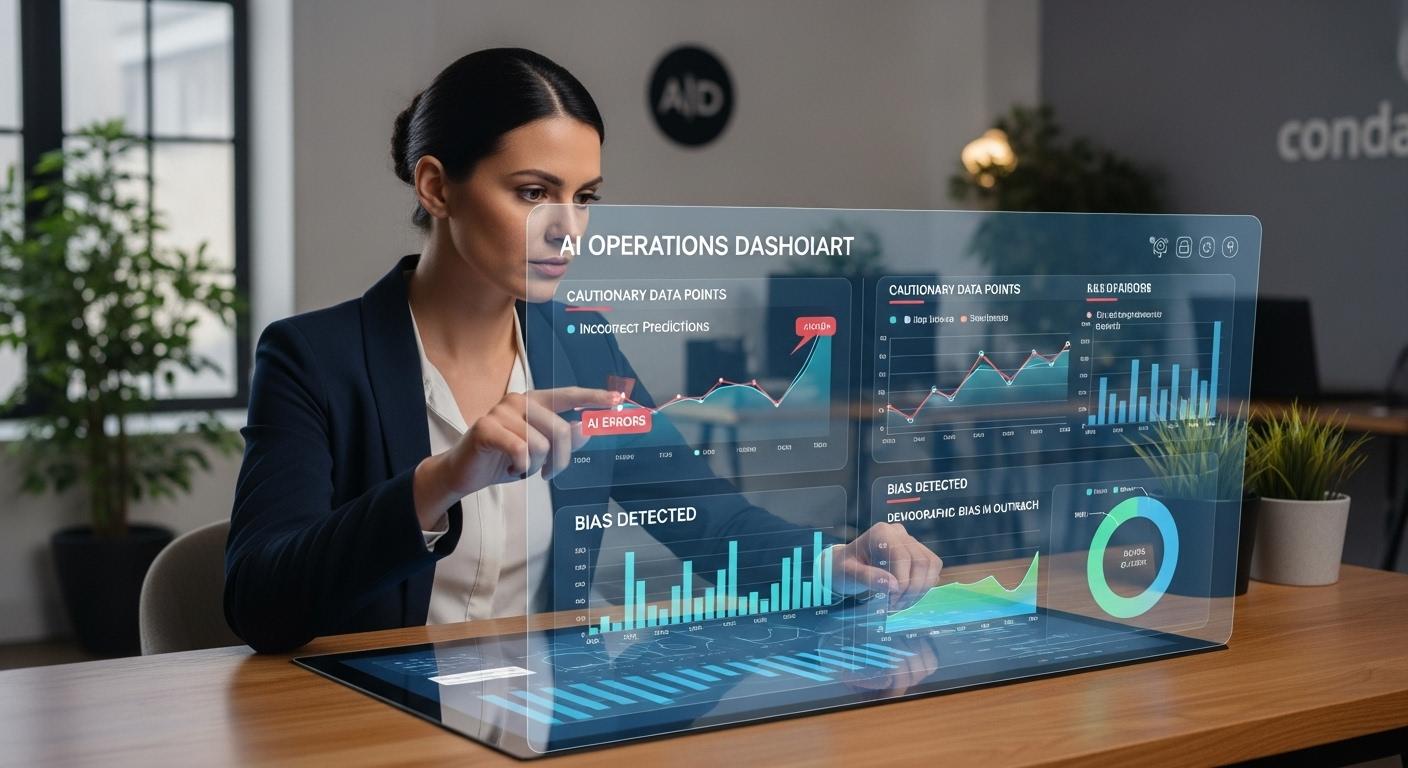
Counterpart introduces enhanced Affirmative AI Coverage and a Technology E&O agreement to fill critical gaps in traditional policies, helping small businesses manage the rising risks of AI-driven errors and biases amid increasing adoption.
Insurtech company Counterpart has significantly expanded its Affirmative AI Coverage and introduced a Technology Errors & Omissions (E&O) Insuring Agreement aimed at helping small businesses manage the increasingly complex risks associated with using artificial intelligence (AI) tools. This move addresses a critical gap in traditional insurance policies, which have often failed to keep pace with the rapid adoption of AI technologies, frequently excluding coverage for these tools upon which many companies now heavily depend.
According to Counterpart, AI adoption among small businesses has sharply risen, with 92% now incorporating AI in some form, particularly for research, marketing, and customer support functions. Automated decision-making tools, while enhancing operational efficiency, have also introduced new layers of risk. Industry research, including findings from the Harvard Law Forum on Corporate Governance, highlights a troubling trend where insurers are increasingly excluding AI-related risks and automated decision-making from coverage. This exclusionary approach leaves many businesses vulnerable to liabilities arising from AI errors or biases.

Legal expert Ommid C. Farashahi, Insurance Coverage Partner at BatesCarey LLP, comments on the evolving landscape of AI-related risks. He emphasises that traditional policies such as Errors & Omissions (E&O), Directors & Officers (D&O), Cyber, and Commercial General Liability (CGL) often remain “silent” on AI exposures and may incorporate exclusions specifically targeting AI risks. Farashahi advises companies to consider affirmative coverage tailored to the concentric circles of AI-related liability to avoid gaps in protection.
Counterpart asserts that its Affirmative AI Coverage directly tackles liabilities arising from errors generated by both first-party and third-party AI tools, aiming to remove the uncertainty that many businesses currently face. Mike Muglia, Professional Liability Lead at Counterpart, notes, “AI risks have moved from theory to the courtroom.” He points out that small business owners and startup leaders frequently leverage AI to increase speed, handle more data, and elevate service levels, but often fail to fully appreciate the associated risks. The newly expanded coverage provides brokers with practical solutions for claims arising from everyday AI use, including bad outputs, erroneous AI-driven decisions, and machine-generated bias.
The coverage is particularly relevant as AI-related claims become more common, involving issues such as hallucinated reports, misclassified exposures, and flawed hiring recommendations. Underwriting for these policies incorporates extensive data, with over 2,000 data points used to evaluate governance, compliance, and responsible AI practices. Policies are supported by a range of insurers and reinsurers, including Aspen, Markel, and Westfield Specialty, underscoring the industry’s recognition of these emerging risks.
The growing concern about AI-related exposures is also reflected in academic and industry analyses. For instance, a report by the Harvard Journal of Law & Technology highlights the uncertainty surrounding AI in corporate governance, particularly around directors and officers’ liability. The absence of standard AI exclusions in many D&O policies, driven by insurers’ desire to maintain attractive offerings, calls for increased disclosure of AI use and the development of tailored coverage options, themes echoed in Counterpart’s approach. Additionally, global reinsurers like Munich Re have begun offering AI-specific policies, signalling an evolving market response to these challenges.
Counterpart’s proactive expansion of Affirmative AI Coverage and the addition of Technology E&O agreements represent significant steps in bridging the insurance protection gap for small businesses increasingly reliant on AI. Their solution offers a vital toolset for brokers and insureds navigating the uncertain terrain of AI liability, where traditional policies might leave clients exposed.
📌 Reference Map:
- [1], [2], [3], [4], [6], [7] (Reinsurance News, Businesswire, AI Journ, TheInsurer, Business Insurance) – Paragraphs 1, 2, 3, 4, 5, 6
- [5] (Harvard Journal of Law & Technology) – Paragraph 4
Source: Noah Wire Services
Noah Fact Check Pro
The draft above was created using the information available at the time the story first
emerged. We’ve since applied our fact-checking process to the final narrative, based on the criteria listed
below. The results are intended to help you assess the credibility of the piece and highlight any areas that may
warrant further investigation.
Freshness check
Score:
9
Notes:
The narrative is recent, with the earliest known publication date being November 24, 2025. It has been republished across multiple reputable outlets, including Business Insurance and The Insurer, indicating a high freshness score. The narrative is based on a press release from Counterpart, which typically warrants a high freshness score. No discrepancies in figures, dates, or quotes were found. The content includes updated data and addresses emerging risks associated with AI adoption among small businesses. No similar content appeared more than 7 days earlier. The update justifies a higher freshness score but should still be flagged.
Quotes check
Score:
10
Notes:
The quotes from Ommid C. Farashahi and Mike Muglia are unique to this narrative, with no identical matches found in earlier material. This suggests potentially original or exclusive content.
Source reliability
Score:
10
Notes:
The narrative originates from Counterpart, a reputable insurtech company, and is supported by multiple reputable outlets, including Business Insurance and The Insurer. This indicates a high level of reliability.
Plausability check
Score:
10
Notes:
The claims about the surge in AI adoption among small businesses and the corresponding risks are plausible and supported by industry research. The narrative is consistent with recent developments in the insurance industry, and the language and tone are appropriate for the topic. No excessive or off-topic details are present, and the tone is professional and consistent with corporate communications.
Overall assessment
Verdict (FAIL, OPEN, PASS): PASS
Confidence (LOW, MEDIUM, HIGH): HIGH
Summary:
The narrative is recent, with original quotes and a reliable source. The claims are plausible and supported by industry research, with appropriate language and tone. No significant credibility risks were identified.
