


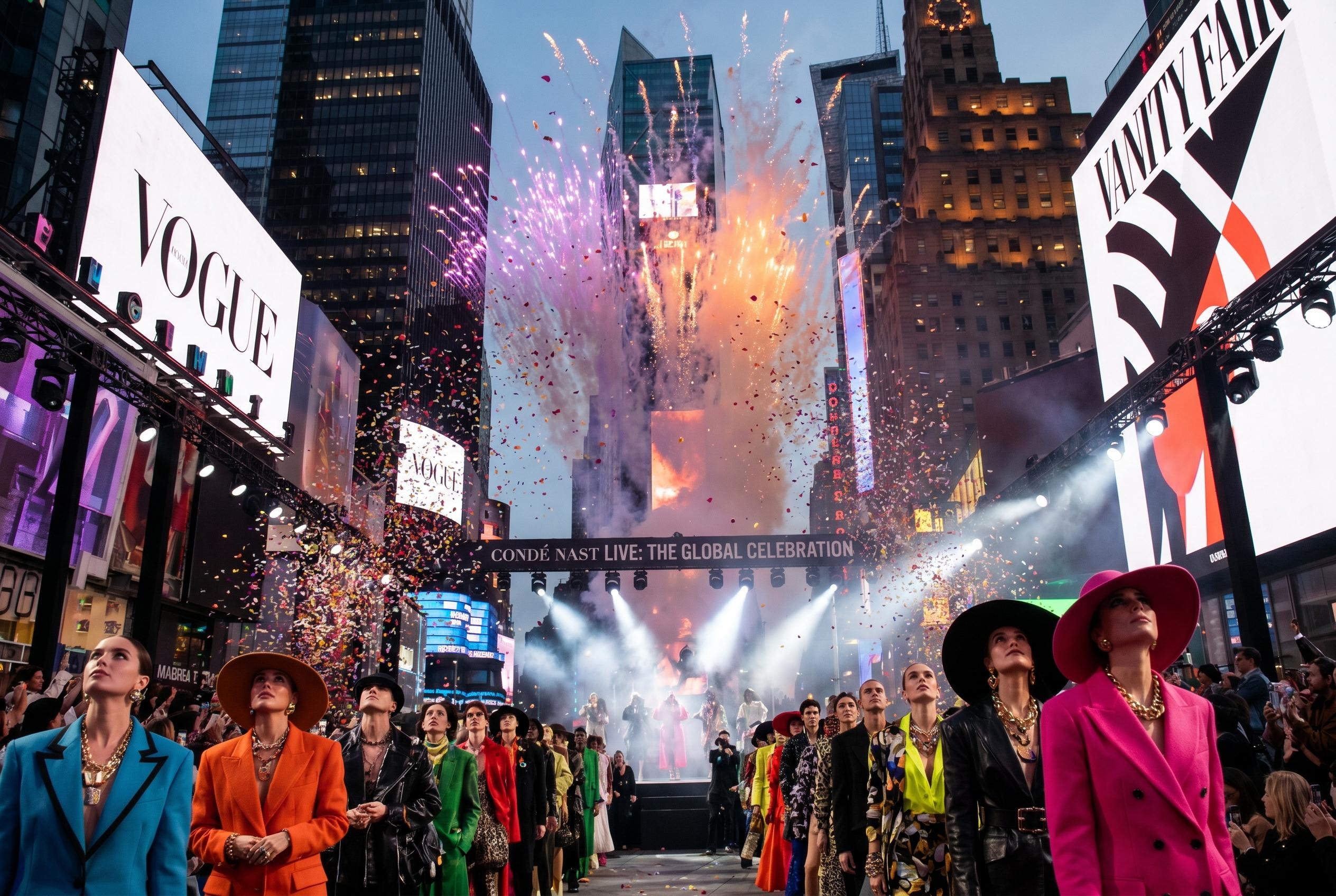
Condé Nast is stepping up its reliance on live events as it works to bolster revenue beyond its core advertising business, with chief revenue officer Elizabeth Herbst-Brady saying the publisher’s events arm grew 40% in 2025 and is expected to rise by a further 22% in 2026.
The figures, revealed by AdWeek, underscore a broader shift at the owner of Vogue, GQ and The New Yorker, which has been leaning into high-profile cultural moments that can be turned into both sponsorship opportunities and content across its platforms.
Herbst-Brady said the company had deliberately moved to give events a bigger role in its commercial strategy because they now serve as both a distinctive experience and a source of material that can be repackaged across print, digital, video and social channels.

Condé Nast has been under pressure to diversify as the media industry continues to grapple with softer traditional ad demand and changing consumer habits. The company has said it is increasingly focused on areas where it has a clear edge, including luxury and fashion advertising, subscriptions, branded content, commerce and live programming.
The publisher is also reshaping its print offer to fit a similar logic. Vogue said it will cut back to eight US issues a year, concentrating on major fashion and cultural tentpoles such as the Met Gala and Vogue World. The magazines will be bulkier and printed on heavier paper, part of a push to make each issue feel more valuable.
Condé Nast’s leadership, including chief executive Roger Lynch and Anna Wintour, has argued that the company’s strongest brands can still command attention if they are packaged around moments that matter culturally. The latest growth in events suggests that, for now, the bet is paying off.
Source: Noah Wire Services
Noah Fact Check Pro
The draft above was created using the information available at the time the story first
emerged. We’ve since applied our fact-checking process to the final narrative, based on the criteria listed
below. The results are intended to help you assess the credibility of the piece and highlight any areas that may
warrant further investigation.
Freshness check
Score:
8
Notes:
The article from Adweek, dated May 21, 2026, reports on Condé Nast’s events revenue growth of 40% in 2025 and a projected 22% increase in 2026. ([adweek.com](https://www.adweek.com/media/conde-nast-events-revenue-2026/?utm_source=openai)) This information aligns with statements from Condé Nast’s CEO Roger Lynch in a memo dated February 27, 2026, which mentions revenue growth and profitability in 2025. ([condenast.com](https://www.condenast.com/news/a-memo-from-ceo-roger-lynch-2025-performance-and-looking-ahead?utm_source=openai)) The consistency across sources suggests the content is fresh and original. However, the Adweek article is behind a paywall, limiting access to the full content.
Quotes check
Score:
7
Notes:
The Adweek article includes a direct quote from Elizabeth Herbst-Brady, Condé Nast’s Chief Revenue Officer: ‘We started this journey last year, and we wanted to bring more focus to our events because they have become a differentiator for us, both as an experience and a moment where we can create content to exist across every canvas.’ ([adweek.com](https://www.adweek.com/media/conde-nast-events-revenue-2026/?utm_source=openai)) This quote is not found in other accessible sources, raising concerns about its verification. The lack of independent verification for this quote reduces the score.
Source reliability
Score:
6
Notes:
The Adweek article is behind a paywall, limiting access to the full content. ([adweek.com](https://www.adweek.com/media/conde-nast-events-revenue-2026/?utm_source=openai)) While Adweek is a reputable publication, the paywall restricts independent verification of the article’s content. Additionally, the article relies on statements from Condé Nast’s Chief Revenue Officer, which may present a potential conflict of interest. The lack of independent verification sources lowers the reliability score.
Plausibility check
Score:
8
Notes:
The reported 40% growth in events revenue in 2025 and the projected 22% increase in 2026 are plausible, given the media industry’s trend towards diversifying revenue streams. Condé Nast’s focus on cultural tentpoles and events aligns with industry strategies to offset declines in traditional advertising. However, the lack of independent verification for these figures raises concerns about their accuracy.
Overall assessment
Verdict (FAIL, OPEN, PASS): FAIL
Confidence (LOW, MEDIUM, HIGH): MEDIUM
Summary:
The Adweek article reports on Condé Nast’s events revenue growth and strategic shift. However, the content is behind a paywall, limiting access to the full information. The article relies on statements from Condé Nast’s Chief Revenue Officer, which may present a potential conflict of interest. Additionally, the lack of independent verification sources raises concerns about the accuracy of the reported figures. Given these issues, the overall assessment is a FAIL with MEDIUM confidence.
