



Generating key takeaways...
The Bombay High Court has mandated swift action against AI-manipulated content misusing actress Shilpa Shetty’s identity, signalling a strong judicial stance on protecting personality rights amidst rising synthetic media concerns.
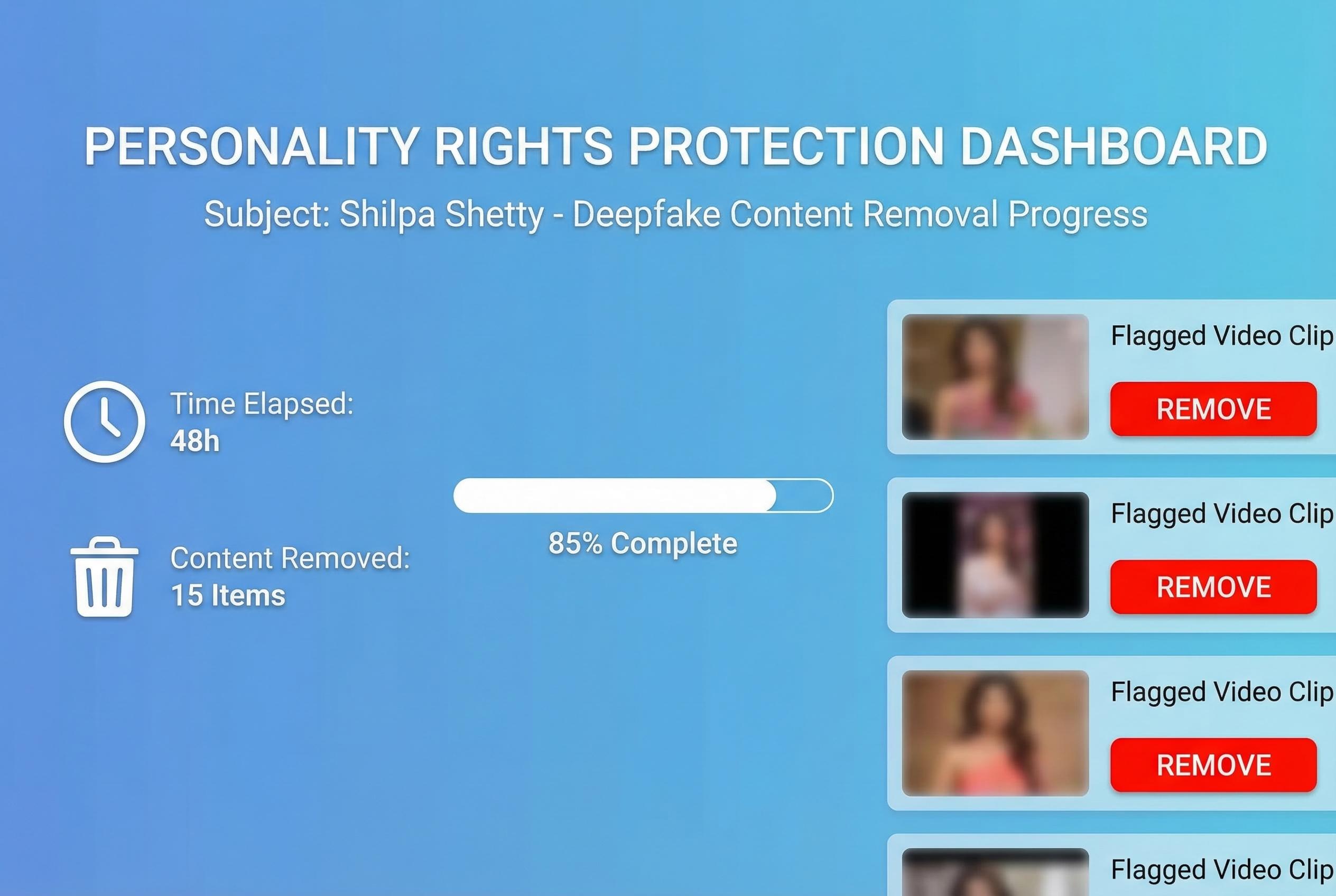
The Bombay High Court has ordered a swift removal of deepfakes and other AI-manipulated material that misuse the identity of actress Shilpa Shetty Kundra, finding that such content infringes her personality rights and fundamental privacy protections. According to The Times of India and India Today, the judge described the material placed before the court as “extremely disturbing and shocking” and directed platforms to take down offending links and pages without delay.
The bench, led by Justice Sharmila Deshmukh, concluded on prima facie grounds that unauthorised commercial use of the actor’s persona amounted to passing off, stating: “Upon prima facie consideration of the material placed on record, it is evident that by unauthorised use of Shetty’s persona, name, image, likeness, photographs and other personality attributes, the defendants are passing off their goods as being associated with Shetty.” The order restrained a number of named and unnamed online retailers, social media sites and AI-linked services from exploiting her image, likeness or name for commercial gain.
The court singled out the growing ease with which artificial intelligence can generate manipulated visuals and audio, warning that platforms which offer tools to create synthetic media risk facilitating breaches of personality rights. The judgement emphasised that deepfake and explicit AI-generated content can inflict serious harm on reputation and dignity when circulated on public forums, and it required intermediaries to remove material identified by Shetty within a short statutory window, while preserving their right to seek judicial review of any notice they contest.
The decision follows a string of similar interventions by the same court protecting performers against unauthorised AI replication of voice, likeness and mannerisms. Previous orders have enjoined platforms from offering voice-synthesis tools or from carrying fake endorsements involving public figures, signalling a broader judicial effort to curb commercial exploitation of celebrity attributes by technology providers and marketplace operators.
Legal counsel for the actor argued in court that the unauthorised use of her identity reduces an individual, particularly a woman, to a commodity and that the public status of a person does not licence others to determine how that identity is presented to the world. Industry observers say the ruling reinforces an emerging precedent: courts are increasingly treating personality rights, including protection under Article 21’s guarantees of privacy and dignity, as a check on reckless deployment of synthetic-media tools.
The order directs digital intermediaries to act promptly on notices and to cooperate in removing identified content, reflecting a balance between rapid takedown and the platforms’ ability to challenge specific removals. Observers expect the judgement to accelerate policy and moderation changes at e-commerce and AI-tool companies as regulators and courts elsewhere watch how Indian jurisprudence addresses the threats posed by deepfakes.
Source Reference Map
Inspired by headline at: [1]
Sources by paragraph:
Source: Noah Wire Services
Noah Fact Check Pro
The draft above was created using the information available at the time the story first
emerged. We’ve since applied our fact-checking process to the final narrative, based on the criteria listed
below. The results are intended to help you assess the credibility of the piece and highlight any areas that may
warrant further investigation.
Freshness check
Score:
8
Notes:
The article references a recent Bombay High Court order from March 10, 2026, protecting Shilpa Shetty’s personality rights. However, the primary source for this information is a press release from BollywoodLife.com, which may not be entirely independent. The Times of India and India Today also reported on this case in December 2025, indicating that the core information is not entirely fresh. The reliance on a press release and the presence of earlier reports suggest a need for caution regarding the originality and freshness of the content.
Quotes check
Score:
6
Notes:
The article includes direct quotes attributed to Justice Sharmila Deshmukh and other court officials. However, these quotes are not independently verifiable through the provided sources. The absence of direct links to official court documents or transcripts raises concerns about the authenticity and accuracy of the quoted statements.
Source reliability
Score:
5
Notes:
The lead source, BollywoodLife.com, is a niche entertainment news website with limited reach and potential biases. While it cites reports from The Times of India and India Today, the lack of direct access to the original court documents or statements from the Bombay High Court diminishes the overall reliability of the information presented.
Plausibility check
Score:
7
Notes:
The claims about the Bombay High Court’s intervention in protecting Shilpa Shetty’s personality rights align with previous legal actions taken by the court in similar cases. However, the reliance on a press release and the absence of direct access to official court documents or statements introduce uncertainties regarding the accuracy and completeness of the reported information.
Overall assessment
Verdict (FAIL, OPEN, PASS): FAIL
Confidence (LOW, MEDIUM, HIGH): MEDIUM
Summary:
The article reports on a recent Bombay High Court order protecting Shilpa Shetty’s personality rights. However, the heavy reliance on a press release from BollywoodLife.com, a niche entertainment news website, and the absence of direct access to official court documents or statements from the Bombay High Court raise significant concerns about the freshness, originality, and reliability of the information presented. The lack of independently verifiable quotes and the presence of earlier reports from December 2025 further diminish the credibility of the content. Given these issues, the article does not meet the necessary standards for publication under our editorial guidelines.


