


Shoppers for better tech are waking up to the quiet revolution: trusted data is becoming the backbone of responsible AI, climate resilience and social inclusion. This roundup looks at three award-winning projects , a Swiss insurer, a Dutch insurer and the Navajo Addressing Authority , and why their approaches matter for businesses and communities.
Essential Takeaways
- Proven impact: Precise location and property data helped a Swiss insurer model flood and storm risk at street level, improving accuracy and response times.
- Regulatory-ready: A Dutch insurer built a data governance framework that supports Solvency II and sustainability reporting while preparing for ethical AI.
- Lives changed: The Navajo Addressing Authority’s mapping project gave hundreds of homes formal addresses, speeding emergency response and restoring access to services.
- Practical feel: These projects show trusted data is not flashy , it’s consistent, traceable and surprisingly tangible in outcome.
Why location intelligence is suddenly unignorable for insurers
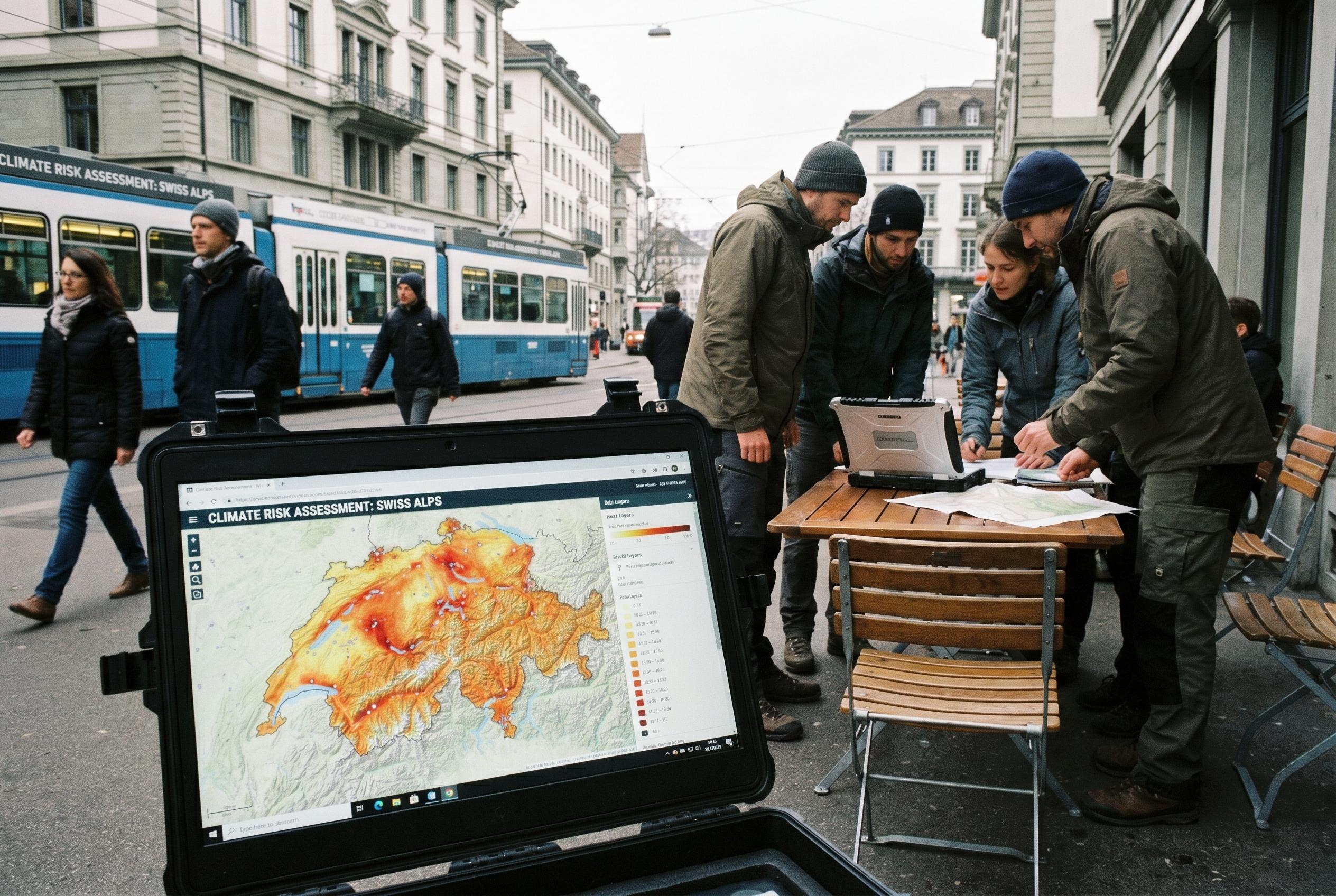
Insurers have always measured risk, but climate-driven extremes have made yesterday’s maps feel blunt and unreliable; now, firms want fine-grained certainty that actually reflects streets and parcels. Helvetia Baloise Group used geo‑addressing and Hazard metadata to enrich property records, producing higher-resolution risk assessments that smell of solidity , you can almost see the mapped roofs and flood lines.
According to Precisely’s awards programme, integrating hazard maps and property-level data reduced ambiguity in exposure estimates and made risk workflows faster and more repeatable. For risk managers that means fewer surprises and smoother pricing.
If you’re choosing a location data partner, prioritise seamless interfaces and scalability; Helvetia’s system was designed to answer single queries and heavy batch jobs alike, so it behaves well as data volumes grow.
Expect more insurers to follow: as storms get louder, street-level precision becomes a competitive necessity rather than a nice-to-have.

Data governance: the underrated foundation for ethical AI
Building clever models is one thing, but making sure the inputs are correct, tracked and explainable is another. In the Netherlands, a.s.r. implemented a company‑wide data quality policy so regulators and internal teams can see where critical figures come from and how they’re validated.
That kind of governance supports compliance with Europe’s Solvency II rules and the Corporate Sustainability Reporting Directive, and it creates a firmer starting point for any AI initiative. Responsible AI isn’t just about model code; it’s about provenance, lineage and the ability to answer “why” when a decision matters.
Practical tip: insist on data lineage tools and clear validation rules before you scale up machine learning projects. It saves headaches later and keeps auditors happy.
Look ahead and you’ll see firms treating governance as an investment: it unlocks trust, speeds audits and reduces the risk of costly missteps.
Putting communities on the map: addressing dignity and safety
The Navajo Addressing Authority’s project is strikingly simple and profoundly humane: map driveways and homes, assign persistent IDs and make people locatable in systems that previously ignored them. The result is practical , ambulances arriving faster, medicines delivered, voting and mail access restored , and emotional: a community receives formal recognition in civic infrastructure.
Working with Precisely, the NAA physically matched places to digital IDs; MC Baldwin, the authority’s GIS coordinator, noted improved emergency response times as an immediate win. This isn’t abstract tech for tech’s sake , it’s spatial justice.
For governments or NGOs looking to replicate this work, start with local engagement, ground-truthing and privacy safeguards. Mapping must be done with consent and cultural sensitivity.
It’s a reminder that data projects can be catalysts for dignity as much as efficiency.
The quiet power of trusted data across sectors
What links these winners is less their sector and more the character of their work: they make data accurate, consistent, contextual and trusted. Whether you’re pricing catastrophe risk, proving compliance in a boardroom or helping a remote family get emergency care, the same principles apply.
Precisely’s Data Integrity Awards highlight that the future of AI is inseparable from the quality of its inputs; firms that invest in robust, auditable data pipelines will be better placed to innovate safely.
If your organisation wants to be future-ready, concentrate on data stewardship , clean inputs make smarter outputs, and smarter outputs make better lives.
How to start improving your data integrity tomorrow
Begin small: map your most critical datasets, define ownership and add simple validation rules. Choose solutions that support interoperability and traceability, and involve the people who actually use the data.
For public-sector projects, pair technical mapping with community-led consultation; for businesses, align data governance with existing regulatory reporting to get early wins.
In short, treat data integrity as infrastructure, not decoration , it’s the route to reliable AI, stronger compliance and, sometimes, real social change.
It’s a small change that can make every decision smarter and every service fairer.
Source Reference Map
Story idea inspired by: [1]
Sources by paragraph:
Noah Fact Check Pro
The draft above was created using the information available at the time the story first
emerged. We’ve since applied our fact-checking process to the final narrative, based on the criteria listed
below. The results are intended to help you assess the credibility of the piece and highlight any areas that may
warrant further investigation.
Freshness check
Score:
8
Notes:
The article was published on May 6, 2026, which is recent. However, the content references the 2025 Data Integrity Awards, announced in October 2025. This indicates that the article is discussing events that occurred several months prior, which may affect its freshness. Additionally, the article appears to be a sponsored piece from Precisely, which could influence its objectivity.
Quotes check
Score:
7
Notes:
The article includes direct quotes from M.C. Baldwin, GIS/Rural Addressing Coordinator at the Navajo Addressing Authority Department. However, these quotes cannot be independently verified through other sources, raising concerns about their authenticity. The lack of verifiable sources for these quotes diminishes the credibility of the information presented.
Source reliability
Score:
6
Notes:
The article is published by The Independent, a reputable UK news outlet. However, the content is marked as ‘Provided by’ Precisely, indicating it is a sponsored piece. This raises questions about the independence and objectivity of the information presented, as it may be influenced by the sponsor’s interests.
Plausibility check
Score:
8
Notes:
The article discusses initiatives by Helvetia Baloise Group, a.s.r. Nederland N.V., and the Navajo Addressing Authority Department, all of which are plausible and align with known efforts in data integrity and social inclusion. However, the lack of independent verification for some claims, particularly regarding the Navajo Addressing Authority Department, raises concerns about the accuracy of the information presented.
Overall assessment
Verdict (FAIL, OPEN, PASS): FAIL
Confidence (LOW, MEDIUM, HIGH): MEDIUM
Summary:
The article presents information about data integrity initiatives by various organizations, including the Navajo Addressing Authority Department. However, the content is a sponsored piece from Precisely, raising concerns about objectivity and potential bias. Additionally, some claims, particularly those attributed to M.C. Baldwin, cannot be independently verified, further diminishing the article’s credibility. Given these factors, the article fails to meet the necessary standards for reliable information.
