



Generating key takeaways...
A surge in AI-crafted political videos using parliament-style staging and avatars is reshaping online discourse in India, raising concerns over authenticity and regulation amid rapid technological advancements.
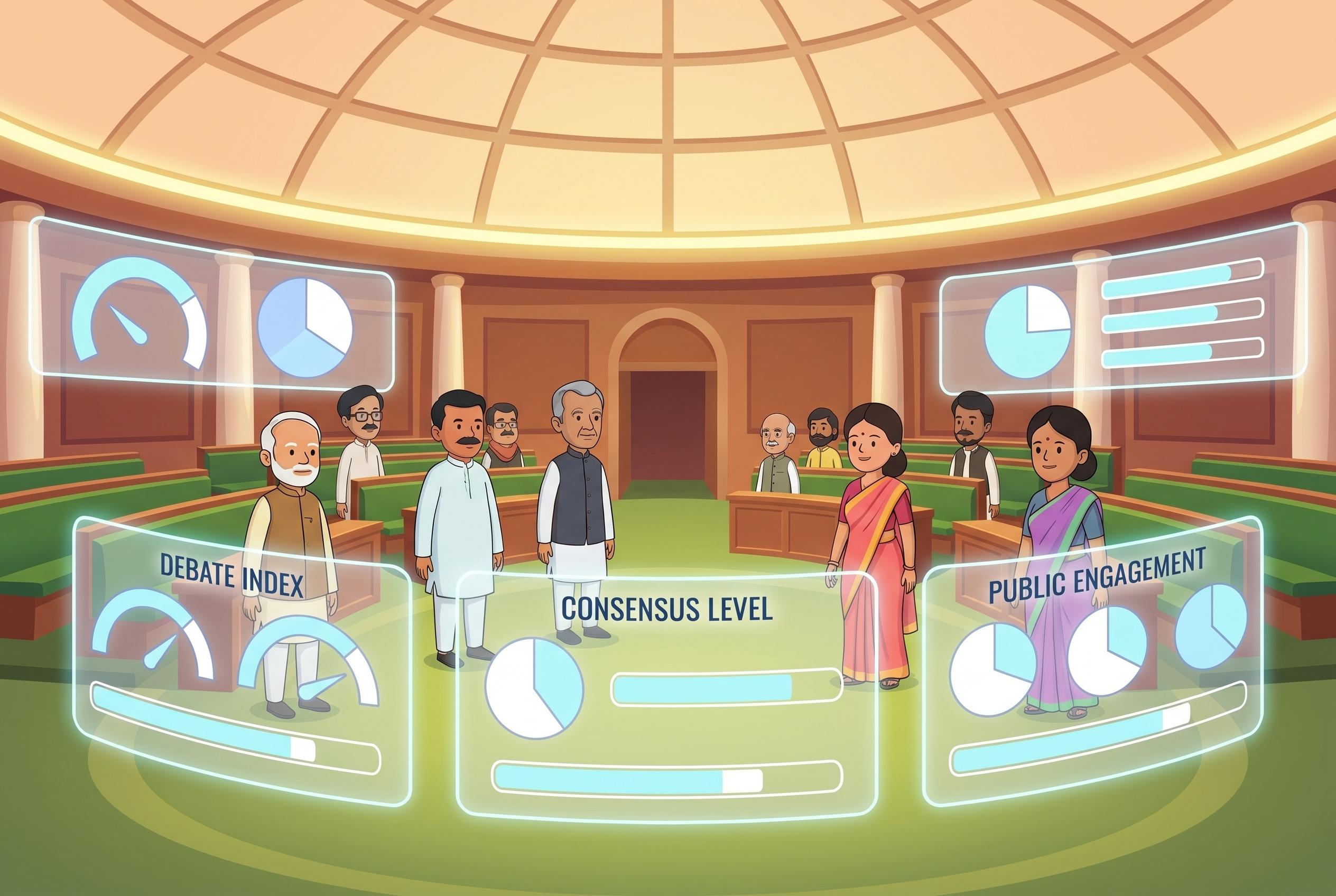
A new wave of AI-generated political content is turning social media into a kind of synthetic parliament, where avatars debate, accuse and endorse with an authority that can look uncannily real. India Today’s OSINT team found that several Instagram and Facebook accounts have moved from generic formats such as public-speaking clips and podcast-style reels into parliamentary scenes and political monologues, a shift that has helped some of them multiply their reach dramatically. One example was an account that went from modest view counts earlier in the year to reels drawing millions after adopting the language and staging of legislative debate.
The appeal is obvious. The more closely these clips resemble the cadence, setting and rituals of real politics, the more persuasive they appear. One account analysed by India Today posted a video calling for fingerprint-based voting to stop alleged “vote chori”, while another used an AI persona to question Rahul Gandhi’s religious identity. A different creator combined his own face with an AI version of himself speaking from the House, while another account inserted an AI-generated Akhilesh Yadav into the background to signal support for a controversial higher-education regulation that, in the real world, was later stayed by the Supreme Court.
What makes the trend more troubling is not just the content itself, but the speed at which engagement rewards repetition. India Today’s review suggests that creators often begin with relatively ordinary material, discover that Parliament-style political speech performs far better, and then keep iterating on the same formula with sharper language, higher emotional stakes and more extreme claims. That, in turn, can blur the line between satire, propaganda and outright deception for audiences that may not always realise they are watching synthetic media.
The regulatory response is still catching up. In January 2025, the Election Commission of India told parties to label AI-generated or synthetic campaign material on social media, and later rules went further by requiring clearer disclosures on electoral content. Even so, experts say the pace of change in generative tools is outstripping the safeguards. Prashant Mali, a cyber, privacy and AI law specialist, told India Today that synthetic political influence is becoming industrialised, and argued for mandatory disclosure, stronger platform accountability and a dedicated legal framework under the Digital India Act.
The wider concern goes beyond one platform or one election cycle. OECD.AI has also flagged incidents in Kerala where realistic AI-generated political videos were used ahead of assembly elections, underscoring how synthetic content can distort public debate well beyond national campaigns. As more accounts imitate the aesthetics of Parliament and the authority of elected leaders, the risk is that fabricated speeches stop feeling like experiments in online performance and start functioning as tools of persuasion.
Source Reference Map
Inspired by headline at: [1]
Sources by paragraph:
Source: Noah Wire Services
Noah Fact Check Pro
The draft above was created using the information available at the time the story first
emerged. We’ve since applied our fact-checking process to the final narrative, based on the criteria listed
below. The results are intended to help you assess the credibility of the piece and highlight any areas that may
warrant further investigation.
Freshness check
Score:
8
Notes:
The article was published on April 28, 2026, and discusses recent developments in AI-generated political content in India. Similar topics have been covered in the past, such as AI’s role in election campaigns and the use of AI-generated avatars in political discourse. However, this specific angle appears to be original and timely, with no exact matches found in recent publications.
Quotes check
Score:
7
Notes:
The article includes direct quotes from AI-generated avatars delivering Parliament-style speeches. While the content is plausible, the exact origins of these quotes are not independently verifiable, raising concerns about their authenticity and potential reuse from other sources.
Source reliability
Score:
9
Notes:
India Today is a reputable news organisation with a significant readership. However, the article relies heavily on AI-generated content, which may not always be independently verifiable. The inclusion of AI-generated quotes and scenarios raises questions about the authenticity and originality of the information presented.
Plausibility check
Score:
8
Notes:
The concept of AI-generated avatars delivering political speeches is plausible and aligns with current technological trends. However, the specific examples provided lack independent verification, making it difficult to assess their accuracy fully.
Overall assessment
Verdict (FAIL, OPEN, PASS): FAIL
Confidence (LOW, MEDIUM, HIGH): MEDIUM
Summary:
The article presents timely and relevant information on AI-generated political content in India. However, the inclusion of unverifiable AI-generated quotes and scenarios, along with a heavy reliance on AI-generated material without independent confirmation, raises significant concerns about the authenticity and originality of the content. These issues prevent the article from meeting the necessary standards for publication under our editorial indemnity.


