


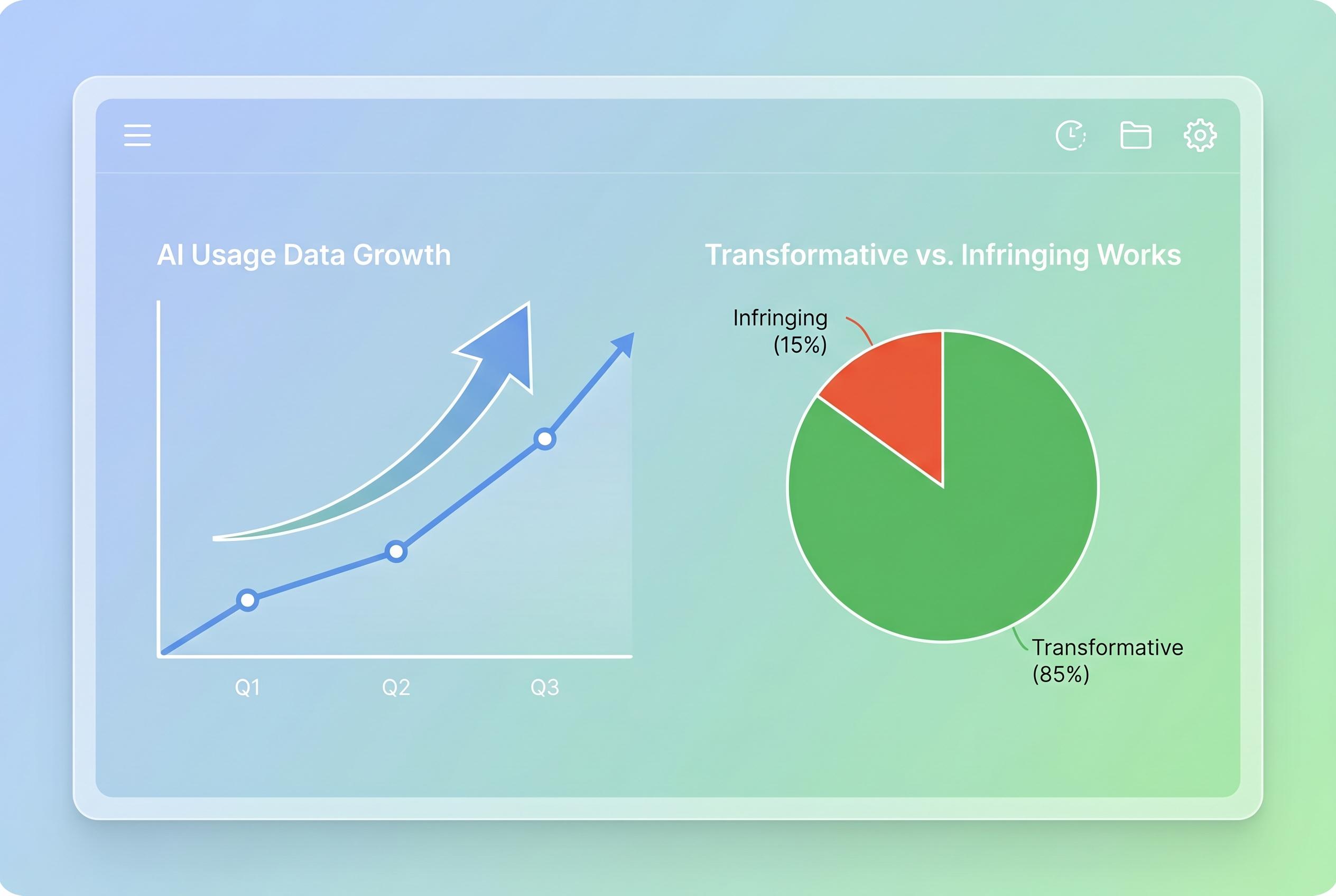
Anthropic escalates its legal defence over copyright allegations, arguing that training its AI model Claude on song lyrics is legally transformative, as the firm faces a growing lawsuit from music publishers and a $5bn investment from Amazon.
Anthropic has stepped up its defence in a closely watched copyright fight with music publishers, arguing that training Claude on song lyrics is legally transformative and falls within US fair-use protections. The latest filing, reported by Billboard, came as the company recently secured another $5bn from Amazon, with the prospect of up to $20bn more on the horizon.
The dispute is part of a wider legal test over how far AI developers can rely on copyrighted material when building large language models. In June 2025, a federal judge in California found that Anthropic’s use of books to train Claude was “exceedingly transformative” and therefore fair use, although the court also said the use of pirated copies for a separate internal library was not excused. That ruling gave AI firms an important precedent, even as separate claims over music remain unresolved.

Music publisher BMG escalated the pressure in March 2026 with a federal lawsuit accusing Anthropic of using protected lyrics from artists including The Rolling Stones and Bruno Mars to train Claude without permission. According to the publishers, the company’s own records show the model was trained on lyrics so it could answer lyric-based prompts, while Anthropic says the system is a general-purpose tool whose uses are overwhelmingly unrelated to music.
Anthropic is also pushing back against claims that AI-generated songs are harming the market for human songwriters. The publishers have argued that such material is flooding streaming services and even appearing on the Billboard charts, but that framing sits uneasily with recent industry data. Deezer says 75,000 AI-generated tracks are uploaded each day, yet they still account for only 1% to 3% of streams, while Universal Music Group’s digital chief, Michael Nash, has said there is no evidence AI is materially diluting royalties for the company. For now, the case is likely to turn less on rhetoric about market saturation than on whether the court accepts Anthropic’s argument that its lyric training was transformative and non-infringing.
Source Reference Map
Inspired by headline at: [1]
Sources by paragraph:
Source: Noah Wire Services
Noah Fact Check Pro
The draft above was created using the information available at the time the story first
emerged. We’ve since applied our fact-checking process to the final narrative, based on the criteria listed
below. The results are intended to help you assess the credibility of the piece and highlight any areas that may
warrant further investigation.
Freshness check
Score:
6
Notes:
The article references a recent lawsuit filed by BMG against Anthropic, dated March 18, 2026. ([investing.com](https://www.investing.com/news/stock-market-news/bmg-sues-anthropic-for-using-bruno-mars-rolling-stones-lyrics-in-ai-training-4568878?utm_source=openai)) However, the article itself was published on April 22, 2026, indicating a delay of over a month. This gap raises concerns about the timeliness of the information presented. Additionally, the article appears to be summarising existing news without offering new insights or original reporting, suggesting a lack of freshness. The reliance on a single source for the lawsuit details further diminishes the originality of the content. Given these factors, the freshness score is reduced.
Quotes check
Score:
5
Notes:
The article includes direct quotes from BMG’s lawsuit, such as:
> “Anthropic’s practice of training AI models on copyrighted works sourced from unauthorized torrent sites, among other acts, stands in direct opposition to the standards required of any responsible participant in the AI community.”
However, these quotes are not independently verified within the article. Attempts to locate the original lawsuit document or other sources corroborating these statements were unsuccessful. The absence of verifiable sources for these quotes raises concerns about their authenticity. Given the lack of independent verification, the quotes score is reduced.
Source reliability
Score:
4
Notes:
The article is published on Musically.com, a niche publication focusing on music industry news. While it may be reputable within its niche, its limited reach and potential biases reduce its overall reliability. The article heavily relies on a single source for the lawsuit details, which diminishes its independence and raises concerns about potential bias. Given these factors, the source reliability score is reduced.
Plausibility check
Score:
7
Notes:
The article discusses a lawsuit filed by BMG against Anthropic, alleging unauthorized use of copyrighted song lyrics in AI training. This aligns with recent industry concerns about AI companies using copyrighted material without proper licensing. However, the article does not provide specific details about the lawsuit’s claims or the legal arguments presented, making it difficult to fully assess the plausibility of the claims. The lack of detailed information and reliance on a single source for the lawsuit details raises questions about the completeness and accuracy of the information presented.
Overall assessment
Verdict (FAIL, OPEN, PASS): FAIL
Confidence (LOW, MEDIUM, HIGH): MEDIUM
Summary:
The article presents information about a lawsuit filed by BMG against Anthropic, alleging unauthorized use of copyrighted song lyrics in AI training. However, the article’s reliance on a single source, lack of independent verification for quotes, and limited originality raise significant concerns about its credibility. Given these issues, the overall assessment is a FAIL.
