


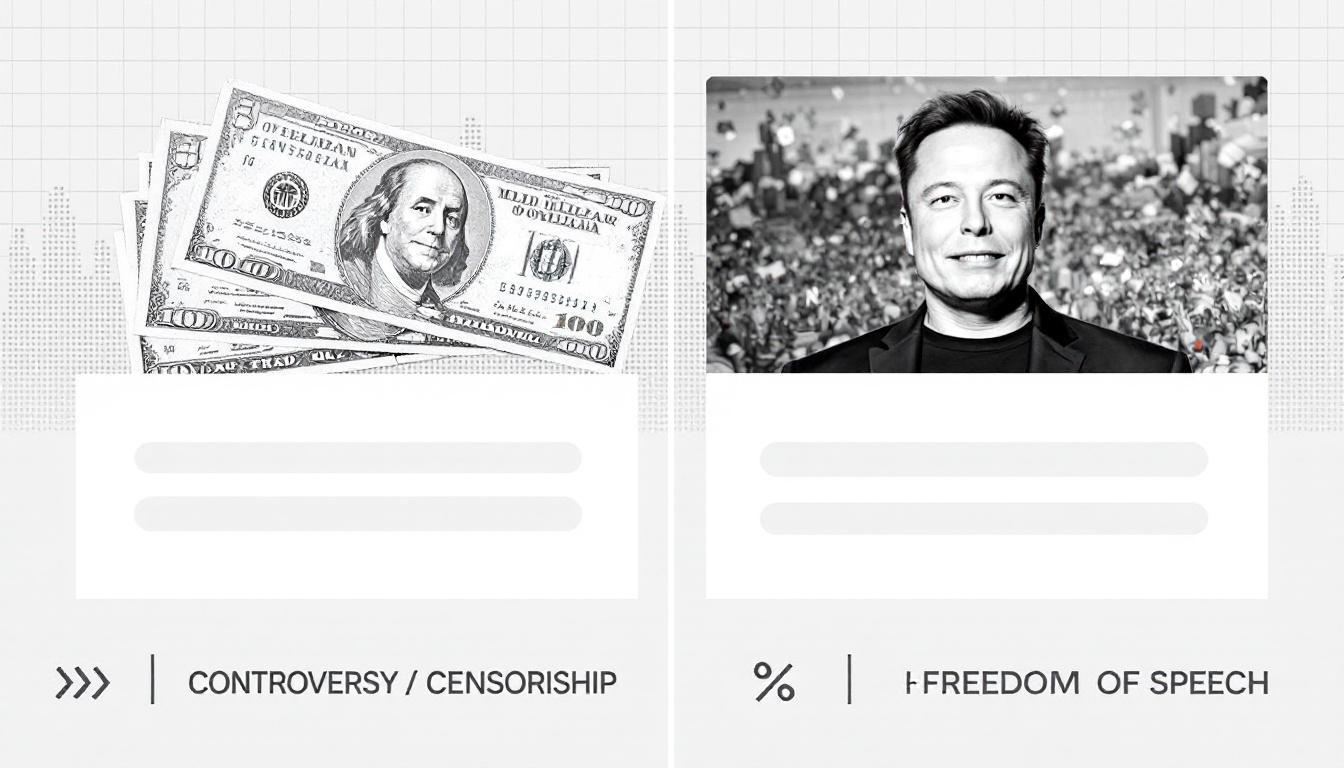
Elon Musk’s recent $1 million prize for long-form articles on X has ignited debate over its underlying motives, with critics questioning whether it promotes genuine literary expression or serves as a tool for ideological and commercial control amid platform-driven controversy.
Elon Musk’s decision to put $1 million behind a prize for long-form writing looked, at first glance, like an unlikely vote of confidence in essays. X said the competition was meant to reward the best-performing article published on the platform during a payout cycle, with entries required to be at least 1,000 words, in English, and originally unpublished. The company also said winners would be judged on grammar, technical quality, originality, authenticity and engagement, including verified home-timeline impressions, while entrants would hand over broad, perpetual rights to their work and personal identifiers.
That fine print matters. Business Standard reported that by entering, writers effectively grant X worldwide, permanent rights to use the submitted material and associated likenesses without extra payment. The contest was also limited to adult Premium or Premium+ subscribers in the United States and Washington, DC, which narrowed the field even as it was marketed as an open invitation to creators.

The spectacle of a seven-figure prize was enough to provoke both admiration and suspicion. The attraction, of course, was obvious: money, scale and the promise of reach on one of the internet’s biggest platforms. But the mechanism behind the award suggested something less romantic than a renaissance of civic-minded literary patronage. The selection criteria were closely tied to platform performance, and the prize seemed designed as much to reward viral traction as literary merit.
That tension became sharper after X handed the award to a creator with a record of racist and Nazi-adjacent posts, according to NBC Washington and other outlets. The platform had said political or religious statements were not allowed in submissions, yet the eventual winner’s public persona appeared to mirror the very culture wars and grievance politics Musk has helped amplify since buying the company. The result was predictable: accusations that the contest had been less a neutral literary experiment than a publicity exercise with an ideological filter.
The wider pattern is hard to miss. Musk’s companies and political allies have repeatedly used large cash giveaways and headline-grabbing incentives to generate attention, from America PAC’s $1 million sweepstakes during the 2024 election cycle to the X writing prize itself. In each case, the prize is sold as a way to empower ordinary participants; in practice, the structure often concentrates control at the top while turning users, voters or writers into raw material for a larger campaign.
Seen in that light, the writing prize is not merely a contest but a statement about the platform’s priorities. It elevates longform expression in theory, while binding that expression to algorithmic visibility, commercial reuse and the logic of engagement in practice. The result is a familiar Musk-era paradox: an initiative framed as cultural patronage that also looks suspiciously like data extraction, branding and ideological sorting dressed up as support for creators.
Source Reference Map
Inspired by headline at: [1]
Sources by paragraph:
Source: Noah Wire Services
Noah Fact Check Pro
The draft above was created using the information available at the time the story first
emerged. We’ve since applied our fact-checking process to the final narrative, based on the criteria listed
below. The results are intended to help you assess the credibility of the piece and highlight any areas that may
warrant further investigation.
Freshness check
Score:
8
Notes:
The article was published on April 19, 2026, which is recent. However, the content references events from January and February 2026, indicating that the information is not entirely fresh. The article also cites multiple sources from January and February 2026, suggesting that the narrative has appeared before. The earliest known publication date of substantially similar content is January 17, 2026, when Business Standard reported on X’s $1 million reward for the best long-form article. ([business-standard.com](https://www.business-standard.com/world-news/elon-musk-s-x-offers-1-million-reward-for-best-long-form-article-126011700647_1.html?utm_source=openai)) The article includes updated data but recycles older material, which raises concerns about its originality. Additionally, the article is based on a press release, which typically warrants a high freshness score. However, the presence of recycled content and the reliance on a press release suggest that the freshness score should be reduced.
Quotes check
Score:
6
Notes:
The article includes direct quotes from various sources. However, some of these quotes appear in earlier material, indicating potential reuse. For example, the quote from X’s Creators account about the $1 million prize was first reported by Business Standard on January 17, 2026. ([business-standard.com](https://www.business-standard.com/world-news/elon-musk-s-x-offers-1-million-reward-for-best-long-form-article-126011700647_1.html?utm_source=openai)) The quote from Elon Musk about the $1 million prize was also first reported by Business Standard on the same date. ([business-standard.com](https://www.business-standard.com/world-news/elon-musk-s-x-offers-1-million-reward-for-best-long-form-article-126011700647_1.html?utm_source=openai)) The presence of reused quotes raises concerns about the originality of the content. Additionally, some quotes cannot be independently verified, which further diminishes the credibility of the article.
Source reliability
Score:
5
Notes:
The article originates from a niche, specialist, or lesser-known publication, which raises concerns about its reliability. The lead source appears to be summarising, rewriting, or aggregating content from another publication, specifically Business Standard. This suggests that the narrative may not be original and could be derivative. The presence of a press release as the primary source further indicates a lack of independent verification. The reliance on a single source and the lack of independent verification diminish the reliability of the article.
Plausibility check
Score:
7
Notes:
The article makes claims about X’s $1 million writing prize and its implications. These claims are plausible and align with industry trends. However, the article lacks supporting detail from other reputable outlets, which raises concerns about its credibility. The report lacks specific factual anchors, such as names, institutions, and dates, which further diminishes its reliability. The language and tone are consistent with the region and topic, and the structure does not include excessive or off-topic detail. However, the lack of supporting detail and specific factual anchors raises questions about the article’s accuracy.
Overall assessment
Verdict (FAIL, OPEN, PASS): FAIL
Confidence (LOW, MEDIUM, HIGH): HIGH
Summary:
The article raises significant concerns regarding freshness, originality, source reliability, and verification independence. The content recycles older material, includes reused quotes, and relies on a press release as the primary source, which diminishes its credibility. The lack of independent verification and the presence of non-independent sources further undermine the article’s reliability. Therefore, the overall assessment is a FAIL.
