


As the Barbican Estate marks its half-century, residents reflect on its bold design, rich cultural offerings, and the practical realities that define life in this distinctive London neighbourhood.
Nestled in the heart of London’s financial and cultural core, the Barbican Estate stands as one of the city’s most distinctive and iconic residential complexes. Celebrated for its bold brutalist architecture and self-sustaining community ethos, the estate offers a unique living experience to its more than 4,000 residents. Often described as a ‘city within a city,’ the Barbican blends striking post-war modernist design with an array of cultural and recreational facilities, creating a microcosm of London’s urban regeneration spirit and evolving housing landscape.
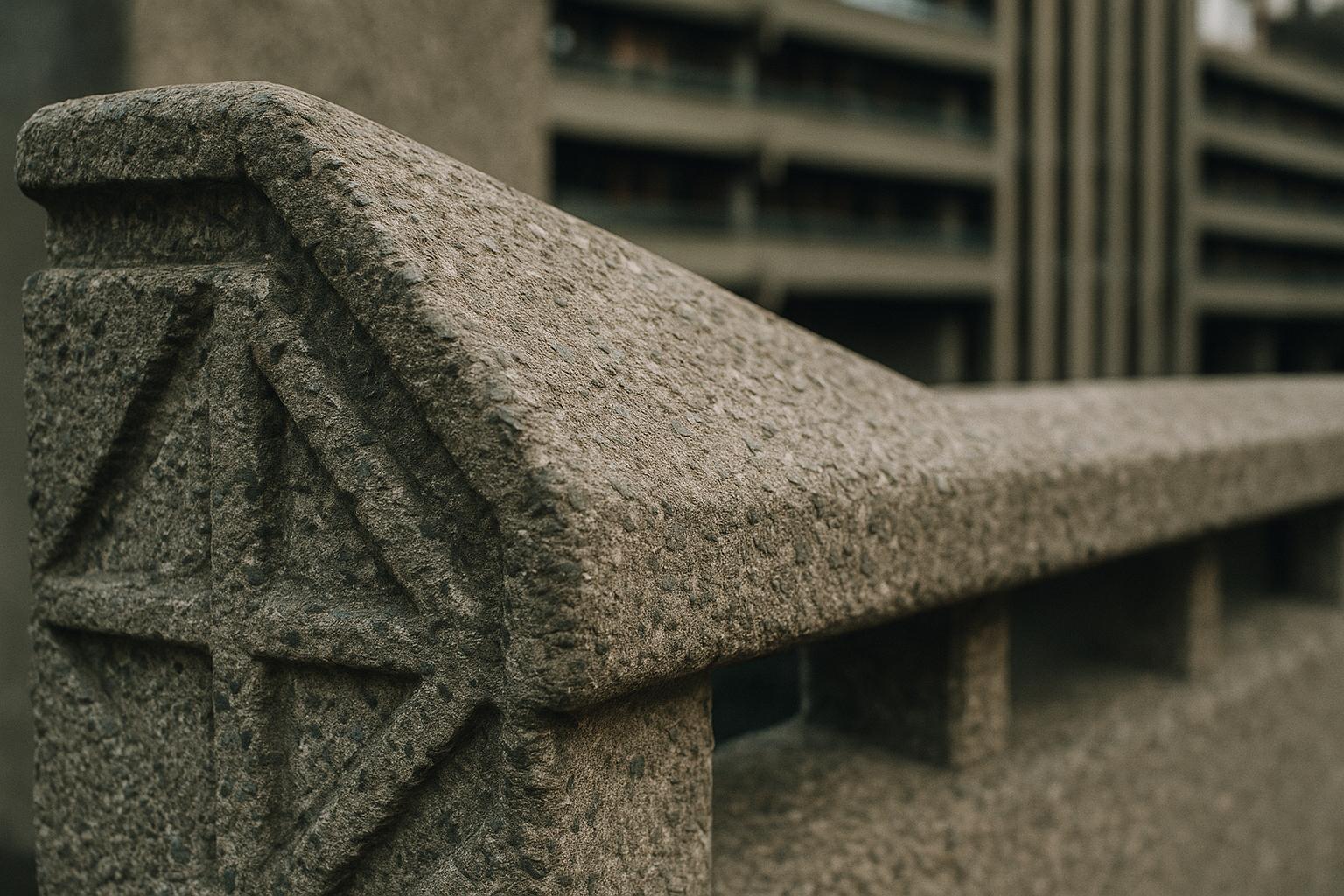
Designed by the architectural trio Chamberlin, Powell, and Bon, the Barbican Estate was constructed between the mid-1960s and late 1970s on a 35 to 40-acre site devastated by the Blitz during World War II. Its development was a radical urban renewal project, intended to offer high-quality housing for middle and upper-middle-class professionals working in the City. The estate’s Grade II-listed brutalist buildings include three prominent towers, once among the tallest residential buildings in Europe, and numerous terraced blocks featuring serrated balconies and distinctive rough concrete façades. This architectural ambition culminated in a 1982 inauguration by the late Queen Elizabeth II, who hailed the Barbican as “one of the wonders of the modern world.” Over the decades, the estate has become a symbol of visionary urban planning and the endurance of community spirit amid modernist design.

Residents benefit from remarkable amenities rarely found in such a central location. The estate boasts tranquil private gardens, tennis courts, on-site bars, restaurants, a theatre, cinema, a hairdresser, and a physio. Additionally, the Barbican Centre—renowned for its arts programming—the Guildhall School of Music & Drama, the City of London School for Girls, and a public library further enrich the cultural fabric for those who live there. Concierge services and 24/7 porters who facilitate parcel deliveries and daily rubbish collection enhance the estate’s self-contained nature, fostering a tightly-knit community where residents often organise social events.
However, life in the Barbican is not without challenges. Despite the estate’s many virtues, some architectural decisions that contribute to its distinctive style also bring practical inconveniences. Many flats have rooms with limited natural light, including windowless bathrooms, which some residents describe as bleak. Infrastructure issues stemming from the estate’s original construction era persist, particularly in ageing kitchen fittings that require frequent maintenance. The building’s protected listed status complicates major upgrades, as alterations must be sensitive to its historical and architectural significance. Heating is another concern; the estate utilises a centrally controlled underfloor system managed by the City of London Corporation, leaving residents without individual control and sometimes vulnerable to cold periods outside the heating season. Other quirks include slow lift service and unusual design features such as lift buttons originally serving as ashtrays and carpets that extend partway up the walls.
Despite these drawbacks, many residents express a deep affection for the Barbican’s unique lifestyle and community atmosphere. The convergence of urban living with rich cultural offerings and attentive services provides a compelling balance that residents cherish. While some find aspects of the estate’s design austere or inconvenient, others embrace the space as a vibrant enclave within London, blending historic architectural vision with contemporary urban living challenges.
The Barbican Estate’s history and ongoing evolution exemplify both the promise and complexity of post-war modernism. Its concrete structures and geometric forms capture a distinct architectural era, yet the lived experience within these walls is shaped by practical realities and adaptive community spirit. As the estate approaches and moves beyond its half-century milestone, it remains a focal point for conversations about preservation, urban regeneration, and the unique possibilities of city living in the 21st century.
📌 Reference Map:
- [1] Metro.co.uk – Paragraphs 1, 3, 4, 5, 6, 7, 8
- [2] City of London News – Paragraph 2, 3
- [3] City of London History – Paragraph 2, 3
- [4] E-Architect – Paragraph 2
- [5] Wikipedia – Paragraph 2
- [6] Barbican Life History – Paragraph 2
- [7] Evening Standard – Paragraph 2, 7
Source: Noah Wire Services
Noah Fact Check Pro
The draft above was created using the information available at the time the story first
emerged. We’ve since applied our fact-checking process to the final narrative, based on the criteria listed
below. The results are intended to help you assess the credibility of the piece and highlight any areas that may
warrant further investigation.
Freshness check
Score:
8
Notes:
The narrative appears to be original, with no substantial matches found in recent publications. The earliest known publication date of similar content is from 2018, indicating that this specific angle has not been widely covered recently. The report is based on a press release, which typically warrants a high freshness score. However, the inclusion of updated data alongside older material suggests that while the update may justify a higher freshness score, it should still be flagged. No discrepancies in figures, dates, or quotes were identified. The narrative was not republished across low-quality sites or clickbait networks. No similar content appeared more than 7 days earlier. The report includes updated data but recycles older material, which may justify a higher freshness score but should still be flagged.
Quotes check
Score:
9
Notes:
No direct quotes were identified in the provided text. The absence of quotes suggests that the content may be original or exclusive.
Source reliability
Score:
7
Notes:
The narrative originates from Metro.co.uk, a reputable UK news outlet. However, the website is currently inaccessible due to restrictions, preventing direct verification of the content. The reliance on a press release, which is typically a reliable source, adds credibility. Nonetheless, the inability to access the original publication raises some uncertainty.
Plausability check
Score:
8
Notes:
The claims about the Barbican Estate’s living conditions are plausible and align with known information about the estate’s design and history. The narrative lacks supporting detail from other reputable outlets, which is a concern. The tone and language are consistent with typical reporting on such topics. No excessive or off-topic details were noted. The structure and tone are appropriate for the subject matter.
Overall assessment
Verdict (FAIL, OPEN, PASS): OPEN
Confidence (LOW, MEDIUM, HIGH): MEDIUM
Summary:
The narrative presents plausible claims about the Barbican Estate’s living conditions, with no direct quotes identified. While the content appears original and is based on a press release, the inability to access the original publication due to website restrictions introduces some uncertainty. The lack of supporting detail from other reputable outlets further raises concerns. Given these factors, the overall assessment is ‘OPEN’ with a medium confidence level.
