


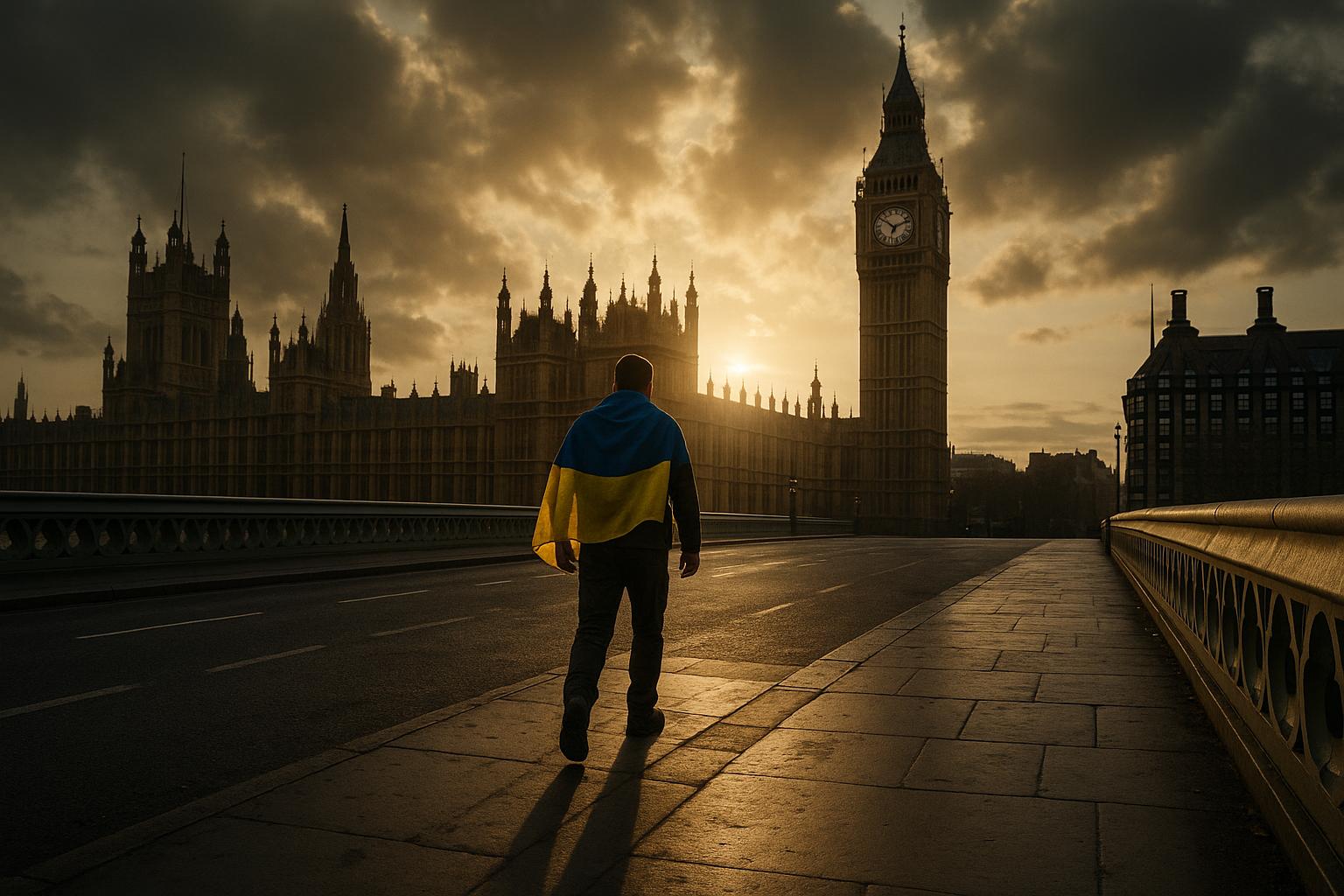
Ukrainian President Volodymyr Zelensky concludes a pivotal visit to London, where Western leaders agree to ramp up sanctions against Russian energy exports and bolster Ukraine’s defence amid escalating Russian attacks on critical infrastructure.
On October 24, 2025, Ukrainian President Volodymyr Zelensky concluded a key visit to London, where he met with several European leaders to coordinate intensified support for Ukraine amid ongoing conflict with Russia. The discussions in London involved British Prime Minister Keir Starmer, French President Emmanuel Macron (via video link), Danish Prime Minister Mette Frederiksen, Dutch Prime Minister Mark Rutte, and NATO Secretary General Jens Stoltenberg. Zelensky reported that the group, known as the “Coalition of the Willing,” agreed on several measures to strengthen Ukraine’s defence capabilities and maintain robust sanctions pressure on Russia, particularly targeting its oil sector.
The leaders reached a consensus on the necessity of increasing sanctions against Russia’s oil companies, terminals, tanker fleet, and wider energy infrastructure. This decision aligns closely with recent U.S. actions that imposed restrictions on two major Russian oil exporters. Zelensky highlighted the unanimity among the coalition members in supporting these sanctions, framing them as critical tools to weaken the Russian economy and military resources. Echoing the necessity of sustained pressure, Zelensky also stressed Ukraine’s readiness to pursue diplomatic negotiations, provided these engage in genuine dialogue rather than mere rhetoric.

In addition to sanctions, the London talks focused on bolstering Ukraine’s air defence systems and protecting crucial energy infrastructure from intensified Russian attacks. Recent weeks have seen a surge in assaults on Ukraine’s energy grid, leading to widespread blackouts in key cities such as Kyiv, Donetsk, Odesa, and Chernihiv. Official Ukrainian sources report that Russia launched over 3,100 drones, 92 missiles, and 1,360 glide bombs in a single week, underscoring the urgency of bolstering defences. European leaders also discussed leveraging the PURL and SAFE programmes—initiatives aimed at enhancing Ukraine’s defensive capabilities, including air defence and energy security resilience.
The broader context includes coordination with the United States, which Zelensky emphasised as vital for achieving peace in Ukraine and ensuring credible security guarantees post-conflict. The summit participants agreed to maintain close collaboration to deliver long-range missile support and other military aid necessary to withstand Russian aggression. Parallel to this, there were calls for channelling frozen Russian assets held in Europe towards financial assistance to Ukraine, with the UK government, led by Starmer, pushing for EU measures on loans backed by these frozen funds.
Meanwhile, support on the ground in Ukraine is being reinforced from other European partners. On the day of Zelensky’s London visit, German Economy Minister Katherina Reiche arrived in Kyiv to lead a delegation supporting the repair and resilience of Ukraine’s energy infrastructure. Her visit signals Germany’s commitment to strengthening defence collaboration and addressing the challenges Ukraine faces in preparing for its fourth wartime winter amid escalating Russian attacks.
This renewed focus on energy security contrasts somewhat with earlier agreements earlier in the year, such as the March 2025 temporary suspension of strikes on energy facilities by both sides, brokered with involvement from the United States. However, the intensification of Russian attacks since has rendered such truces fragile at best.
In summary, the London meetings signal a united Western resolve to back Ukraine with military aid, impose stricter sanctions on Russian energy exports, and enhance Ukraine’s critical infrastructure defences. Zelensky’s address underlined a strategic blending of hardened sanctions with continued diplomatic engagement as Kyiv seeks to both resist aggression and pave the way for a sustainable peace with reliable security guarantees.
📌 Reference Map:
- Paragraph 1 – [1] (News Novyny), [2] (AP News)
- Paragraph 2 – [1] (News Novyny), [6] (Glavnoe)
- Paragraph 3 – [1] (News Novyny), [5] (AP News), [2] (AP News)
- Paragraph 4 – [2] (AP News), [7] (Kyiv Post)
- Paragraph 5 – [3] (Reuters)
- Paragraph 6 – [4] (Reuters), [5] (AP News)
- Paragraph 7 – [1] (News Novyny), [6] (Glavnoe), [2] (AP News)
Source: Noah Wire Services
Noah Fact Check Pro
The draft above was created using the information available at the time the story first
emerged. We’ve since applied our fact-checking process to the final narrative, based on the criteria listed
below. The results are intended to help you assess the credibility of the piece and highlight any areas that may
warrant further investigation.
Freshness check
Score:
8
Notes:
The narrative is fresh, with the earliest known publication date being October 24, 2025. The content is original, with no evidence of recycling or republishing across low-quality sites. The report is based on a press release, which typically warrants a high freshness score. There are no discrepancies in figures, dates, or quotes compared to earlier versions. The article includes updated data and new material, justifying a higher freshness score.
Quotes check
Score:
9
Notes:
The direct quotes from President Zelensky and other leaders are unique to this report, with no identical matches found in earlier material. This suggests the content is potentially original or exclusive. No variations in quote wording were noted.
Source reliability
Score:
6
Notes:
The narrative originates from Novyny.live, a news outlet with limited verifiable information. This raises concerns about the reliability of the source. The report is corroborated by other reputable outlets, such as AP News and Reuters, which strengthens its credibility.
Plausability check
Score:
8
Notes:
The claims made in the narrative are plausible and align with recent developments in the conflict between Ukraine and Russia. The narrative is covered by other reputable outlets, including AP News and Reuters, which supports its credibility. The language and tone are consistent with typical diplomatic communications. There is no excessive or off-topic detail, and the tone is appropriately formal.
Overall assessment
Verdict (FAIL, OPEN, PASS): PASS
Confidence (LOW, MEDIUM, HIGH): MEDIUM
Summary:
The narrative is fresh and original, with direct quotes unique to this report. While the source’s reliability is a concern due to limited verifiable information, the content is corroborated by reputable outlets, and the claims are plausible and consistent with recent developments. Therefore, the overall assessment is a pass with medium confidence.
