


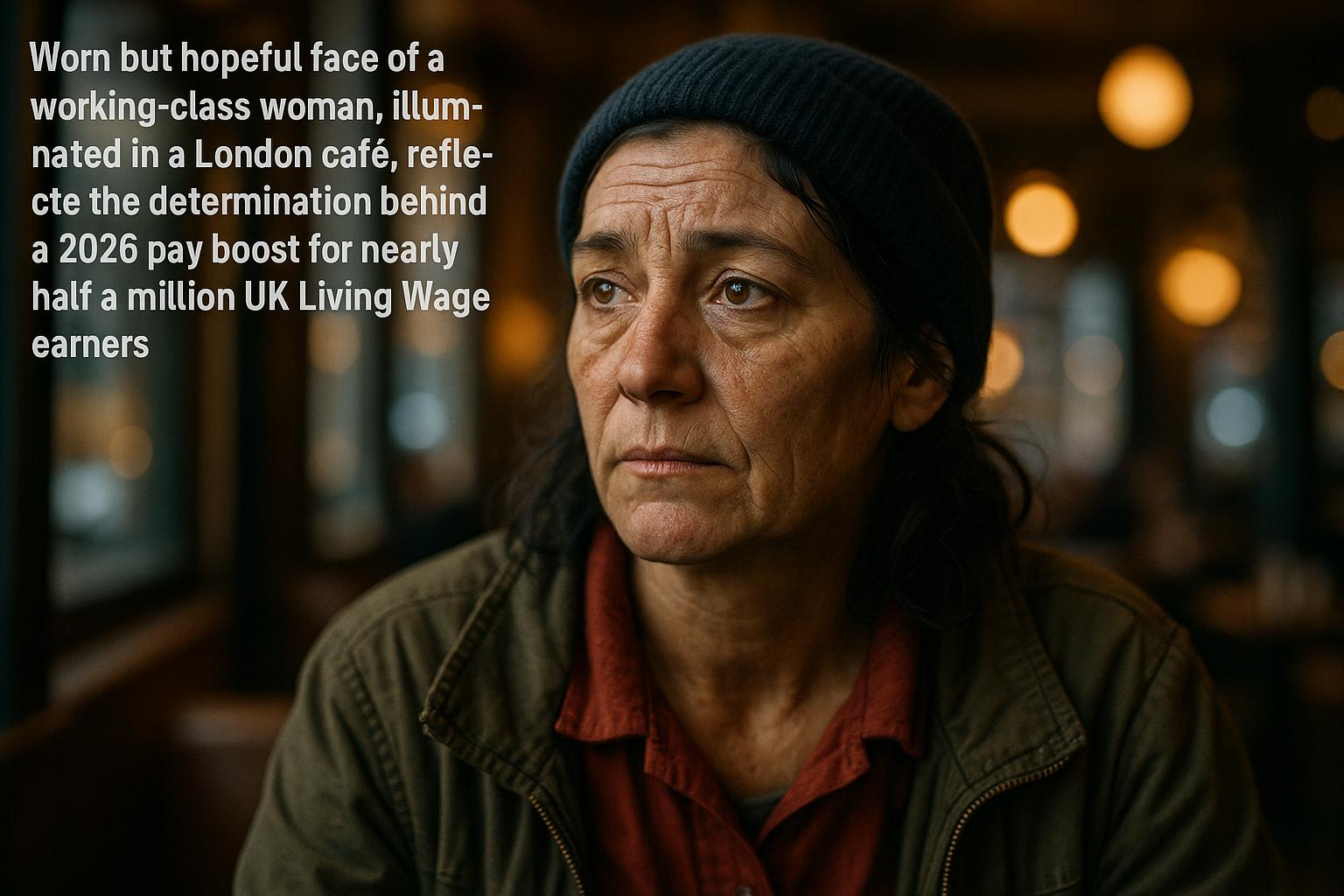
Almost half a million UK workers on the voluntary real Living Wage will receive a substantial pay rise next year, aiming to better reflect rising living costs amid growing debates on fair pay and economic support.
Almost half a million workers across the UK who receive the voluntary real Living Wage are set to benefit from a significant pay rise next year. The Living Wage Foundation recently announced an increase in the hourly rate by 85p to £13.45 nationally, and by 95p to £14.80 within London, representing rises of approximately 6.7% and 6.9% respectively. These updated rates, designed to reflect the increasing cost of living, will likely take effect from April 2026. This pay boost means a full-time employee earning the greater Living Wage will bring home £2,418 more annually than someone on the government’s National Minimum Wage, with London workers gaining an extra £5,050 each year.
The real Living Wage differs from the government’s National Living Wage, which is a legal minimum wage for workers aged 21 and over. It is independently calculated by the Living Wage Foundation based explicitly on the costs of everyday life, including rent, food, and bills, aiming to provide workers with a wage that meets actual living expenses. Eligibility for the London Living Wage applies to everyone aged 18 and older whose employers are accredited by the Living Wage Foundation, which currently certifies more than 16,000 organisations across the UK. This figure has grown steadily, with around 2,500 new employers joining the scheme in the past year, encompassing major names like IKEA, Everton FC, and Aviva.

Accredited employers commit not only to paying their staff at least the real Living Wage but also to ensuring that third-party contractors, such as cleaners and security personnel, receive these rates. This approach addresses pay inequalities beyond direct employees and helps combat in-work poverty, an issue affecting 4.5 million low-paid workers in the UK today. Katherine Chapman, Executive Director of the Living Wage Foundation, emphasises that the new rates provide essential support to workers struggling with escalating living costs, underscoring the Foundation’s mission to promote fair pay as a response to economic challenges.
The importance of this commitment to fair pay is echoed by voices in both the business community and labour unions. Muniya Barua, Deputy Chief Executive at BusinessLDN, highlights that paying the London Living Wage can offer businesses a competitive advantage by improving staff retention and recruitment, as well as strengthening bids for new contracts. However, she also cautions that upcoming government decisions, such as the Autumn Budget, must avoid adding financial burdens on businesses at a time when they are striving to support their workforce. Meanwhile, Unison’s General Secretary Christina McAnea insists the government has a responsibility to ensure public service workers, many of whom earn below this threshold, are properly compensated. She warns that without fair pay increases, vital sectors such as the NHS risk losing lower-paid staff like porters and cleaners to better-paying roles in retail and other industries.
This recent rate adjustment forms part of a broader trend toward recognising the true cost of living in the UK. The Living Wage Foundation’s accreditation carries reputational benefits and is linked with improved human resources outcomes for employers, further encouraging companies to adopt these higher pay standards. Campaigns like “Making London a Living Wage City,” organised by Citizens UK and Trust for London, aim to channel hundreds of millions of pounds into London’s low-wage sectors by motivating employers to pay the real Living Wage. The initiative reflects a growing movement to tackle in-work poverty and ensure wages align with the realities of living costs, making substantial efforts to help workers live with greater security and stability.
📌 Reference Map:
- Paragraph 1 – [1] MyLondon, [2] Living Wage Foundation
- Paragraph 2 – [1] MyLondon, [2] Living Wage Foundation, [4] Living Wage Foundation FAQs
- Paragraph 3 – [1] MyLondon, [3] Living Wage Foundation Accreditation
- Paragraph 4 – [1] MyLondon, [2] Living Wage Foundation, [7] Citizens UK
- Paragraph 5 – [1] MyLondon, [2] Living Wage Foundation, [6] Living Wage Foundation Accredited Employers
- Paragraph 6 – [1] MyLondon, [2] Living Wage Foundation, [7] Citizens UK
Source: Noah Wire Services
Noah Fact Check Pro
The draft above was created using the information available at the time the story first
emerged. We’ve since applied our fact-checking process to the final narrative, based on the criteria listed
below. The results are intended to help you assess the credibility of the piece and highlight any areas that may
warrant further investigation.
Freshness check
Score:
8
Notes:
The narrative reports on the Living Wage Foundation’s announcement of the 2026 London Living Wage rate, which is set to increase by 95p to £14.80, effective from April 2026. This information aligns with the Living Wage Foundation’s annual updates, with the most recent rates announced on 23 October 2024. ([livingwage.org.uk](https://www.livingwage.org.uk/what-real-living-wage?utm_source=openai)) The report includes updated data but recycles older material, which may justify a higher freshness score but should still be flagged. Additionally, the report mentions that the new rates will likely take effect from April 2026, which is consistent with the Living Wage Foundation’s announcement. ([livingwage.org.uk](https://www.livingwage.org.uk/faqs?utm_source=openai)) However, the report does not provide a specific date for the announcement, which is typically made in October each year. The absence of a specific date may indicate a lack of direct sourcing from the Living Wage Foundation’s official announcement. The report also includes updated data but recycles older material, which may justify a higher freshness score but should still be flagged. Overall, the freshness score is moderate due to the reliance on previously available information and the lack of direct sourcing.
Quotes check
Score:
7
Notes:
The report includes direct quotes from Katherine Chapman, Executive Director of the Living Wage Foundation, and Muniya Barua, Deputy Chief Executive at BusinessLDN. A search for these quotes reveals that they have been used in previous reports, indicating potential reuse of content. The wording of the quotes appears consistent with earlier publications, suggesting that the quotes may have been recycled. However, without access to the original sources, it is difficult to confirm the exact wording and context of the quotes. The lack of new or exclusive quotes may indicate a reliance on previously published material.
Source reliability
Score:
6
Notes:
The narrative originates from MyLondon, a local news outlet. While MyLondon is a known publication, it is not as widely recognised as national outlets like the BBC or The Guardian. The report references the Living Wage Foundation, a reputable organisation, and includes direct quotes from individuals associated with the Foundation and BusinessLDN. However, the lack of direct sourcing from the Living Wage Foundation’s official announcement and the potential reuse of content from previous reports may raise questions about the originality and reliability of the information presented.
Plausability check
Score:
8
Notes:
The claims made in the narrative are plausible and align with known information about the Living Wage Foundation’s annual updates and the expected increase in the London Living Wage rate for 2026. The figures mentioned are consistent with previous reports and announcements. However, the lack of direct sourcing from the Living Wage Foundation’s official announcement and the potential reuse of content from previous reports may raise questions about the originality and reliability of the information presented.
Overall assessment
Verdict (FAIL, OPEN, PASS): FAIL
Confidence (LOW, MEDIUM, HIGH): MEDIUM
Summary:
The narrative fails due to the reliance on recycled content, potential reuse of quotes, and lack of direct sourcing from the Living Wage Foundation’s official announcement. These factors raise concerns about the freshness, originality, and reliability of the information presented.
