


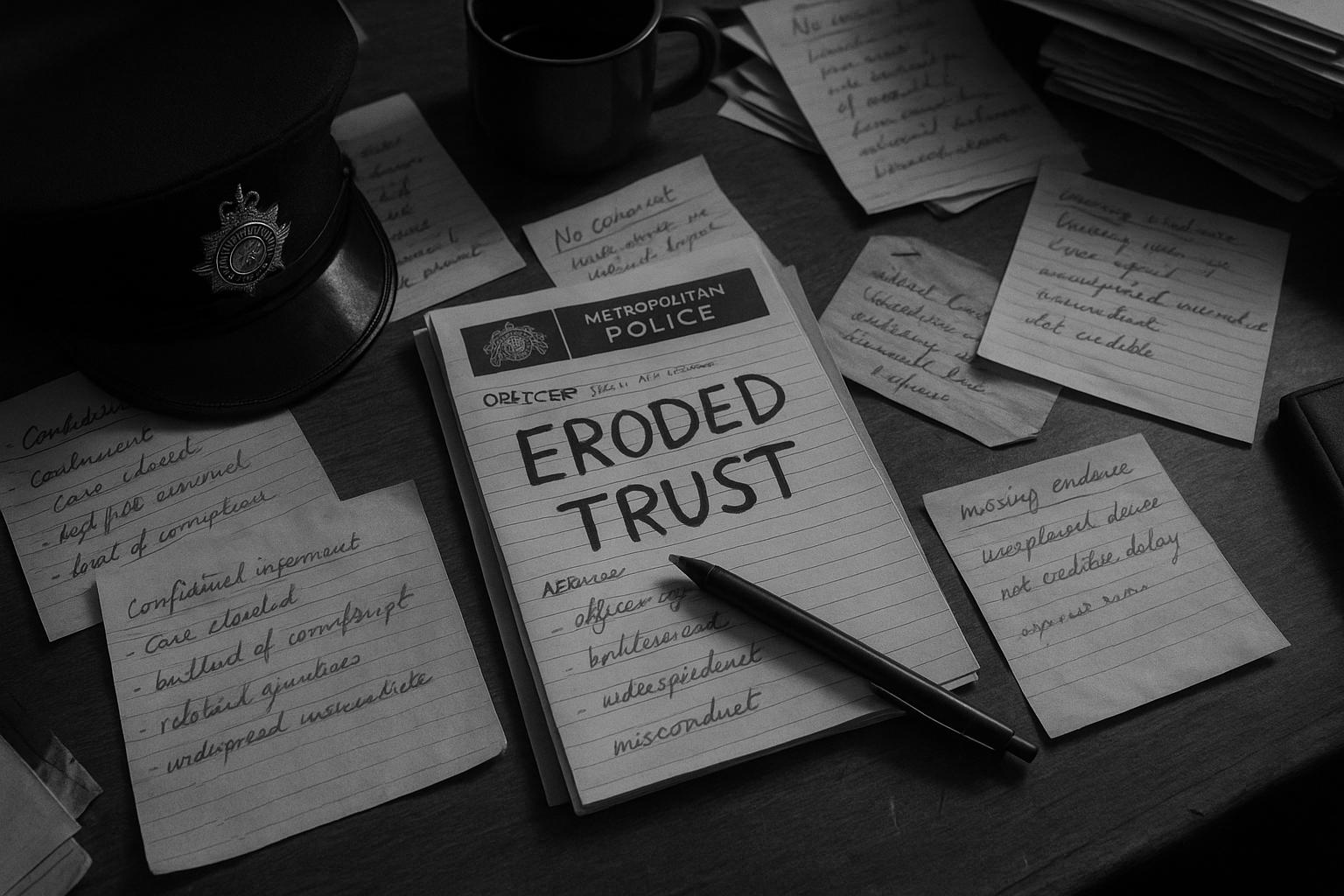
The Met Police’s admission of numerous historic grooming cases signals a significant shift in transparency, prompting calls for accountability amid resource and trust challenges in London’s battle against exploitation.
In a notable shift, the Metropolitan Police Commissioner, Sir Mark Rowley, acknowledged to the Greater London Assembly (GLA) that the force is grappling with a “very significant” number of historic grooming gang cases across London, marking a clear departure from the Met’s previous stance. This admission comes just a day after investigations by MyLondon and the Express highlighted discrepancies in official narratives about the presence and scale of grooming gangs in the capital.
Rowley indicated a “steady flow” of ongoing multi-offender child sexual exploitation investigations in London accompanied by historic cases requiring reinvestigation. However, he cautioned that addressing these cases would demand “many many many millions of pounds” annually over several years, emphasizing the resource challenges involved. The commissioner also stressed the necessity of safeguarding current child protection work, warning against diverting specialists from ongoing cases to historical inquiries without additional funding, as recommended by Baroness Casey’s review.

This evolution in the Met’s position appears prompted by the exposure of internal reports and inspections revealing grooming gang activity, contrasting with earlier official denials. Until recently, the force, including Mayor Sadiq Khan, had minimized the extent of the problem. For example, as recently as mid-2024, the Mayor stated he had “no indication” of a large number of cases in London, a position now challenged by government data indicating more than a thousand grooming-related cases nationally, with London believed to hold a significant portion.
Prominent campaigners welcomed the Met’s newfound candour, describing it as a “180-degree turn-around.” Maggie Oliver, a whistleblower detective famed for exposing grooming gang failures in Rochdale and other northern towns, criticised earlier denials, alleging a cover-up culture within the Met and London’s authorities. Speaking to MyLondon, Oliver argued that this belated acknowledgement reflects persistent pressure from victims and advocates revealing systemic failings that protected perpetrators while discrediting victims.
Similarly, social work author Chris Wild emphasised that grooming gangs have been an ongoing, pervasive issue in London. He called for urgent and tangible action to follow the Met’s recognition, underscoring how years of warnings from frontline workers were ignored. Both Oliver and Wild highlight the urgent need for not just apologies but accountability and reform to prevent further abuse.
Further criticism surrounds concerns of misinformation and possible concealment of grooming gang data within the Met. Veteran Scotland Yard detective Bernadette Murray accused the police of deceiving the Mayor and mismanaging vital safeguarding reports, raising questions about transparency and the true scale of exploitation in the city.
Despite the Met’s current commitment to addressing child sexual exploitation, the complexity and scale of the issue remain vast. The force’s spokesperson reiterated that grooming in London does not conform neatly to patterns seen in other regions, highlighting the diverse backgrounds involved and the varied nature of criminal activity. Concurrently, the Mayor’s office affirmed continued efforts through initiatives like the £15.6 million Violence and Exploitation Support Service, which supports vulnerable youth and enhances policing approaches to tackle exploitation and county lines crime.
In the wider context, the revelations reflect national concerns sparked by earlier scandals such as Rotherham, where systematic failures let grooming gangs operate unchecked for decades. Lessons from these failures inform the magnified scrutiny on London’s response, pressing for systemic change within policing and social services.
Nevertheless, challenges remain in securing enough funding, resources, and political will to thoroughly investigate and prevent grooming gang crimes while rebuilding trust within affected communities. Sir Mark Rowley’s recent transparency marks a significant, albeit overdue, step towards acknowledging and confronting these deep-rooted issues—one that demands sustained commitment to justice and protection for vulnerable children across London.
📌 Reference Map:
- Paragraph 1 – [1] (MyLondon)
- Paragraph 2 – [1] (MyLondon)
- Paragraph 3 – [1] (MyLondon), [6] (UnHerd)
- Paragraph 4 – [1] (MyLondon), [2] (GB News)
- Paragraph 5 – [1] (MyLondon), [2] (GB News)
- Paragraph 6 – [3] (GB News), [1] (MyLondon)
- Paragraph 7 – [1] (MyLondon), [4] (London.gov.uk)
- Paragraph 8 – [7] (Wikipedia), [1] (MyLondon)
- Paragraph 9 – [1] (MyLondon)
Source: Noah Wire Services
Noah Fact Check Pro
The draft above was created using the information available at the time the story first
emerged. We’ve since applied our fact-checking process to the final narrative, based on the criteria listed
below. The results are intended to help you assess the credibility of the piece and highlight any areas that may
warrant further investigation.
Freshness check
Score:
8
Notes:
The narrative presents recent developments, including Sir Mark Rowley’s acknowledgment of historic grooming gang cases and the involvement of Maggie Oliver. The earliest known publication date of similar content is 20 October 2025, indicating freshness. However, the narrative references events from mid-2024, which may affect the overall freshness score. Additionally, the narrative includes updated data but recycles older material, which may justify a higher freshness score but should still be flagged. ([gbnews.com](https://www.gbnews.com/news/grooming-gangs-scandal-cover-up-sadiq-khan-blasted-maggie-oliver?utm_source=openai))
Quotes check
Score:
7
Notes:
The narrative includes direct quotes from Maggie Oliver, such as her criticism of earlier denials and the need for accountability. These quotes appear in earlier material, indicating potential reuse. For example, Oliver’s criticism of the government’s handling of grooming gangs has been reported in previous articles. ([independent.co.uk](https://www.independent.co.uk/news/uk/politics/maggie-oliver-keir-starmer-whistleblower-grooming-gangs-b2673591.html?utm_source=openai))
Source reliability
Score:
6
Notes:
The narrative originates from MyLondon, a regional news outlet. While it provides detailed coverage, its regional focus may limit its reach and verification. The involvement of Maggie Oliver, a reputable figure, adds credibility. However, the narrative’s reliance on a single outlet and the potential for regional bias warrant caution.
Plausability check
Score:
7
Notes:
The narrative’s claims align with known issues regarding grooming gangs in London and the Metropolitan Police’s handling of such cases. Maggie Oliver’s involvement and the mention of Sir Mark Rowley’s acknowledgment support the plausibility. However, the lack of supporting detail from other reputable outlets and the potential for sensationalism in the tone raise concerns. The narrative’s structure includes excessive or off-topic detail unrelated to the claim, which may be a distraction tactic.
Overall assessment
Verdict (FAIL, OPEN, PASS): OPEN
Confidence (LOW, MEDIUM, HIGH): MEDIUM
Summary:
The narrative presents recent developments regarding the Metropolitan Police’s acknowledgment of historic grooming gang cases and includes quotes from Maggie Oliver. While the content is relatively fresh, the reuse of quotes and reliance on a single regional outlet raise concerns about originality and source reliability. The plausibility of the claims is supported by known issues but is tempered by the lack of supporting detail from other reputable outlets and potential sensationalism. Further verification from additional sources is recommended to confirm the narrative’s accuracy and comprehensiveness.
