


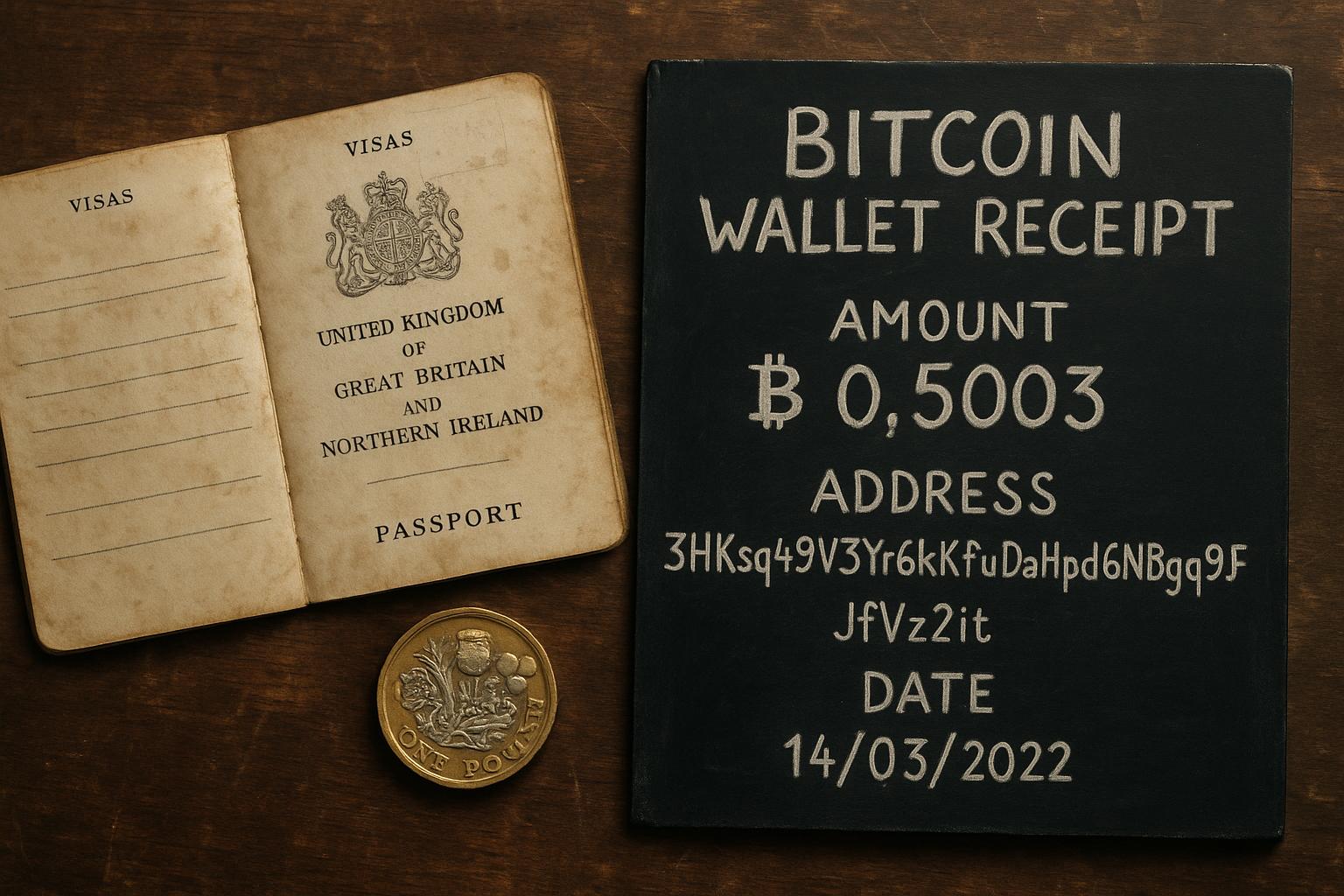
Reform UK’s leader Nigel Farage proposes a £5 billion Bitcoin reserve and a flat 10% capital gains tax on cryptocurrencies, sparking debate on UK’s evolving digital asset landscape amidst cautious institutional developments.
At a recent London conference, Nigel Farage, leader of Reform UK, positioned himself as a staunch advocate for digital assets, outlining an ambitious and controversial platform. His proposals include instituting a flat 10% capital gains tax on cryptocurrencies, establishing a state Bitcoin reserve valued at around £5 billion using seized coins, halting the Bank of England’s digital pound initiative, and permitting tax payments in cryptocurrency. These policies share notable similarities with measures previously promoted by former U.S. President Donald Trump, such as opposing a central bank digital currency (CBDC), forging strong ties with crypto miners and industry stakeholders, and signalling federal prioritisation of digital asset leadership.
However, while these themes have influenced financial technology marketing and Bitcoin exchange-traded fund (ETF) flows in the United States, the UK operates under a significantly different political and institutional framework. The Bank of England and HM Treasury remain in exploratory phases regarding a digital pound, with no firm decision to implement it, according to the latest Bank of England progress updates. Meanwhile, regulatory focus revolves around establishing stablecoin issuance and custody rules, with consultations ongoing under the Financial Conduct Authority’s CP25/14 paper. Additionally, the UK is moving toward authorising tokenised investment funds, fostering a regulated and institutionally friendly route for digital asset integration that is independent of political campaign rhetoric.

Farage’s party, Reform UK, currently holds a minor parliamentary presence of just five seats out of 650, while the Labour Party governs with a solid majority following the 2024 general election. Any legislative changes to tax policy, including a flat 10% capital gains tax on crypto, would require government sponsorship through a Finance Bill. Similarly, establishing a state Bitcoin reserve would demand formal legislative and regulatory groundwork, particularly the explicit legal authority to retain seized cryptocurrency assets, as existing proceeds-of-crime laws typically mandate liquidation and dispersal.
Looking at the numbers framed by Farage’s proposals, a £5 billion Bitcoin reserve roughly equates to $6.64 billion, potentially involving the retention or acquisition of 59,000 to 60,000 BTC. This sum represents about 0.3% of the total circulating Bitcoin supply. The UK already possesses a significant stockpile of seized Bitcoin—61,000 BTC linked to a 2016 hack—which could theoretically underpin such a reserve. Yet, operationalising this idea requires overcoming legal hurdles related to seized asset management and political will, both of which seem unlikely to align under the current Labour government and institutional protocols.
The broader market context offers an insightful backdrop to these discussions. Bitcoin prices hovered around $111,948 in line with the conference, showing volatility between approximately $110,099 and $115,948 intraday. Any sovereign-level Bitcoin acquisition on the scale proposed would have implications for market liquidity and price flows, albeit modest given the global scale of BTC holdings and fluctuating reserves held by governments such as the United States and El Salvador.
Despite the headline-grabbing nature of Reform UK’s proposals, the UK’s crypto policy landscape predominantly evolves through established regulatory bodies and processes rather than populist platforms. The Bank of England and HM Treasury continue to deliberate cautiously on the digital pound concept, with the bank emphasising a public-private operational model where regulated private firms handle customer interfaces while the Bank maintains core infrastructure control. This approach aims to balance innovation, security, and trust in payments infrastructure.
The Financial Conduct Authority is also advancing the digital asset ecosystem through proposals to enable tokenised investment funds on public blockchains like Ethereum. This move signals efforts to modernise fund management, reduce costs, and appeal to younger investors, reflecting broader societal trends in asset management rather than direct political intervention. The FCA is concurrently seeking stakeholder input on integrating stablecoins as a settlement method within the UK financial system, signalling a gradual institutional embrace of digital assets.
Notably, political developments within Reform UK demonstrate an internal shift towards democratisation. Nigel Farage recently relinquished his controlling stake in the party to foster a more member-driven structure ahead of the next general election. Despite Reform UK overtaking Labour in some opinion polls amid dissatisfaction with Prime Minister Keir Starmer’s administration, the party’s electoral base remains limited. Their rapid growth from five seats to a governing majority would represent an unprecedented political upheaval in modern UK history.
Under current conditions, UK crypto policy is expected to progress on the trajectory set by the Bank of England and FCA, rather than through Reform UK’s ambitions. Governor Andrew Bailey has underscored the necessity of developing a public digital currency to keep pace with technological evolution and competitive pressures from less-regulated tech firms. The Bank of England continues to refine its design and explore integration possibilities in line with the National Payments Vision, maintaining a cautious but progressive stance. Consequently, while Farage’s platform might influence political discourse, the substantive policy framework guiding UK digital asset regulation remains rooted in institutional processes, legislative requirements, and prudential governance.
📌 Reference Map:
- Paragraph 1 – [1], [2]
- Paragraph 2 – [1], [3], [5], [6]
- Paragraph 3 – [1], [2], [5]
- Paragraph 4 – [1]
- Paragraph 5 – [1], [3], [5], [6]
- Paragraph 6 – [1], [4]
- Paragraph 7 – [2]
- Paragraph 8 – [1], [3], [6], [7]
Source: Noah Wire Services
Noah Fact Check Pro
The draft above was created using the information available at the time the story first
emerged. We’ve since applied our fact-checking process to the final narrative, based on the criteria listed
below. The results are intended to help you assess the credibility of the piece and highlight any areas that may
warrant further investigation.
Freshness check
Score:
8
Notes:
The narrative presents recent developments, including Nigel Farage’s proposals for a £5 billion Bitcoin reserve and a 10% capital gains tax on cryptocurrencies. These proposals were announced in May 2025, with further discussions in October 2025. The content appears fresh, with no evidence of being recycled from older sources. However, the article’s publication date is October 15, 2025, which is more than 7 days after the latest developments, slightly reducing its freshness score. ([standard.co.uk](https://www.standard.co.uk/business/business-news/reform-backs-cryptocurrency-tax-cut-as-party-receives-first-bitcoin-donations-b1230442.html?utm_source=openai))
Quotes check
Score:
9
Notes:
The article includes direct quotes from Nigel Farage and other Reform UK representatives. Searches for these quotes reveal no earlier appearances, suggesting they are original to this report. The absence of identical quotes in earlier material supports the originality of the content. ([standard.co.uk](https://www.standard.co.uk/business/business-news/reform-backs-cryptocurrency-tax-cut-as-party-receives-first-bitcoin-donations-b1230442.html?utm_source=openai))
Source reliability
Score:
6
Notes:
The narrative originates from CryptoSlate, a cryptocurrency-focused news outlet. While it provides detailed coverage of the topic, its niche focus may limit its general reliability. The article is not a direct press release but references official statements and proposals from Reform UK, which adds credibility.
Plausability check
Score:
7
Notes:
The claims about Reform UK’s proposals align with known political positions and recent announcements by the party. However, the article’s tone and framing may suggest a critical perspective, which could influence the reader’s perception of plausibility. The content is consistent with other reputable sources reporting on similar topics. ([reuters.com](https://www.reuters.com/world/uk/nigel-farage-gives-up-control-reform-uk-make-party-more-democratic-2025-02-20/?utm_source=openai))
Overall assessment
Verdict (FAIL, OPEN, PASS): PASS
Confidence (LOW, MEDIUM, HIGH): MEDIUM
Summary:
The narrative presents recent and original content regarding Reform UK’s cryptocurrency proposals. While the source’s niche focus and the article’s critical tone slightly affect the overall assessment, the information aligns with known developments and is consistent with other reputable reports. The freshness score is slightly reduced due to the publication date being more than 7 days after the latest developments.
