


Listen to the article
Polish airspace breached by Russian drones, triggering NATO response amidst wave of disinformation
Polish and NATO forces were forced to respond to a significant breach of Polish airspace by approximately 20 Russian drones during the night of September 10-11, marking the first time in NATO’s 74-year history that the alliance has opened fire on enemy aircraft in European airspace.
The incident represents a notable escalation in the ongoing conflict that experts trace back to Russia’s 2014 invasion of Crimea and incursions into the Donbas region. Security specialists in Poland are increasingly describing the situation in terms of a state of war between Russia and Belarus on one side, and the European Union and NATO on the other.
“This conflict has its own history and distinct phases,” explained a Polish defense analyst who requested anonymity. “What we witnessed this week represents a concerning new development in Russia’s willingness to directly challenge NATO territorial integrity.”
The airspace violation was immediately followed by what cybersecurity experts have described as an unprecedented disinformation campaign aimed at Polish citizens. Michal Fedorowicz, president of Res Futura, a collective specializing in social media analysis, described the digital onslaught as a “tsunami of disinformation.”
“Over the course of that night, we analyzed around 200,000 mentions [statuses, messages, comments] spreading the Russian narrative, or 200 to 300 mentions per minute,” Fedorowicz said. “In terms of scale, it’s the equivalent of what happens during an election night for a presidential vote.”
The sophistication of this information warfare campaign has alarmed security experts. The false narratives followed specific themes designed to sow confusion and undermine public trust in Polish and NATO authorities. According to researchers who tracked the campaign, the primary narratives claimed the drone incursion was actually a Ukrainian provocation designed to drag Poland into a wider conflict and potentially trigger a third world war.
These fabricated messages also portrayed NATO and Polish military forces as ineffective despite their substantial resources, while simultaneously accusing Polish and transatlantic authorities of concealing the truth about the incidents.
The timing and coordination of the digital campaign suggest a level of preparation that indicates Russian intelligence agencies had likely planned the airspace violations well in advance, preparing the groundwork for the disinformation blitz that followed.
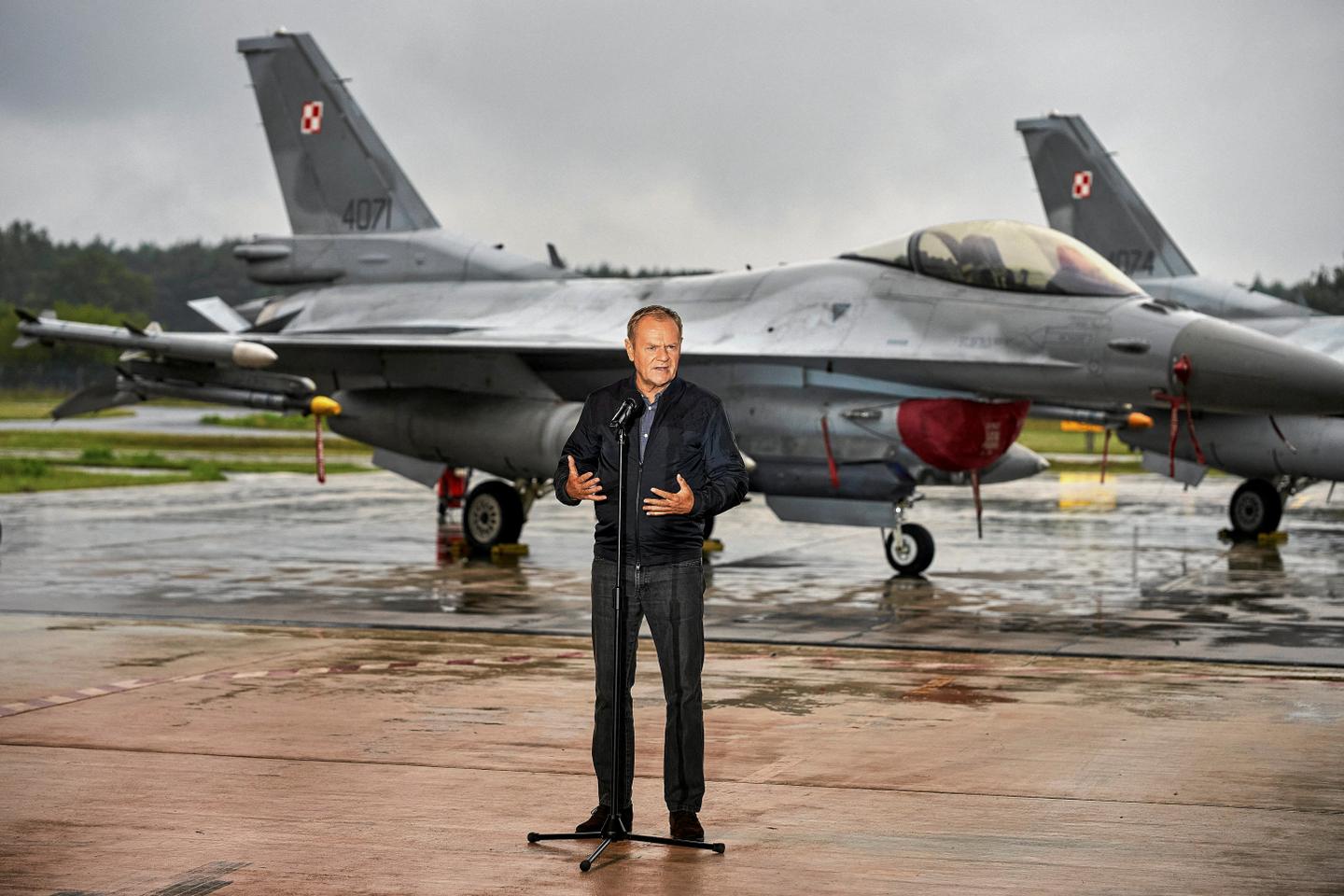
Polish Prime Minister Donald Tusk addressed the nation from the Lask Air Base, standing before Polish F-16 fighter jets that had been scrambled to respond to the incursion. Tusk emphasized that Poland would not be intimidated by such provocations and reaffirmed the country’s commitment to NATO’s collective defense principles.
The incident comes at a critical moment in the broader Ukraine conflict, with Western allies debating additional military aid packages and considering further sanctions against Russia. Security analysts suggest the airspace violation may represent an attempt by Moscow to test NATO’s resolve and response capabilities.
NATO Secretary General Mark Rutte issued a statement condemning “Russia’s reckless and provocative actions” and called an emergency meeting of the North Atlantic Council to discuss the alliance’s response. “NATO stands united in the defense of every inch of allied territory,” Rutte affirmed.
The drone incursion also highlights the growing importance of unmanned aerial systems in modern warfare. Russia has increasingly deployed drones for both reconnaissance and attack missions throughout the Ukraine conflict, but this marks one of the most direct uses of such systems to challenge NATO territory.
For Poland, a frontline NATO state that shares borders with both Russian ally Belarus and war-torn Ukraine, the incident underscores the country’s vulnerable position and its critical role in the alliance’s eastern defense strategy. Since 2022, Poland has significantly increased its defense spending and accelerated military modernization efforts.
As investigations into the incident continue, cybersecurity teams across NATO countries remain on high alert for further disinformation campaigns that may attempt to exploit the situation and sow division among alliance members.
Verify This Yourself
Use these professional tools to fact-check and investigate claims independently
Reverse Image Search
Check if this image has been used elsewhere or in different contexts
Ask Our AI About This Claim
Get instant answers with web-powered AI analysis
Related Fact-Checks
See what other fact-checkers have said about similar claims
Want More Verification Tools?
Access our full suite of professional disinformation monitoring and investigation tools

12 Comments
This is a concerning development, with Russia directly challenging NATO’s airspace. The disinformation campaign that followed the drone incursion is equally troubling and highlights the hybrid warfare tactics employed by Russia.
It’s clear Russia is willing to escalate tensions and test the boundaries of NATO’s response. Maintaining a strong and unified front against these provocations will be crucial.
While the drone breach of Polish airspace is concerning, the subsequent disinformation campaign is equally troubling. Russia seems intent on sowing discord and undermining the credibility of Poland and NATO.
It will be important for Poland and its allies to thoroughly investigate this incident, identify the source of the disinformation, and take appropriate actions to protect their sovereignty and security.
This incident highlights the ongoing tensions between Russia and the West, especially in Eastern Europe. The use of drones and the subsequent disinformation campaign are concerning tactics.
It will be important for Poland and NATO to thoroughly investigate this breach and take appropriate measures to protect their airspace and counter the disinformation efforts.
The drone incursion and disinformation campaign are clear attempts by Russia to destabilize the region and test the resolve of NATO and the EU. It’s crucial that Poland and its allies respond firmly and decisively.
This incident serves as a reminder of the complex hybrid warfare tactics employed by Russia. Effective counter-measures will require a multifaceted approach from Poland and its partners.
The breach of Polish airspace by Russian drones is a serious breach of sovereignty. I’m curious to see how NATO and the EU respond to this latest provocation from Russia.
The disinformation campaign that followed is also deeply concerning. Combating this type of hybrid warfare will require a multi-faceted approach from Poland and its allies.
Russia’s willingness to directly challenge NATO’s territorial integrity is a worrying development. The disinformation campaign that followed is an attempt to sow confusion and undermine Poland’s response.
Maintaining a strong and coordinated response from NATO and the EU will be crucial in deterring further Russian aggression and mitigating the impact of the disinformation campaign.