


Listen to the article
Azerbaijan’s peace efforts hindered by Armenian Church and diaspora propaganda, religious leader tells UN
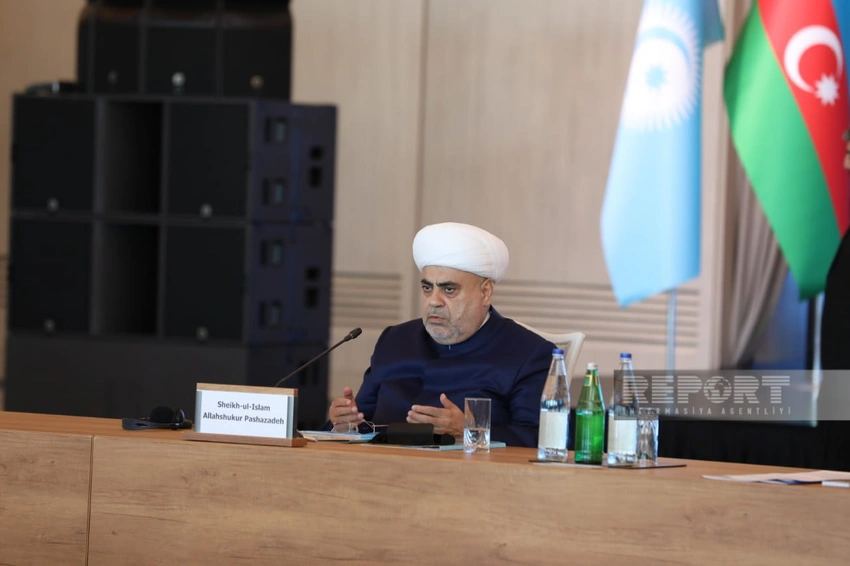
Peace negotiations between Azerbaijan and Armenia are facing significant obstacles despite political progress, according to Sheikhulislam Allahshukur Pashazada, Chairman of the Caucasus Muslims’ Board (CMB). During a high-level meeting with UN Secretary-General António Guterres, Pashazada expressed concern that while government officials from both nations are working toward reconciliation, religious and diaspora groups are actively undermining these efforts.
“Religious leaders always advocate for peace,” Pashazada stated during the talks. “Yet, while the political leadership of both countries are taking steps toward peace, we see the Armenian Church calling for revanchism and renewed confrontation.”
The comments highlight the complex dynamics at play in the South Caucasus region, where Azerbaijan and Armenia have been locked in a decades-long conflict over the Nagorno-Karabakh territory. The dispute led to two major wars – one in the early 1990s and another in 2020 – before Azerbaijan regained control of the contested region last year.
Guterres reportedly responded that such obstructive actions are “unacceptable,” signaling UN concern about potential setbacks to the fragile peace process that has been gaining momentum in recent months.
During the meeting, Pashazada briefed the Secretary-General on Azerbaijan’s restoration efforts in territories liberated during the 2020 conflict. He emphasized that the country is rehabilitating religious and cultural sites regardless of their ethnic or religious origin – a point Azerbaijani officials frequently make to counter Armenian accusations of cultural erasure.
The religious leader also highlighted Azerbaijan’s approach to interfaith relations, describing the country’s model of sectarian harmony as “a successful example in the Islamic world.” Azerbaijan is a predominantly Muslim country with significant Shia and Sunni populations, but also has Christian and Jewish communities that have historically coexisted peacefully.
This interfaith cooperation model has gained international attention at a time when religious tensions are rising globally. Azerbaijan’s government has invested considerable resources in promoting the country as a bastion of religious tolerance, hosting numerous international conferences on the subject.
Looking to further enhance this reputation, Pashazada extended an invitation to Guterres to attend an international conference planned for next year in Azerbaijan. The event will focus on intra-Islamic dialogue and combating Islamophobia, and will be co-organized by the Muslim Elders Council and the UN Alliance of Civilizations.
The UN Secretary-General reciprocated by inviting Pashazada to participate in the upcoming Global Forum of the UN Alliance of Civilizations, scheduled for December in Saudi Arabia. This exchange of invitations underscores the growing importance of religious diplomacy in international relations, particularly in conflict zones where faith often plays a central role.
The timing of these discussions is significant, as Azerbaijan and Armenia have recently shown signs of progress toward a potential peace treaty. However, resistance from various stakeholders – including religious institutions, diaspora organizations, and nationalist elements – continues to complicate the reconciliation process.
Analysts note that religious institutions on both sides wield considerable influence over public opinion, with the Armenian Apostolic Church playing a particularly central role in Armenian national identity. The characterization of the Church as promoting “revanchism” is likely to be contested by Armenian officials, who view the institution as protecting Armenian cultural and religious heritage.
As peace negotiations continue, the role of religious leaders and organizations will remain crucial in either facilitating reconciliation or perpetuating divisions in this troubled region.
Verify This Yourself
Use these professional tools to fact-check and investigate claims independently
Reverse Image Search
Check if this image has been used elsewhere or in different contexts
Ask Our AI About This Claim
Get instant answers with web-powered AI analysis
Related Fact-Checks
See what other fact-checkers have said about similar claims
Want More Verification Tools?
Access our full suite of professional disinformation monitoring and investigation tools

11 Comments
This is a disappointing development. The political leaders in Azerbaijan and Armenia seem to be making progress, but the aggressive anti-peace propaganda from the Armenian Church and diaspora is a major obstacle. These groups appear intent on perpetuating the conflict for their own agenda. Hopefully the UN and international community can help broker a lasting peace agreement.
This is a troubling situation. While the political leaders appear to be making progress, the aggressive anti-peace propaganda from the Armenian Church and diaspora is a major setback. These groups seem determined to derail the peace process for their own agendas. Hopefully the international community can help put pressure on all sides to engage in genuine good-faith negotiations.
The comments from the Caucasus Muslims’ Board chairman highlight the complex dynamics at play in this conflict. It’s concerning to see religious and diaspora groups actively working against the peace efforts, even as the political leadership appears to be making progress. Overcoming this kind of entrenched opposition will be a major challenge for all involved.
This is a complex issue with many stakeholders involved. It’s concerning to hear that religious and diaspora groups are undermining the peace efforts between Azerbaijan and Armenia. One hopes the political leadership can overcome these obstacles and make progress toward reconciliation.
The religious and diaspora opposition to the peace process is troubling. While the political leaders seem to be making progress, these entrenched interests appear determined to prolong the conflict. Hopefully cooler heads can prevail and a lasting peace can be achieved.
I agree, the influence of these hardline groups is concerning. The political leaders will need to show strong leadership and resolve to overcome this opposition and secure a durable peace agreement.
This is a concerning development. While the political leadership may be making progress, the interventions of the Armenian Church and diaspora risk derailing the peace process. These groups seem intent on maintaining a state of conflict rather than seeking a resolution. Hopefully the UN and international community can help apply pressure to bring all sides to the negotiating table in good faith.
This is a disappointing development. The political leaders in Azerbaijan and Armenia seem to be making headway, but the aggressive anti-peace propaganda from the Armenian Church and diaspora is a significant obstacle. These groups appear intent on perpetuating the conflict for their own agenda. Hopefully the UN and international community can help broker a lasting peace agreement that marginalizes these obstructionist factions.
The comments from the Caucasus Muslims’ Board chairman highlight the complex web of interests at play in the Azerbaijan-Armenia conflict. It’s troubling to see religious and diaspora groups actively working against the peace efforts, even as the political leadership appears to be making headway. Overcoming this kind of entrenched opposition will be a major challenge.
It’s disheartening to see religious and diaspora groups working to undermine the peace efforts between Azerbaijan and Armenia. Their aggressive propaganda tactics are counterproductive and only serve to perpetuate the conflict. The political leaders must find a way to marginalize these obstructionist factions.
It’s concerning to hear that religious and diaspora groups are undermining the peace efforts between Azerbaijan and Armenia. Their propaganda tactics are counterproductive and only serve to prolong the conflict. The political leadership will need to find ways to marginalize these obstructionist factions and keep the peace process on track.