


Listen to the article
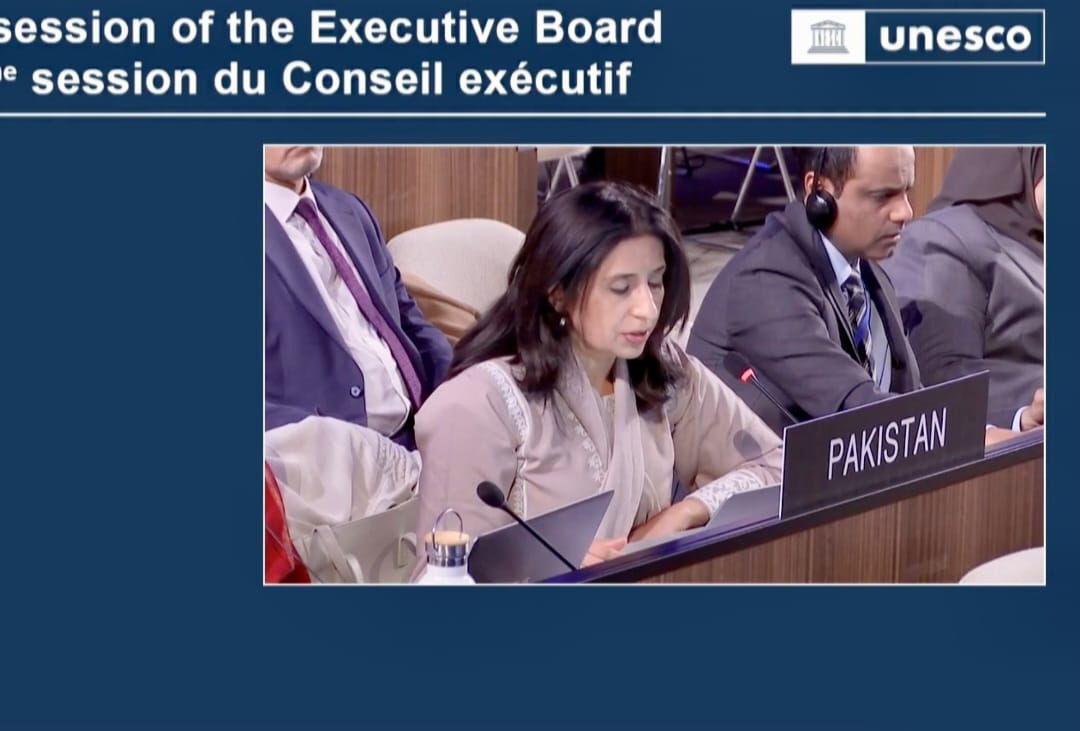
UNESCO has adopted a significant proposal put forward by Pakistan aimed at countering disinformation, misinformation, and hate speech while safeguarding freedom of expression. The initiative, presented by Ambassador Mumtaz Zahra Baloch, Pakistan’s Permanent Delegate to UNESCO, gained approval during the 222nd Session of the UNESCO Executive Board currently underway in Paris.
The proposal received widespread support across regional boundaries, demonstrating a growing global consensus on the urgent need to protect information integrity in an increasingly digital world. This broad backing highlights the international community’s recognition of the challenges posed by false information and harmful content in today’s media landscape.
Pakistan’s initiative reinforces UNESCO’s central role in fostering a media environment that is safe, reliable, and inclusive. The organization continues to be at the forefront of promoting information ecosystems that uphold human rights, democratic principles, and universal access to accurate information.
During discussions, the UNESCO Executive Board emphasized emerging challenges to information integrity presented by rapidly advancing technologies. Particular concern was expressed regarding artificial intelligence (AI), neurotechnology, and immersive digital environments, which present both opportunities and new vectors for misinformation.
The adoption comes at a critical time as governments worldwide grapple with the proliferation of false information and harmful content across digital platforms. Pakistan’s leadership on this issue aligns with global efforts to establish frameworks that balance freedom of expression with the need for accurate and reliable information sources.
Digital platforms face increasing pressure under the proposal to implement stronger transparency and accountability measures. The Executive Board specifically called on tech companies to develop and deploy systems capable of detecting and properly labeling AI-generated or manipulated content. Additionally, the proposal emphasizes the importance of strengthening authentication measures to help users identify reliable sources.
Information integrity has become a pressing global concern as sophisticated technologies make it increasingly difficult to distinguish between authentic and manipulated content. The spread of false information has been linked to political polarization, election interference, and public health crises worldwide, including during the COVID-19 pandemic when misinformation about treatments and vaccines proliferated.
UNESCO has been building momentum on this issue since the adoption of its landmark Windhoek+30 Declaration in 2021, which acknowledged the changing information landscape and called for greater efforts to promote media freedom, independence, and pluralism in the digital era.
Pakistan’s proposal builds upon previous international frameworks while addressing emerging technological challenges. The country has itself experienced the harmful effects of online misinformation and hate speech, making its leadership on this issue particularly relevant.
Media literacy experts have praised the initiative, noting that international coordination is essential when addressing problems that transcend national borders. The proposal’s emphasis on both technological solutions and broader educational approaches reflects current best practices in combating information disorders.
The adoption represents a significant diplomatic achievement for Pakistan on the international stage, demonstrating its engagement with pressing global issues. It also reflects UNESCO’s evolving approach to information integrity challenges that continue to shape public discourse worldwide.
As implementation begins, attention will turn to how member states translate these principles into concrete actions within their national contexts while respecting freedom of expression and other fundamental rights. The initiative’s success will ultimately depend on cooperation between governments, technology companies, civil society organizations, and media institutions in developing effective responses to information integrity threats in an increasingly complex digital environment.
Verify This Yourself
Use these professional tools to fact-check and investigate claims independently
Reverse Image Search
Check if this image has been used elsewhere or in different contexts
Ask Our AI About This Claim
Get instant answers with web-powered AI analysis
Related Fact-Checks
See what other fact-checkers have said about similar claims
Want More Verification Tools?
Access our full suite of professional disinformation monitoring and investigation tools

21 Comments
Countering the proliferation of false information and harmful rhetoric is a complex challenge, but this UNESCO proposal seems like a step in the right direction. I’m curious to learn more about the specific mechanisms it will employ.
This proposal from Pakistan seems like a positive step, but the implementation will be crucial. I hope UNESCO can develop robust frameworks to address disinformation while upholding democratic principles and human rights.
You raise a fair point. The details of how this initiative will be carried out will be important to monitor, to ensure it achieves the desired outcomes.
Kudos to Pakistan for taking the lead on this important issue at UNESCO. Protecting information integrity is vital for maintaining trust in media and democratic institutions. I’m curious to see how this proposal is put into practice.
I share your curiosity. The growing challenge of disinformation and hate speech online requires a multilateral, comprehensive response. I hope this UNESCO initiative can serve as a model for other international efforts.
This UNESCO initiative aligns with the growing global recognition of the urgent need to address the challenges posed by the online dissemination of false and harmful content. I’m interested to see how this proposal is implemented and its long-term impact.
While I applaud the intent behind this UNESCO proposal, I have some concerns about how it will be implemented in practice. Striking the right balance between curbing harmful content and preserving free expression is a delicate task.
Those are valid concerns. The details of this initiative will need to be closely scrutinized to ensure it doesn’t inadvertently restrict legitimate speech. Maintaining that balance is absolutely essential.
In an era of rapid technological change, the spread of disinformation and hate speech has become a pressing global concern. I’m encouraged to see UNESCO taking concrete steps to counter these threats while upholding freedom of expression.
Tackling disinformation and misinformation is a global priority, so I’m glad to see UNESCO taking action. However, the details of this proposal will need to be carefully considered to ensure it doesn’t infringe on legitimate free speech.
This UNESCO proposal seems like a positive development in the effort to address the proliferation of false information and harmful rhetoric online. However, the details of its implementation will be critical to ensure it achieves its intended goals.
This is an important step in combating the spread of disinformation and hate speech online. Protecting information integrity and promoting reliable, inclusive media environments is crucial in today’s digital age.
I agree, the global support for Pakistan’s proposal reflects the widespread recognition of these challenges. UNESCO’s role in safeguarding freedom of expression while addressing misinformation is critical.
Protecting freedom of expression while curbing the spread of disinformation and hate speech is a delicate balance. I hope UNESCO can develop a framework that effectively addresses these issues without infringing on fundamental rights.
Countering the proliferation of false information and harmful content is a complex issue, but I’m encouraged to see UNESCO taking concrete action through this initiative. Maintaining the balance between free speech and information integrity is key.
Absolutely. The rapid advancement of technology has exacerbated these problems, so a coordinated international response is necessary to find effective solutions.
This is an important step in the global fight against the spread of disinformation and hate speech. UNESCO’s role in fostering reliable, inclusive media environments is critical. I’m hopeful this proposal can make a meaningful difference.
Agreed. In an increasingly digitized world, the integrity of information has become a pressing international issue. I’m glad to see UNESCO taking a leadership role in addressing these challenges.
Safeguarding information integrity is crucial for maintaining trust in media and democratic institutions. I commend Pakistan for taking the lead on this issue at UNESCO and hope the organization can devise effective solutions to these complex problems.
This is a timely and necessary initiative from UNESCO. In an age of rapid technological change, the spread of false information poses serious threats to social cohesion and democratic processes. I hope this proposal leads to meaningful progress.
Agreed. The proliferation of misinformation and hate speech online has become a major challenge worldwide. A coordinated global response is critical to address these issues while upholding fundamental rights.