


Listen to the article
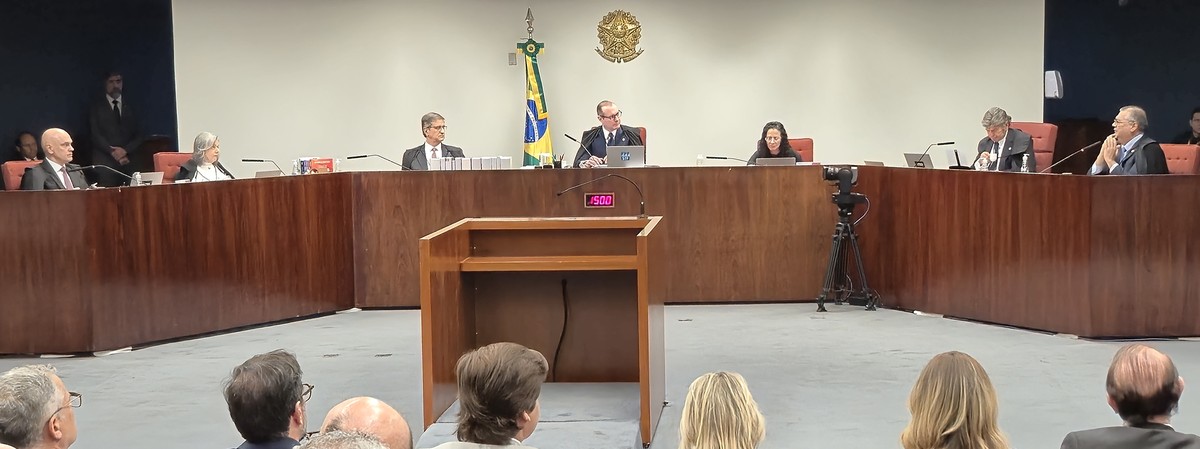
Brazil’s Supreme Court began on Tuesday the trial of seven defendants identified as the “fourth core” of an alleged conspiracy to overturn the 2022 election results. This group, according to the Office of the Prosecutor General (PGR), was responsible for coordinating disinformation campaigns targeting Brazil’s electoral system, democratic institutions, and officials who refused to participate in coup plans.
This marks the second group to face judgment in the ongoing investigation into the alleged coup plot. In September, the court convicted all members of the “central core,” including former President Jair Bolsonaro, who received a sentence of 27 years and three months in prison.
The defendants in the “fourth core” include retired Army majors Ailton Gonçalves and Ângelo Martins Denicoli, engineer Carlos César Moretzsohn Rocha, Army sub-lieutenant Giancarlo Gomes Rodrigues, Army lieutenant colonel Guilherme Marques de Almeida, former intelligence agent Marcelo Araújo Bormevet, and Army colonel Reginaldo Vieira de Abreu.
They face serious charges including armed criminal organization, attempted violent abolition of the Democratic Rule of Law, attempted coup d’état, and destruction of protected heritage sites.
Prosecutor General Paulo Gonet has characterized this group as a “misinformation cell” that worked in coordination with the “central core” and misused state resources to “distort sensitive information against Brazil’s electronic voting system and public authorities.”
According to prosecutors, Ailton Barros acted under orders from General Walter Braga Netto, Mr. Bolsonaro’s running mate in the 2022 election, to launch disinformation campaigns against military commanders who refused to support the alleged coup attempt. These attacks reportedly went beyond online defamation to include in-person harassment at commanders’ residences, described by Gonet as “severe pressure mechanisms to provoke institutional rupture.”
Prosecutors allege Ângelo Denicoli produced fraudulent materials targeting Brazil’s electronic voting machines, while Carlos Rocha drafted the report that Bolsonaro’s Liberal Party (PL) used to challenge the 2022 election results before the Superior Electoral Court.
Giancarlo Gomes and Marcelo Bormevet, both former members of the Brazilian Intelligence Agency (Abin), allegedly participated in what prosecutors called the “counterintelligence arm” of the conspiracy, using government intelligence infrastructure to gather information beneficial to Bolsonaro.
Guilherme Almeida stands accused of transmitting false information about Brazil’s voting system to Argentine influencer Fernando Cerimedo, who then hosted a broadcast questioning the election’s legitimacy.
Perhaps most alarming, Reginaldo Abreu allegedly knew about a plan called “Green and Yellow Dagger,” which prosecutors say contemplated the assassination of then-President-elect Luiz Inácio Lula da Silva, Vice-President-elect Geraldo Alckmin, and Supreme Court Justice Alexandre de Moraes, who oversees the coup-related cases.
Defense attorneys for all defendants submitted closing statements on September 19, denying all accusations and seeking full acquittal. Their primary arguments rest on alleged lack of criminal elements, insufficient evidence connecting the defendants as an organization, and challenges to testimony provided by Lieutenant Colonel Mauro Cid, Bolsonaro’s former aide-de-camp who entered into a plea agreement with prosecutors.
Several defense teams have specifically targeted Cid’s testimony, with Abreu’s lawyers requesting the annulment of his plea bargain agreement based on procedural irregularities. Others cited Cid’s statements as evidence of their clients’ innocence. Defense attorneys also claimed violations of due process, arguing they received delayed access to evidence and insufficient time to review case materials.
The Supreme Court has already scheduled the next phases of trials related to the alleged coup conspiracy. The “third core,” accused of pressuring military commanders to join the coup attempt, will be tried in November, while the “second core,” allegedly responsible for drafting a “coup decree” and attempting to suppress voter turnout in Brazil’s Northeast region during the 2022 elections, will face trial in December.
These proceedings represent a significant moment in Brazil’s efforts to hold accountable those allegedly involved in attempting to overturn the democratic order following Bolsonaro’s electoral defeat in 2022, in what has become one of the most consequential political and constitutional cases in Brazil’s recent history.
Verify This Yourself
Use these professional tools to fact-check and investigate claims independently
Reverse Image Search
Check if this image has been used elsewhere or in different contexts
Ask Our AI About This Claim
Get instant answers with web-powered AI analysis
Related Fact-Checks
See what other fact-checkers have said about similar claims
Want More Verification Tools?
Access our full suite of professional disinformation monitoring and investigation tools

7 Comments
The alleged coup plot is a troubling development that requires a robust response from the authorities. I hope the trial will uncover the full extent of the conspiracy and lead to appropriate consequences for those found guilty.
This is a serious case that deserves close attention. The alleged misinformation campaign targeting Brazil’s democratic institutions is concerning and should be thoroughly investigated. Preserving the integrity of the electoral process is crucial for a healthy democracy.
This case serves as a reminder of the fragility of democracy and the constant need to be vigilant against efforts to undermine it. I hope the trial will shed light on the full scope of the alleged conspiracy and lead to appropriate measures to prevent such threats in the future.
While the details of the case are still unfolding, the alleged attempt to undermine Brazil’s democratic institutions is deeply concerning. It’s critical that the rule of law is upheld and that those responsible are held accountable.
The alleged involvement of military personnel in this conspiracy is particularly troubling. It underscores the need for strong safeguards and oversight to prevent the misuse of state resources for political ends.
It’s good to see the Supreme Court taking this matter seriously and holding the alleged perpetrators accountable. Disinformation poses a real threat to democratic stability, and swift action is necessary to address such threats.
This case highlights the importance of combating misinformation and protecting the democratic process. I’m curious to see how the trial unfolds and what implications it might have for the future of Brazil’s political landscape.