


Listen to the article
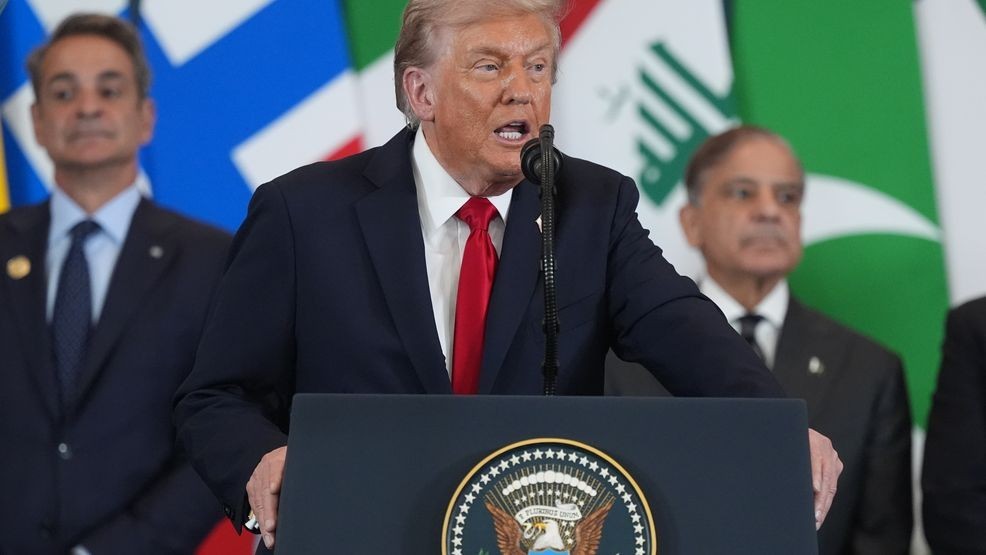
The Venezuelan opposition leader María Corina Machado, this year’s Nobel Peace Prize recipient, has dedicated her award to former President Donald Trump shortly after he negotiated a peace agreement between Israel and Hamas, bringing an end to one of the world’s most intractable conflicts.
The Nobel Peace Prize, established in 1901, represents the pinnacle of recognition for contributions to global peace. Throughout American history, only four U.S. presidents have received this prestigious honor.
Theodore Roosevelt became the first American president to win the award in 1906 for his mediation efforts that ended the Russo-Japanese War. President Woodrow Wilson followed in 1919, recognized for his instrumental role in establishing the League of Nations, which later evolved into the United Nations.
It would take more than eight decades before another U.S. president joined these ranks. In 2002, former President Jimmy Carter was honored for his diplomatic achievement in brokering the Camp David Accords of 1978, which established peace between Egypt and Israel. The Nobel Committee also acknowledged Carter’s extensive humanitarian work following his presidency.
In 2009, the Nobel Committee’s decision to award President Barack Obama the Peace Prize just months into his first term generated significant controversy. Unlike previous recipients, Obama’s recognition came without specific diplomatic achievements, instead citing his “extraordinary efforts to strengthen international diplomacy and cooperation between peoples.”
Obama himself acknowledged the premature nature of the award during his acceptance speech, stating he was at “the beginning, and not the end” of his diplomatic endeavors. Critics pointed to the ongoing U.S. military engagements in Iraq and Afghanistan, which had resulted in substantial civilian casualties.
While Trump has not been awarded the Nobel Peace Prize, his supporters argue his diplomatic accomplishments merit such recognition. During his first administration, Trump oversaw the Abraham Accords, a groundbreaking agreement that normalized relations between Israel, the United Arab Emirates, and Bahrain. This marked the first Arab-Israeli normalization agreement in over two decades, creating new opportunities for regional trade, tourism, and stability.
In his current term, Trump has continued to prioritize international peace initiatives. According to White House officials, he recently facilitated talks between Azerbaijani President Ilham Aliyev and Armenian Prime Minister Nikol Pashinyan, resulting in a joint declaration aimed at resolving the decades-long conflict over the Nagorno-Karabakh region—a territory within Azerbaijan that has historically been controlled by ethnic Armenians.
The Trump administration has also mediated between Rwanda and the Democratic Republic of Congo, producing agreements on troop withdrawals, security cooperation, and economic frameworks designed to stimulate investment in both nations.
Beyond these efforts, Trump has been involved in negotiating ceasefires between India and Pakistan, as well as Thailand and Cambodia—regions with long histories of border disputes and conflicts over resources.
Trump’s approach to international diplomacy represents a departure from traditional methods. He favors direct engagement and high-stakes negotiations over conventional diplomatic channels, a strategy that has produced measurable results but also sparked debate among foreign policy experts.
While opinions on Trump’s diplomatic initiatives vary widely across the political spectrum, even his critics acknowledge the tangible outcomes of his unconventional approach. His administration’s peace agreements span multiple continents and address conflicts with deep historical roots.
As the Nobel Peace Prize continues to symbolize humanity’s highest aspirations for global harmony and reconciliation, the full impact and historical significance of Trump’s diplomatic legacy remains a subject of ongoing assessment. Whether future Nobel Committees will recognize these efforts remains to be seen.
Verify This Yourself
Use these professional tools to fact-check and investigate claims independently
Reverse Image Search
Check if this image has been used elsewhere or in different contexts
Ask Our AI About This Claim
Get instant answers with web-powered AI analysis
Related Fact-Checks
See what other fact-checkers have said about similar claims
Want More Verification Tools?
Access our full suite of professional disinformation monitoring and investigation tools

12 Comments
While Trump may not have won the Nobel Prize, his role in brokering the Israel-Hamas peace deal is significant. Bringing an end to long-standing conflicts, even in a politically charged environment, deserves recognition.
That’s a fair point. The Nobel Prize is not the only measure of impact when it comes to diplomacy and peacemaking. Tangible results on the ground are ultimately what matter most.
The Trump administration’s efforts to negotiate peace agreements, even if not recognized by the Nobel Committee, are still noteworthy. Bringing an end to long-standing conflicts requires nuanced diplomacy and persistence.
That’s a good point. The Nobel Prize is not the only measure of a president’s diplomatic achievements. Tangible results in conflict resolution should be the primary focus.
Interesting to see Trump’s peace efforts recognized, even if he didn’t win the Nobel Prize. Diplomacy and negotiations can often be underappreciated, but bringing an end to long-standing conflicts is a significant achievement.
You make a good point. While the Nobel Prize is prestigious, the real impact is in the results achieved through diplomacy and conflict resolution.
It’s interesting to see the evolving landscape of the Nobel Peace Prize and which U.S. presidents have been recognized. While the selection process is always debated, the award remains an important symbol of global cooperation and conflict resolution.
Absolutely. The Nobel Peace Prize, despite its controversies, continues to shine a light on the critical role of diplomacy and peacemaking in international affairs.
It’s encouraging to see former U.S. presidents recognized for their diplomatic efforts and contributions to global peace, even if the selections are sometimes controversial. The Nobel Peace Prize remains an important symbol of international cooperation.
I agree. The Nobel Peace Prize can bring attention to important peacemaking efforts, even if the choices are debated. Maintaining diplomatic channels is crucial for resolving conflicts.
While the Nobel Peace Prize selection process may be debated, it’s encouraging to see U.S. presidents recognized for their contributions to global peace and cooperation. Negotiating complex political agreements is a significant challenge, and Trump’s efforts deserve consideration.
I agree. The Nobel Prize is a prestigious honor, but the true impact of diplomatic efforts should be measured by their real-world outcomes in reducing conflict and fostering cooperation.