


Listen to the article
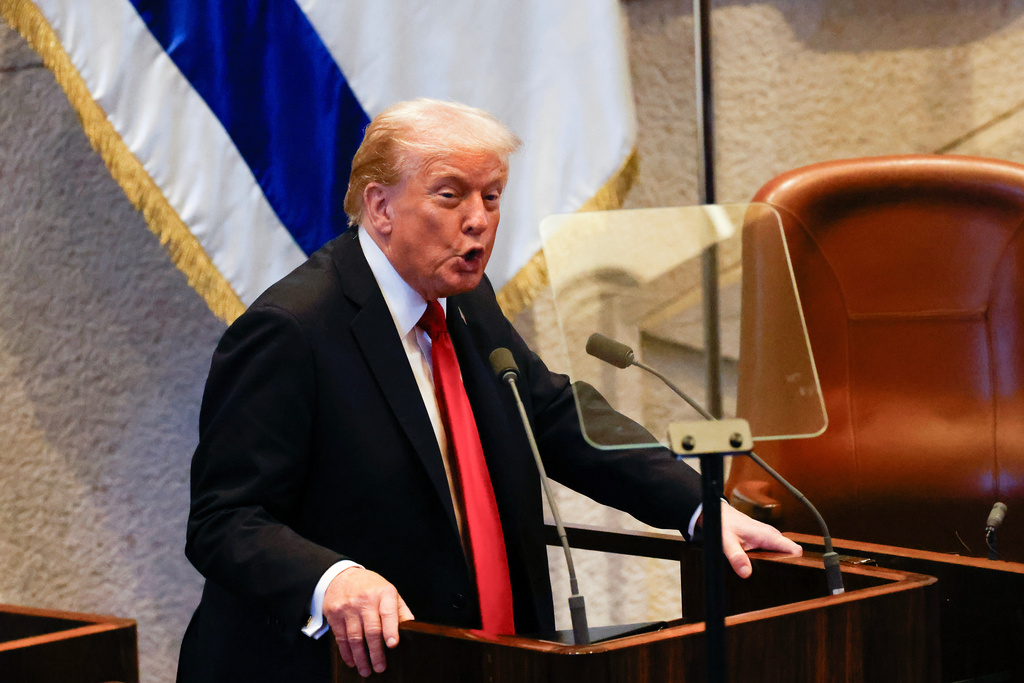
In a significant diplomatic moment, Israel and Hamas exchanged hostages and prisoners on Monday, marking what U.S. President Donald Trump characterized as a crucial first step toward peace during his address to Israel’s parliament, the Knesset.
“After so many years of unceasing war and endless danger, today the skies are calm. The guns are silent. The sirens are still. And the sun rises on a holy land that is finally at peace,” Trump declared, adding that he had now ended his “eighth war,” up from the seven he claimed previously.
However, analysts and diplomatic experts caution that Trump’s assertions of resolving multiple global conflicts represent an overstatement of actual achievements. While progress has occurred in several regions, many situations remain tenuous or incomplete.
The Israel-Hamas agreement, while significant, represents early stages in what would need to be a comprehensive peace process. The initial agreement includes the release of hostages from Gaza, freedom for hundreds of Palestinian prisoners held in Israel, increased humanitarian aid, and a partial Israeli military withdrawal from Gaza’s major urban areas.
Following his Israel visit, Trump participated in a “Summit of Peace” in Egypt, where he and other world leaders signed what he described as a “comprehensive” document outlining “rules and regulations” for the path forward. Details of this document have not been fully disclosed.
Crucial elements still require negotiation, including Hamas disarmament, formation of a post-war Gaza government, reconstruction plans, and the extent of Israel’s withdrawal. Trump envoys Steve Witkoff and Jared Kushner are reportedly already addressing implementation issues.
In the Israel-Iran conflict, Trump helped negotiate a ceasefire after directing American airstrikes against Iranian nuclear facilities at Fordo, Isfahan, and Natanz. This intervention followed Israel’s attacks on Iran’s nuclear program and military leadership.
Evelyn Farkas, executive director of Arizona State University’s McCain Institute, credited Trump with ending the immediate hostilities, noting, “There’s always a chance it could flare up again if Iran restarts its nuclear weapons program, but nonetheless, they were engaged in a hot war with one another.”
Lawrence Haas from the American Foreign Policy Council characterized the ceasefire as a “temporary respite” in an ongoing “day-to-day cold war” between the two nations.
Trump has also claimed success in mediating tensions between Egypt and Ethiopia over the Grand Ethiopian Renaissance Dam on the Blue Nile River. However, negotiations between Egypt, Ethiopia, and Sudan have stalled despite Trump’s previous efforts to broker a deal during his first term, when he suspended aid to Ethiopia over the dispute.
“It would be a gross overstatement to say that these countries are at war,” Haas noted regarding this situation.
The India-Pakistan ceasefire following April’s tourist killings in Indian-controlled Kashmir represents another claim. While Pakistan thanked Trump and recommended him for the Nobel Peace Prize, India has denied Trump’s assertions regarding U.S. trade concessions influencing the ceasefire.
Trump’s administration has listed the Serbia-Kosovo relationship as a resolved conflict, despite no imminent war threat existing during his second term. While Trump negotiated a wide-ranging deal between the countries during his first term, much remains unimplemented.
In Africa, the administration facilitated a peace agreement between Rwanda and the Democratic Republic of Congo, signed at the White House in June. However, the M23 rebel group, backed by Rwanda but not directly involved in negotiations, has not committed to the agreement’s terms, and deadly fighting continues in eastern Congo.
The Armenia-Azerbaijan conflict saw progress when Trump hosted both nations’ leaders at the White House in August, resulting in signed agreements aimed at reopening transportation routes and affirming commitment to a peace treaty. Though preliminary approval was indicated, a final treaty has yet to be signed and ratified.
Finally, officials from Thailand and Cambodia have acknowledged Trump’s role in their July ceasefire, with Trump reportedly warning both nations that the U.S. would not proceed with trade agreements if hostilities continued.
While Trump has made substantial diplomatic interventions in several international conflicts, the characterization of having definitively “ended eight wars” represents an oversimplification of complex situations that continue to require sustained diplomatic engagement and monitoring.
Verify This Yourself
Use these professional tools to fact-check and investigate claims independently
Reverse Image Search
Check if this image has been used elsewhere or in different contexts
Ask Our AI About This Claim
Get instant answers with web-powered AI analysis
Related Fact-Checks
See what other fact-checkers have said about similar claims
Want More Verification Tools?
Access our full suite of professional disinformation monitoring and investigation tools

12 Comments
The mining and energy sectors will be watching this situation closely, as stability in the Middle East can have significant impacts on commodity prices and supply chains. A lasting peace would be positive for the global economy.
That’s a good point. Reduced geopolitical tensions in the region could improve the investment climate for mining and energy companies operating there. But the details of any agreement will be crucial.
Interesting to see the nuances and complexities around Trump’s claims on ending conflicts. It’s important to maintain a balanced perspective and not overstate progress, as the Israel-Hamas truce is just an initial step in a longer peace process.
Agreed. The situation remains fragile, and sustained diplomatic efforts will be needed to achieve a comprehensive peace agreement. It’s prudent to avoid premature declarations of success.
The mining and energy sectors will be closely monitoring the situation in the Middle East, as regional stability can significantly affect commodity prices and supply chains. A genuine, lasting peace would be welcomed by the industry.
That’s a fair point. However, the industry will likely take a cautious approach until the details and long-term viability of any peace agreement become clearer. Sustainable solutions are the ultimate goal.
The mining and energy sectors have a vested interest in regional stability, as it can impact the availability and pricing of critical resources. However, caution is warranted when assessing the full implications of the latest truce.
That’s a fair assessment. While the truce is a positive step, companies in these industries will likely take a wait-and-see approach until a more durable peace agreement can be established.
Fact-checking is important to ensure accurate reporting, especially on high-profile political claims. While progress is welcome, it’s wise to avoid exaggerating the scope and permanence of conflict resolutions.
Absolutely. Maintaining a realistic and nuanced perspective is key when evaluating complex geopolitical developments like this. The road to lasting peace is often long and arduous.
It’s important to maintain a balanced and objective view when evaluating claims about ending conflicts. The details and long-term viability of any agreement are crucial for understanding its true impact.
Exactly. Premature declarations of success can be counterproductive and undermine the hard work required to achieve lasting peace. Fact-checking and nuanced analysis are essential in these situations.