


Listen to the article
Healthcare Premium Increases Loom as ACA Subsidies Face Expiration
As Republicans and Democrats approached an October 1 government shutdown deadline, a heated debate emerged over whether to pass a clean extension of federal funding or to include provisions extending expiring Affordable Care Act subsidies. Democrats warned that failure to extend these subsidies would result in substantial increases in healthcare costs for millions of Americans.
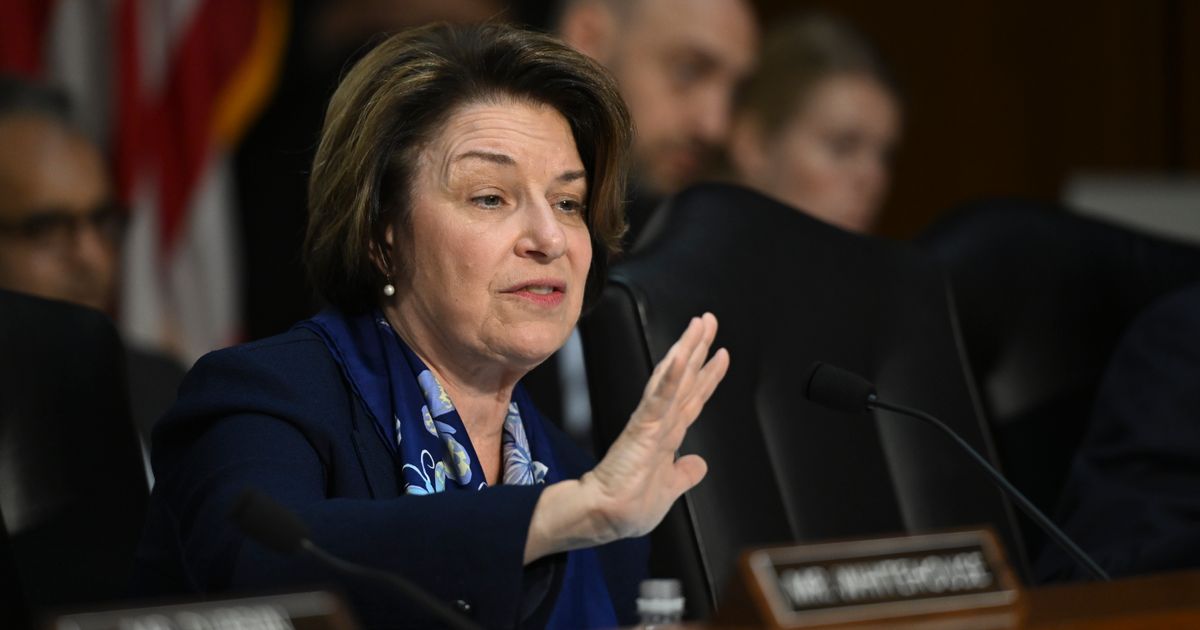
During a September 28 interview on CBS’ “Face the Nation,” Sen. Amy Klobuchar (D-Minn.) highlighted the potential impact on her constituents. “Republicans have created a health care crisis,” Klobuchar said. “My constituents, Americans, are standing on a cliff right now with these insurance premium increases that are upon them.”
The senator pointed to specific consequences, claiming there would be “a 75% increase in premiums starting Nov. 1 on people who are small business owners, people who are farmers out there, twice as much in the rural areas.”
This potential premium increase stems from enhanced Affordable Care Act subsidies that are set to expire. These enhanced subsidies, initially implemented in 2021 under President Biden’s administration, made health insurance more affordable by reducing the maximum amount purchasers would pay for coverage and extending subsidies to households with incomes above 400% of the federal poverty level.
The enhanced subsidies proved highly effective in expanding healthcare coverage. According to data analyzed by KFF, a leading health care think tank, the number of Americans receiving these subsidies jumped from 12 million in 2021 to 21.4 million in 2024. Congress renewed these enhanced subsidies in 2022, but they are currently set to expire at the end of 2025.
KFF’s analysis substantiates the dramatic cost increase Klobuchar referenced. Using 2024 federal data, KFF calculated that without the enhanced subsidies, enrollees would face out-of-pocket increases of approximately 79% on average—close to Klobuchar’s 75% figure. Two days after Klobuchar’s remarks, KFF released updated estimates showing an even higher potential increase of 114%.
The impact on rural communities appears particularly significant. According to an analysis by the Century Foundation, a progressive think tank cited by Klobuchar’s office, out-of-pocket insurance costs in rural counties would increase on average from $713 to $1,473—a 107% increase, effectively doubling costs for these residents.
By comparison, urban counties would see an 89% increase. While the rural impact is disproportionately larger, it’s important to note that the rural increase would be 28% larger than for urban enrollees—substantial, but not twice as much as might be inferred from some interpretations of Klobuchar’s statement.
The expiration of these subsidies would have far-reaching effects across the healthcare marketplace. For many self-employed individuals, small business owners, and farmers who don’t receive employer-sponsored health insurance, these increases represent a significant financial burden. The subsidies have been particularly important for individuals who earn too much to qualify for traditional ACA subsidies but still struggle with healthcare costs.
Healthcare experts warn that without an extension of these enhanced subsidies, the insurance marketplace could see disruption as some individuals, particularly those who are younger and healthier, might choose to drop coverage altogether, potentially destabilizing the risk pool and driving premiums even higher for those who remain.
As the deadline approaches, the debate highlights the ongoing partisan divide over healthcare policy. Democrats have framed the issue as a potential crisis requiring immediate attention, while Republicans have focused on broader spending concerns in budget negotiations.
The outcome of these discussions will have significant implications for millions of Americans who rely on the ACA marketplace for health coverage, with rural communities potentially facing the most severe financial consequences if the enhanced subsidies are allowed to expire.
Verify This Yourself
Use these professional tools to fact-check and investigate claims independently
Reverse Image Search
Check if this image has been used elsewhere or in different contexts
Ask Our AI About This Claim
Get instant answers with web-powered AI analysis
Related Fact-Checks
See what other fact-checkers have said about similar claims
Want More Verification Tools?
Access our full suite of professional disinformation monitoring and investigation tools

6 Comments
This is a concerning development. Healthcare costs are already a significant burden for many. A 75% premium increase would price a lot of people out of the market. I hope Congress can come together to find a way to extend the subsidies.
I’m quite skeptical of these claims. A 75% increase seems exorbitant. While I’m sure there will be some premium hikes, I’d want to see more concrete data and analysis before accepting those numbers. Hopefully the facts get clarified soon.
As someone who has struggled with healthcare costs, I’m really worried about the potential for huge premium increases. This could be devastating for small businesses and families. I hope a solution can be found quickly.
This is a complex issue with a lot of moving parts. While I’m concerned about potential premium increases, I’d encourage everyone to look at the full context and details before jumping to conclusions. Maintaining affordable healthcare access should be the priority.
Wow, a 75% premium increase would be devastating for many families and small businesses. With the ACA subsidies expiring, it’s crucial that lawmakers find a solution to keep healthcare costs affordable for all Americans.
I’m very curious to see how this plays out. While premium hikes are never welcome, I appreciate the Senator highlighting the potential impact, especially on rural communities. Hopefully a bipartisan compromise can be reached.