


Listen to the article
Democracy’s Digital Challenge: Information Integrity Beyond Security Theater
The global conversation around information integrity is plagued by a fundamental disconnect between rhetoric and action. While world leaders and institutions frequently declare that “democracy is at stake,” their solutions remain largely confined to platform-centric approaches that fail to address the deeper sociological forces making populations vulnerable to disinformation campaigns.
The United Nations’ Global Principles for Information Integrity, launched in mid-2024, exemplifies this paradox. The initiative rightly identifies concerns about how “technology companies based in a handful of countries monopolize control over global information flow” and envisions “an information ecosystem that delivers choice, freedom, privacy and safety for all.” However, this approach predominantly treats symptoms while ignoring root causes.
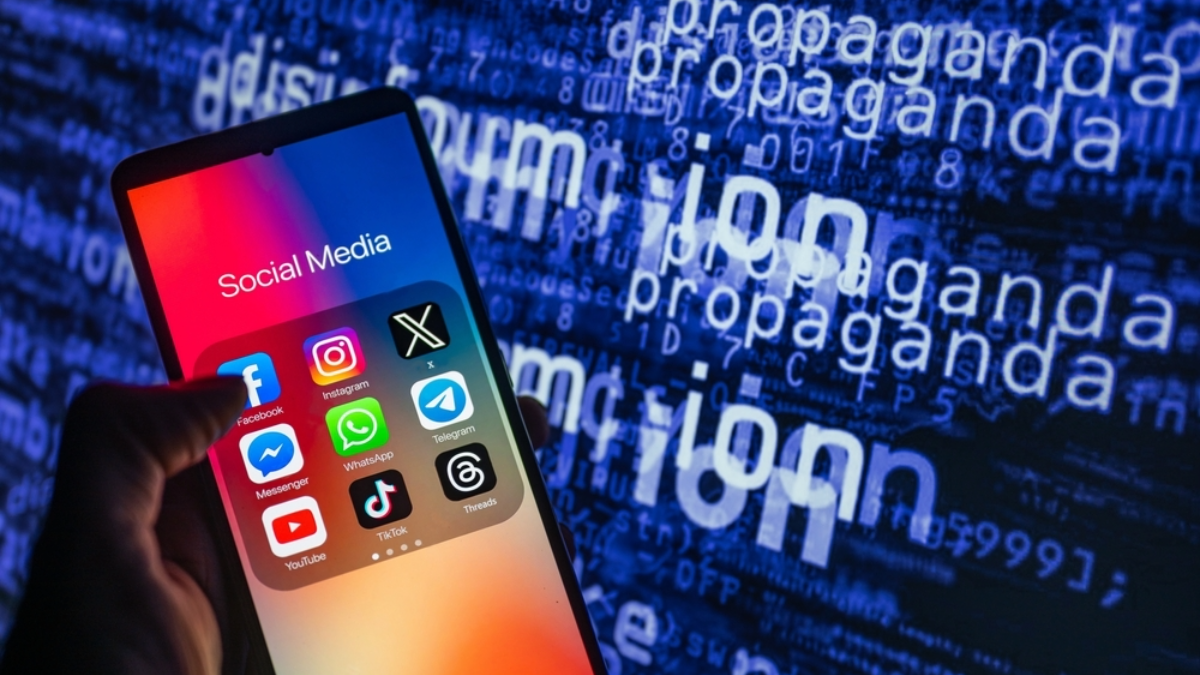
Across democratic societies, reactionary groups increasingly employ antagonistic politics and online humor to undermine opponents. Platform recommendation algorithms can be manipulated to funnel users toward extremist content, while “disinformation-as-a-service” has emerged as a profit-driven industry with opportunistic intermediaries who prioritize financial gain over democratic values.
The prevailing policy response resembles what experts describe as “security theater” – actions designed to create the appearance of improved security without addressing fundamental vulnerabilities. While authorities warn about threats to democracy, their cautious approach often weighs “the limits of toleration for bad faith reactionary actors against the perceived costs of having independent institutions adjudicate political disputes.”
Current methods for controlling disinformation typically focus on content removal and account bans – a “carceral approach” that targets individual actors rather than examining the social conditions that make people receptive to false information in the first place. This raises the critical question: what circumstances in people’s social lives make them vulnerable to disinformation?
Economic insecurity provides a significant part of the answer. Austerity, precarity, and underemployment have reshaped public life in ways that contribute to what economists Anne Case and Angus Deaton term “deaths of despair.” When institutions fail to deliver on their promises and financial stability becomes increasingly elusive, alternative explanations – even deeply flawed ones – become appealing precisely because they offer coherent narratives about societal failures.
“Misinformation succeeds not because people are inherently gullible, but because it provides meaning and agency in contexts where both have been systematically eroded,” notes one researcher in the field.
Policy responses that focus solely on media literacy or technological solutions often misdiagnose the problem. The assumption that disinformation spreads due to individual reasoning deficits that can be “patched” through education fails to recognize that the issue stems from collective experiences of social alienation and economic abandonment.
There’s also a troubling selectivity in how disinformation is defined. While electoral processes receive significant attention, corporate communications that downplay environmental risks or misrepresent working conditions rarely face similar scrutiny, despite their profound impact on public welfare. This selective application reveals more about power structures than concerns over truthfulness.
Terminology presents additional challenges. The term “AI” has become so broad and imprecise that it often obscures rather than clarifies discussions. Similarly, “misinformation” and “disinformation” have fallen out of favor due to their political baggage, leading to a constant search for neutral terminology like “information integrity” or “synthetic narrative control.”
Moving beyond security theater requires a fundamental shift in approach. Rather than asking merely “how do we stop misinformation?” policy researchers must examine “what material and symbolic interests does information serve, and how do power relations shape what counts as legitimate knowledge?”
This approach demands examining not just false information but the entire system through which certain beliefs become accepted while others are marginalized. It provides tools for understanding how dominant groups maintain cognitive hegemony and how alternative meaning-making systems develop in response.
The concept of “habitus,” developed by French sociologist Pierre Bourdieu, offers valuable insights. Groups that have experienced institutional failure and marginalization develop a reasonable skepticism toward official authority. What might appear as susceptibility to disinformation may actually represent rational caution based on lived experience.
Addressing the information integrity crisis requires both technological solutions and structural transformation that tackles root causes, including economic insecurity and institutional failure. As one expert concludes, “the field of information integrity must return to classical social questions about representation and property relations, especially during this moment of hegemonic transition in the global market.”
Democracy’s digital future depends not just on fighting false information, but on rebuilding the social and economic foundations that make democratic discourse possible in the first place.
Verify This Yourself
Use these professional tools to fact-check and investigate claims independently
Reverse Image Search
Check if this image has been used elsewhere or in different contexts
Ask Our AI About This Claim
Get instant answers with web-powered AI analysis
Related Fact-Checks
See what other fact-checkers have said about similar claims
Want More Verification Tools?
Access our full suite of professional disinformation monitoring and investigation tools

7 Comments
Disinformation thrives in environments of economic insecurity and social division. Sustainable solutions need to address these underlying drivers, not just the symptoms.
Agreed. Empowering citizens with access to reliable information and strengthening democratic institutions are key to building societal resilience against disinformation.
The UN’s principles for information integrity are a step in the right direction, but more action is needed to truly fix the deeper issues fueling the disinformation crisis.
Disinformation thrives on polarization and eroding social cohesion. Investing in community-level programs that bring people together could be an effective antidote.
Addressing the social and economic root causes of disinformation is critical. Tackling this challenge requires a holistic approach that goes beyond just platform-centric solutions.
Manipulated algorithms and ‘disinformation-as-a-service’ business models are alarming trends. Regulatory oversight and transparency are crucial to restoring trust in digital information.
Absolutely. Platforms must be held accountable for how their systems can be exploited to spread harmful content and erode democratic discourse.