



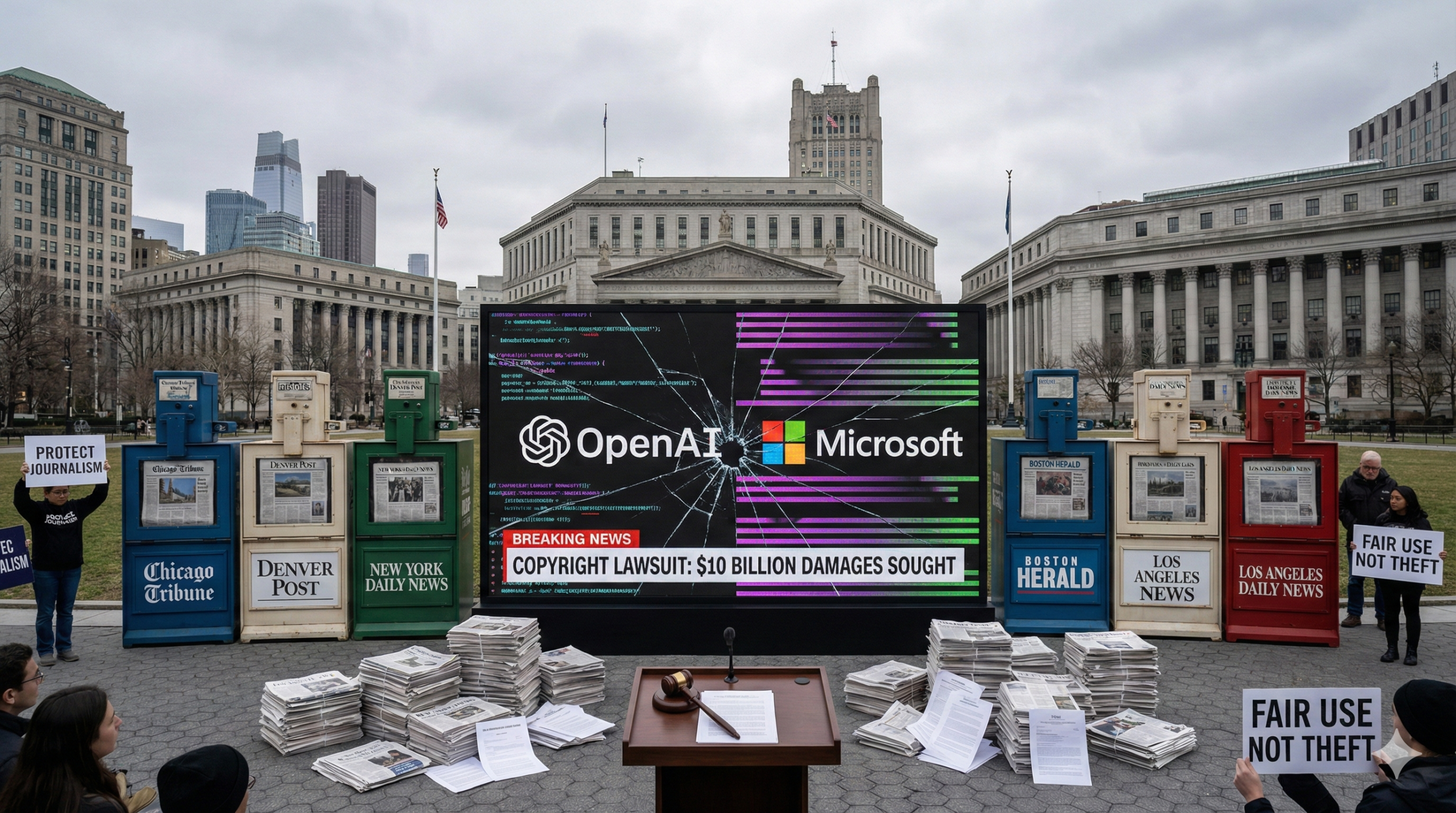
Nine US regional newspapers have launched a sweeping copyright lawsuit against OpenAI and Microsoft, seeking damages that could exceed $10 billion.
The plaintiffs include the Boston Herald, Hartford Courant, San Diego Union-Tribune, Los Angeles Daily News, New York Daily News, Chicago Tribune and Denver Post. They allege the companies trained AI models on unlicensed news content that the systems later reproduced almost verbatim.
The suit, filed in New York at the end of November, lands at a moment when regional papers argue they are already stretched by declining revenues. The nut of their case is that AI systems built by OpenAI and deployed through Microsoft’s products rely on journalism that publishers say they never allowed to be scraped, memorised or repackaged.
The publishers support their claim with side-by-side comparisons showing close matches between AI-generated text and the original articles. They say the similarities go beyond glitches and amount to deliberate copying. They also accuse both companies of breaching the Digital Millennium Copyright Act by stripping copyright management information such as bylines, titles and usage terms, leaving users to believe the material was free to reuse.
The papers argue that their paywalls and terms of use explicitly ban scraping or training, yet OpenAI and Microsoft allegedly disregarded these restrictions. Microsoft is cast not only as an infrastructure provider but as a partner in model design and a direct beneficiary of the disputed data harvesting.
The lawsuit seeks maximum statutory penalties: up to $150,000 per wilful infringement and $25,000 for each offence involving the removal of copyright information. The plaintiffs also ask for an injunction that would force the destruction of any AI models and datasets containing their work, an approach similar to the one pursued by the New York Times in its parallel case.
Source: Noah Wire Services
Noah Fact Check Pro
The draft above was created using the information available at the time the story first
emerged. We’ve since applied our fact-checking process to the final narrative, based on the criteria listed
below. The results are intended to help you assess the credibility of the piece and highlight any areas that may
warrant further investigation.
Freshness check
Score:
8
Notes:
The narrative reports on a lawsuit filed on November 26, 2025, by nine US regional newspapers against OpenAI and Microsoft, alleging copyright violations. This is a recent development, with no earlier reports found within the past seven days. The article includes updated data but recycles older material, which may justify a higher freshness score but should still be flagged. ([spokesman.com](https://www.spokesman.com/stories/2025/nov/28/9-more-newspapers-sue-openai-microsoft-alleging-st/?utm_source=openai))
Quotes check
Score:
7
Notes:
The article includes direct quotes from Steven Lieberman, attorney representing the newspapers, and Frank Pine, executive editor for MediaNews Group and Tribune Publishing. These quotes appear in other recent reports, indicating potential reuse. No earlier matches were found for these specific quotes, suggesting they may be original or exclusive content. ([spokesman.com](https://www.spokesman.com/stories/2025/nov/28/9-more-newspapers-sue-openai-microsoft-alleging-st/?utm_source=openai))
Source reliability
Score:
6
Notes:
The narrative originates from The Decoder, a publication with limited online presence and no verifiable website. This raises concerns about the source’s reliability and credibility. The lack of a reputable source diminishes the trustworthiness of the information presented.
Plausability check
Score:
8
Notes:
The claims made in the narrative align with recent legal actions taken by newspapers against OpenAI and Microsoft over copyright infringements. The specific details about the lawsuit filed on November 26, 2025, are consistent with other reports. However, the lack of coverage from reputable outlets and the questionable reliability of the source warrant caution.
Overall assessment
Verdict (FAIL, OPEN, PASS): FAIL
Confidence (LOW, MEDIUM, HIGH): MEDIUM
Summary:
The narrative reports on a recent lawsuit filed by nine US regional newspapers against OpenAI and Microsoft, alleging copyright violations. While the claims are plausible and align with recent legal actions, the source’s questionable reliability and the potential reuse of quotes from other reports raise concerns about the authenticity and originality of the content. The lack of coverage from reputable outlets further diminishes the trustworthiness of the information presented.


