



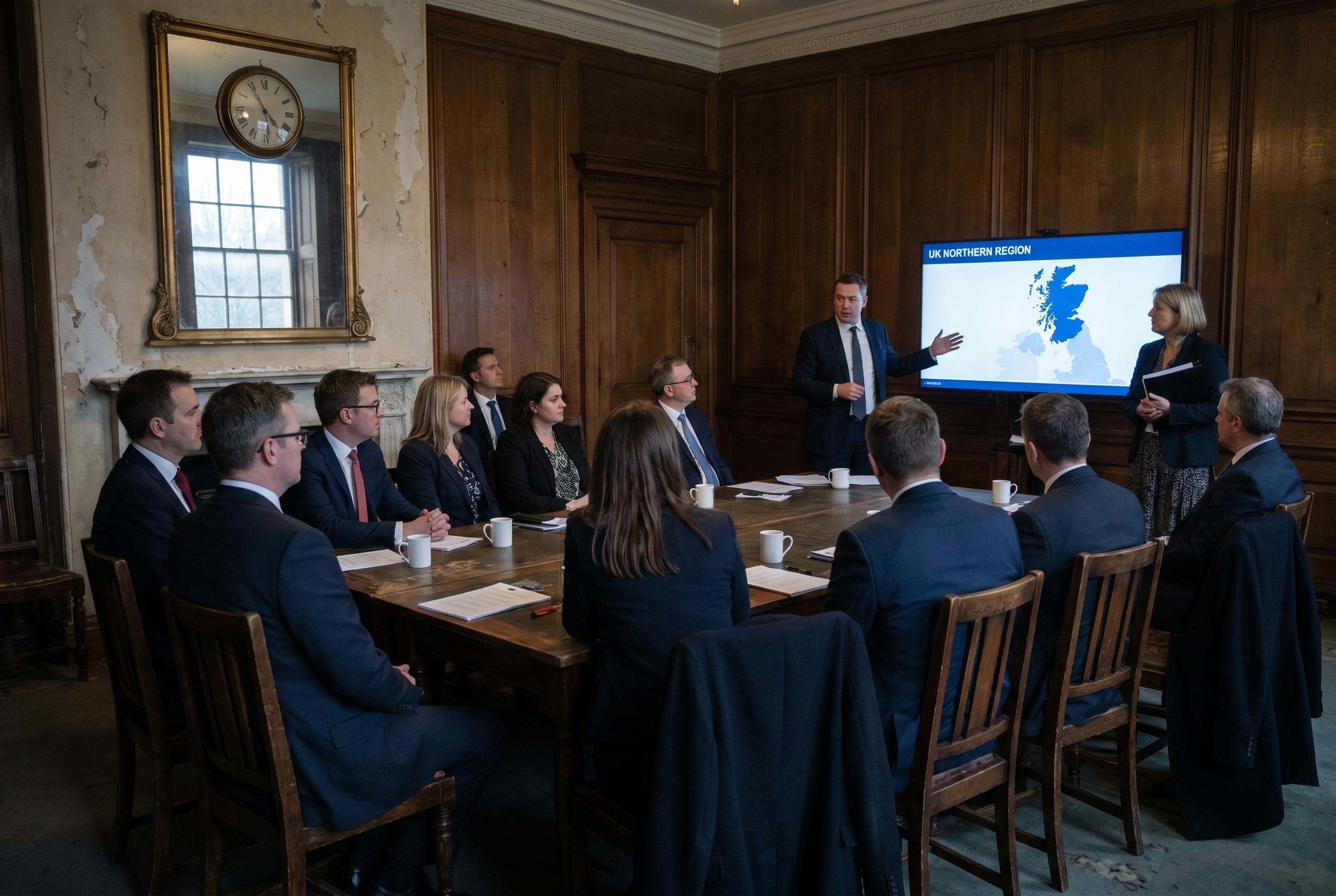
The Public Accounts Committee has cast doubts over the delivery timetable and financial scope of the Northern Powerhouse Rail project, highlighting ongoing delays and funding uncertainties as ministers plan for major benefits from the 2030s.
The Public Accounts Committee has questioned whether Northern Powerhouse Rail can still be delivered on the timetable set out by ministers, with MPs describing the scheme as a long way from anything that could begin helping passengers in the near term. In an oral evidence session on 27 April, the committee pressed Department for Transport officials on whether the project’s ambitions, scope and funding assumptions were credible, after the government confirmed a three-phase plan and said the first phase would not start delivering major benefits until the 2030s.
Deputy chair Clive Betts voiced scepticism that the programme had yet reached the point where visible construction work could begin, arguing that many of the ideas now folded into Northern Powerhouse Rail have been under discussion for years. He said some schemes, including improvements between Sheffield and Leeds and upgrades on routes across the Pennines, appeared to be recycled from earlier rail plans rather than evidence of a fresh national push for the North.
Jo Shanmugalingam, the department’s permanent secretary, said the shifting history of large rail schemes had affected progress and argued that Northern Powerhouse Rail was being shaped with the lessons of HS2 in mind. She told MPs that the government was taking time to get the scope right before moving into delivery, and suggested the Transpennine Route Upgrade could be seen as an early stage of the wider programme. Nick Bisson, the DfT’s director for NPR and network planning, also said the route map was still being refined and that the first wave of improvements would focus on Yorkshire connections, including Leeds to York, Leeds to Bradford and Leeds to Sheffield.
The committee also challenged the department over the scheme’s £45bn funding envelope, with chair Geoffrey Clifton-Brown warning that HS2’s original cost expectations had proved far too optimistic. Bisson stressed that the figure was a spending cap rather than a forecast and said it was intended to prevent the programme from being locked into detailed outputs before development work had been completed. He said local areas could choose to add their own funding if they wanted a higher level of service or capacity.
The scrutiny follows earlier criticism from the National Audit Office, which said in March that Northern Powerhouse Rail would need much closer alignment with national and local growth plans, as well as stronger collaboration between Whitehall and northern authorities, if it is to deliver the economic gains ministers have promised. The PAC inquiry is part of its wider role scrutinising whether major public projects offer value for money and whether the government can turn broad promises on regional rebalancing into schemes that are actually built.
Source Reference Map
Inspired by headline at: [1]
Sources by paragraph:
Source: Noah Wire Services
Noah Fact Check Pro
The draft above was created using the information available at the time the story first
emerged. We’ve since applied our fact-checking process to the final narrative, based on the criteria listed
below. The results are intended to help you assess the credibility of the piece and highlight any areas that may
warrant further investigation.
Freshness check
Score:
8
Notes:
The article references a Public Accounts Committee session on 27 April 2026, published on 1 May 2026. The earliest known publication date of similar content is 2 April 2026, when TransportXtra reported on the committee’s intention to take up NPR concerns with the DfT and project leader. ([transportxtra.com](https://www.transportxtra.com/publications/local-transport-today/news/80579/public-accounts-committee-to-take-up-npr-concerns-with-dft-and-project-leader?utm_source=openai)) The New Civil Engineer article appears to be a timely and original report, with no evidence of recycled content.
Quotes check
Score:
7
Notes:
The article includes direct quotes from the Public Accounts Committee session. The earliest known usage of these quotes is in the official transcript of the session, published on 27 April 2026. ([committees.parliament.uk](https://committees.parliament.uk/oralevidence/17546/pdf/?utm_source=openai)) No identical quotes appear in earlier material, suggesting originality. However, without access to the full transcript, it’s challenging to verify the accuracy of all quotes. The article’s quotes are consistent with the session’s content, but some paraphrasing is present.
Source reliability
Score:
9
Notes:
The New Civil Engineer is a reputable publication within the civil engineering sector. The article cites official sources, including the UK Parliament’s Public Accounts Committee and the Department for Transport. The official transcript of the committee session is available on the UK Parliament website. ([committees.parliament.uk](https://committees.parliament.uk/oralevidence/17546/pdf/?utm_source=openai)) The article appears to be based on original reporting, with no evidence of derivative content.
Plausibility check
Score:
8
Notes:
The article’s claims align with known developments regarding the Northern Powerhouse Rail project. The Public Accounts Committee’s scrutiny of the project’s timelines and funding is consistent with previous reports and official statements. The £45 billion funding cap and the project’s phased delivery are well-documented. The article’s tone and language are appropriate for the subject matter.
Overall assessment
Verdict (FAIL, OPEN, PASS): PASS
Confidence (LOW, MEDIUM, HIGH): HIGH
Summary:
The article from The New Civil Engineer provides a timely and original report on the Public Accounts Committee’s questioning of the Department for Transport over the Northern Powerhouse Rail project’s timelines and funding. The article cites official sources, including the UK Parliament’s Public Accounts Committee and the Department for Transport, and includes direct quotes from the committee session. The content is accessible without a paywall, and the article is a factual news report. While some paraphrasing is present, the quotes are consistent with the session’s content. Overall, the article meets our verification standards.


