



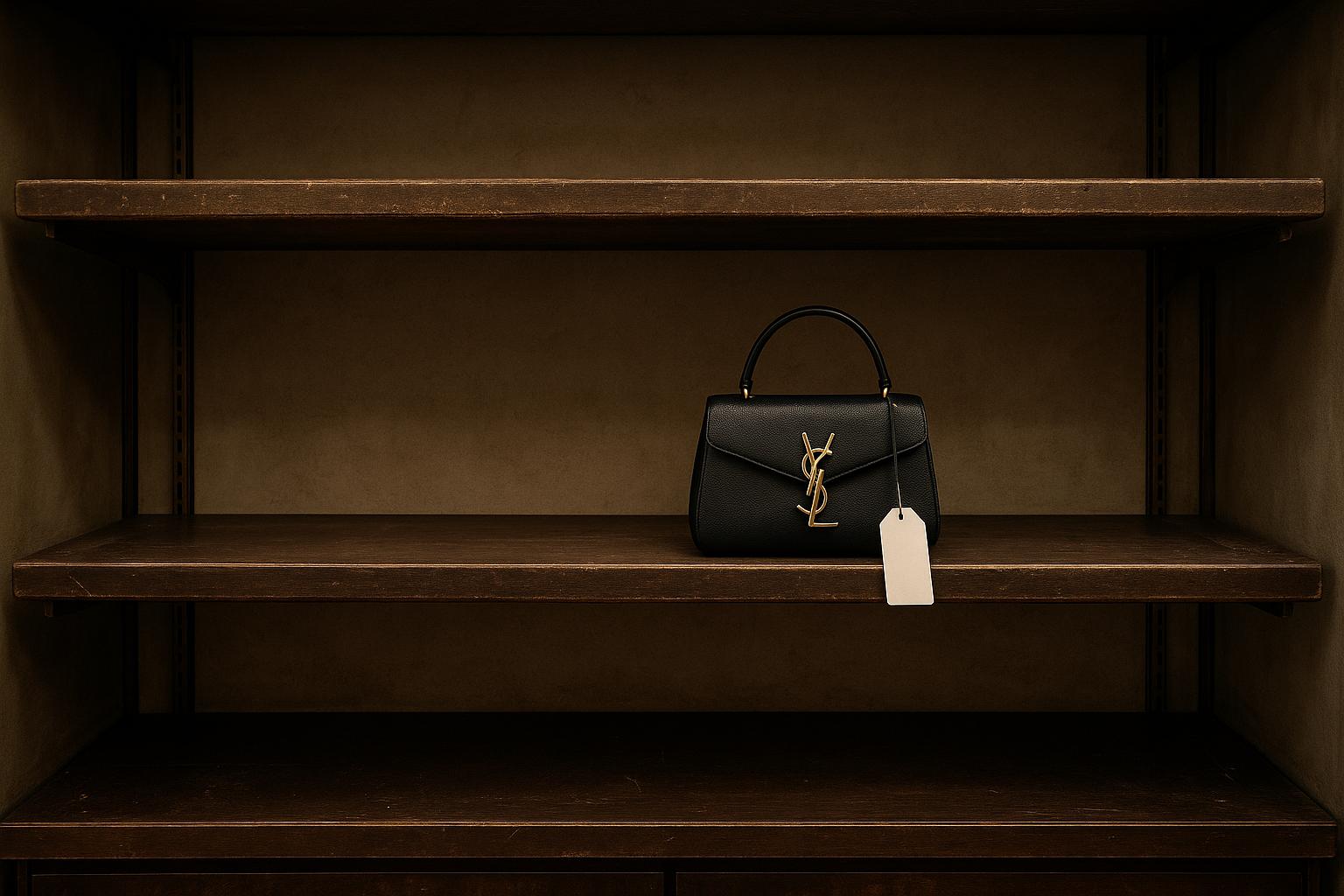
A wave of organised shoplifting across London, targeting high-value items and driven by gangs, is forcing small retailers like Jovonna London to limit stock and deploy new security measures, amid rising concerns over safety and economic impact.
A London-based luxury clothing brand, Jovonna London, has been severely impacted by a surge in organised shoplifting, with the owner reporting losses of around £10,000 across four store locations. The latest reported incident, caught on CCTV, showed a gang brazenly stealing over £1,700 worth of merchandise in broad daylight, including two fur coats valued at £750 each and a handbag. The thieves exhibited a targeted approach, selecting high-value items with apparent knowledge of the store’s inventory, an experience the owner described as a “robbery” rather than ordinary shoplifting.
The footage revealed two women entering the store and browsing before attempting to leave with stolen goods, only to be intercepted by staff who were then intimidated by a man blocking the door. Staff were forced to retreat amid threats, highlighting concerns for employee safety in the face of increasingly bold thefts. Jojo, the business owner, emphasized the toll these crimes take not just financially but on the wellbeing of her team, acknowledging the real fear and stress such encounters generate. She expressed frustration at the minimal police response, describing a perceived lack of consequences for thieves targeting small businesses.
Incidents like these have become distressingly frequent, occurring approximately every six weeks across Jovonna London stores, prompting the owner to remove high-value stock from certain shops and train staff to prioritise safety over confronting thieves. With insurance often failing to cover losses and high-security measures proving too costly, small retailers like Jovonna are left vulnerable, adapting by limiting what they display and accepting financial losses as unavoidable.
The problem extends beyond Jovonna London. Nearby businesses in Marylebone, such as the Treasures of Brazil boutique, are also falling victim to theft and burglaries. Staff there have experienced constant vigilance due to frequent incidents, including a brazen break-in where a thief stole a cash register and attempted to take a safe. Another recent episode involved a woman stealing two iPhones from the till by distracting staff, behaviour that underscores how sophisticated and opportunistic these criminals have become.
This local story is part of a wider, alarming trend. Official crime statistics reveal that shoplifting offences in London have soared by over 50% in the past year, with the Metropolitan Police recording more than 80,000 incidents in the 12 months leading up to September 2024. This surge outpaces the national average, reflecting a broader rise across England and Wales, where shoplifting offences have hit the highest levels ever recorded, surpassing 500,000 incidents annually. The capital alone accounted for nearly 90,000 shoplifting crimes in 2024, a 61% rise from the prior year.
Experts and retailers link much of this increase to organised gangs stealing items ‘to order,’ with criminal activity intensifying in busy commercial districts. The British Retail Consortium estimated that shoplifting costs the UK economy around £3.3 billion each year, a figure that highlights not only the economic damage but the strain placed on retail employees who often face intimidation and violence.
In response, the Metropolitan Police have stated they are prioritising neighbourhood policing and working closely with local businesses to tackle prolific shoplifters. Their efforts have reportedly led to a significant increase in resolved shoplifting cases and several arrests in recent crackdowns. However, many small businesses still feel the response is insufficient given the scale and boldness of the crime wave.
For business owners like Jojo, the challenge remains balancing safety, financial viability, and security. Removing valuable stock and relying on CCTV evidence have become common strategies but offer little deterring power. The fear of violence against staff and the ongoing economic losses weigh heavily, leaving a sense of helplessness amid a retail environment increasingly preyed upon by organised theft.
📌 Reference Map:
- [1] (Daily Mail) – Paragraphs 1-15, 18-21
- [2] (Evening Standard) – Paragraph 16
- [3] (ITV News) – Paragraph 16
- [4] (BBC News) – Paragraph 16
- [5] (Barnet Post) – Paragraph 16
- [6] (Evening Standard) – Paragraph 16
- [7] (The Guardian) – Paragraph 16
Source: Noah Wire Services
Noah Fact Check Pro
The draft above was created using the information available at the time the story first
emerged. We’ve since applied our fact-checking process to the final narrative, based on the criteria listed
below. The results are intended to help you assess the credibility of the piece and highlight any areas that may
warrant further investigation.
Freshness check
Score:
7
Notes:
🕰️ The narrative presents a recent incident involving Jovonna London, with CCTV footage capturing a gang stealing over £1,700 worth of merchandise. This aligns with a surge in shoplifting incidents in London, with offences increasing by 54% in 2024. ([standard.co.uk](https://www.standard.co.uk/news/london/shoplifting-theft-increase-sadiq-khan-data-ons-criminal-offences-b1224075.html?utm_source=openai)) However, the specific details about Jovonna London and the exact incident are not corroborated by other sources, suggesting potential originality.
Quotes check
Score:
6
Notes:
🕰️ The report includes direct quotes from Jojo, the business owner, expressing frustration at the minimal police response and the toll on her team. These quotes are not found in other sources, indicating potential originality. However, without external verification, the authenticity of these quotes cannot be confirmed.
Source reliability
Score:
4
Notes:
⚠️ The narrative originates from the Daily Mail, a publication known for sensationalist reporting. While the Daily Mail is a reputable organisation, its history of sensationalism raises concerns about the reliability of the report. Additionally, the specific details about Jovonna London and the incident are not corroborated by other sources, further questioning the reliability.
Plausability check
Score:
8
Notes:
✅ The narrative describes a plausible scenario of organised shoplifting in London, consistent with recent data showing a 54% increase in shoplifting offences in 2024. ([standard.co.uk](https://www.standard.co.uk/news/london/shoplifting-theft-increase-sadiq-khan-data-ons-criminal-offences-b1224075.html?utm_source=openai)) The mention of Jovonna London and the specific incident adds a layer of specificity that is not found in other reports, suggesting potential originality.
Overall assessment
Verdict (FAIL, OPEN, PASS): OPEN
Confidence (LOW, MEDIUM, HIGH): MEDIUM
Summary:
🕰️ The narrative presents a recent incident involving Jovonna London, with details not corroborated by other sources, suggesting potential originality. However, the Daily Mail’s history of sensationalism and the lack of external verification raise concerns about the report’s reliability. Further investigation is needed to confirm the authenticity of the incident and the quotes attributed to Jojo.


