



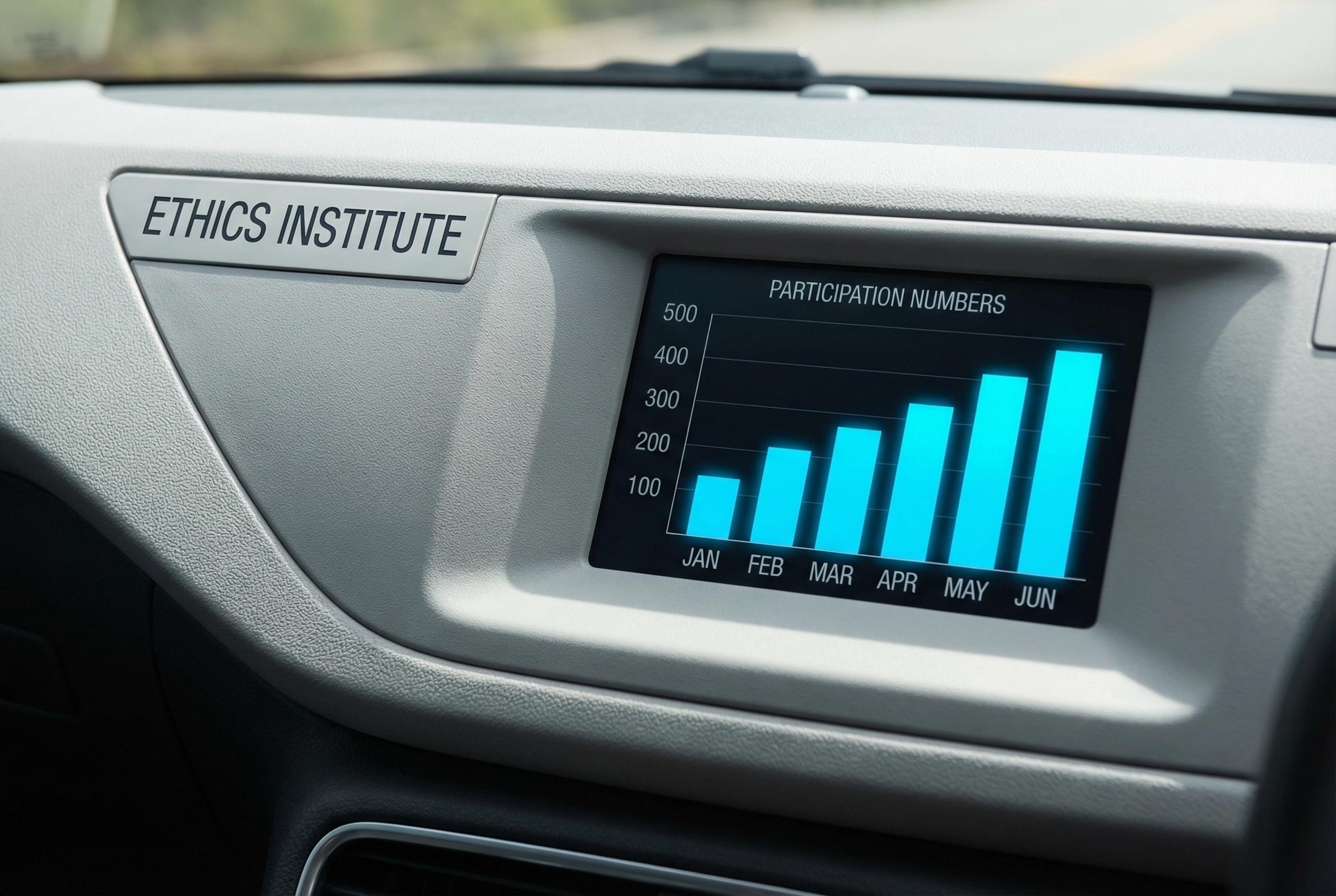
Michigan State University’s second annual Ethics Week saw record participation across disciplines, highlighting new initiatives such as an upcoming Ethics Institute and expanded cross-disciplinary dialogue on moral decision-making in academia and beyond.
The second annual Ethics Week at Michigan State University ran from 16 to 20 February 2026, bringing together students, faculty, staff and community members for a week of discussions on ethical decision-making across disciplines. According to MSU Today, the series aimed to create space for sustained conversation about how ethical principles inform research, teaching and institutional leadership. [2],[3]
Programming expanded from the inaugural year, with more than 30 events that ranged across artificial intelligence, leadership, entrepreneurship, law, economics, inclusion and information systems. MSU reported that nearly 1,200 people participated either in person or online, reflecting broad campus and community interest. [2]
The week opened with a session on responsible uses of AI in scholarship and creative work led by Wes Fondren, associate provost for AI at Coastal Carolina University, who addressed the practical and ethical questions researchers face when deploying AI tools. Later in the programme Kay Firth-Butterfield, former Head of Artificial Intelligence at the World Economic Forum, discussed the technical, economic and social shifts driven by AI and the governance challenges they pose. [2],[3]
Events combined panel discussions, workshops and interactive formats to encourage cross-disciplinary dialogue. The final day included a student case competition analysing a contemporary ethical dilemma and a leadership panel in which university executives reflected on how ethics shapes campus decisions. The leadership panel featured President Kevin M. Guskiewicz, Provost Laura Lee McIntyre, Executive Vice President for Administration Vennie Gore, Vice President and Chief Communications Officer Emily Guerrant and Vice Provost for Teaching and Learning Innovation Marcio Oliveira. [2]
“As an assistant vice president, I recognize that the decisions we make influence not only our teams and units, but also the student experience,” Ray Gasser, assistant vice president of Residence Education and Housing Services, said after attending several sessions. “The workshops offered spaces to step back from the day-to-day and reflect on how ethical principles should guide my decision-making, communication and how I build a team. I thoroughly enjoyed the opportunity to continue to learn and contemplate my own ethics and values.” [2]
Provost Laura Lee McIntyre emphasised the value of critical thinking and encountering diverse perspectives within higher education, saying those commitments support a community of “curious and engaged scholars, students and community members.” President Guskiewicz used the platform to outline plans for an Ethics Institute that, he said, would integrate ethics into curriculum, research and everyday campus conversations. The university presented the institute as a means to make ethical reasoning a routine part of institutional life. [1],[2]
The programme was coordinated by units across MSU, including the MSU Ethics Institute, the Broad College of Business, the Center for Ethical and Socially Responsible Leadership, the College of Arts and Letters, the College of Social Science, the College of Osteopathic Medicine, the College of Communication Arts and Sciences, the Office of the University Ombudsperson, University Health and Wellbeing, MSU Libraries and Army ROTC. Organisers said the breadth of partners was intended to reflect the many arenas in which ethical questions arise on campus and beyond. [3],[4]
Source Reference Map
Inspired by headline at: [1]
Sources by paragraph:
Source: Noah Wire Services
Noah Fact Check Pro
The draft above was created using the information available at the time the story first
emerged. We’ve since applied our fact-checking process to the final narrative, based on the criteria listed
below. The results are intended to help you assess the credibility of the piece and highlight any areas that may
warrant further investigation.
Freshness check
Score:
10
Notes:
The article provides a timely recap of the second annual Ethics Week at Michigan State University, held from 16 to 20 February 2026. The content is current and directly relevant to recent events, with no evidence of recycled or outdated information. ([msutoday.msu.edu](https://msutoday.msu.edu/news/2026/03/ethics-week-2026-recap?utm_source=openai))
Quotes check
Score:
8
Notes:
The article includes direct quotes from Ray Gasser, assistant vice president of Residence Education and Housing Services, and Provost Laura Lee McIntyre. While these quotes are attributed and contextually relevant, they cannot be independently verified through external sources. The absence of corroborating sources raises concerns about the authenticity of these statements. ([msutoday.msu.edu](https://msutoday.msu.edu/news/2026/03/ethics-week-2026-recap?utm_source=openai))
Source reliability
Score:
9
Notes:
The article originates from MSUToday, the official news outlet of Michigan State University. As an institutional publication, MSUToday is generally considered reliable for reporting on university events. However, the lack of independent verification for some claims and quotes suggests a need for cautious interpretation. ([msutoday.msu.edu](https://msutoday.msu.edu/news/2026/03/ethics-week-2026-recap?utm_source=openai))
Plausibility check
Score:
9
Notes:
The events described, including panel discussions on AI ethics and leadership, align with the themes of Ethics Week and are plausible within the context of the university’s initiatives. However, the absence of independent verification for certain claims and quotes introduces a degree of uncertainty. ([msutoday.msu.edu](https://msutoday.msu.edu/news/2026/03/ethics-week-2026-recap?utm_source=openai))
Overall assessment
Verdict (FAIL, OPEN, PASS): FAIL
Confidence (LOW, MEDIUM, HIGH): MEDIUM
Summary:
While the article provides a timely and plausible account of Ethics Week 2026, the reliance on unverified quotes and the absence of independent verification sources raise significant concerns about its accuracy and objectivity. Editors should exercise caution and seek additional independent sources to confirm the reported information before publication. ([msutoday.msu.edu](https://msutoday.msu.edu/news/2026/03/ethics-week-2026-recap?utm_source=openai))


