


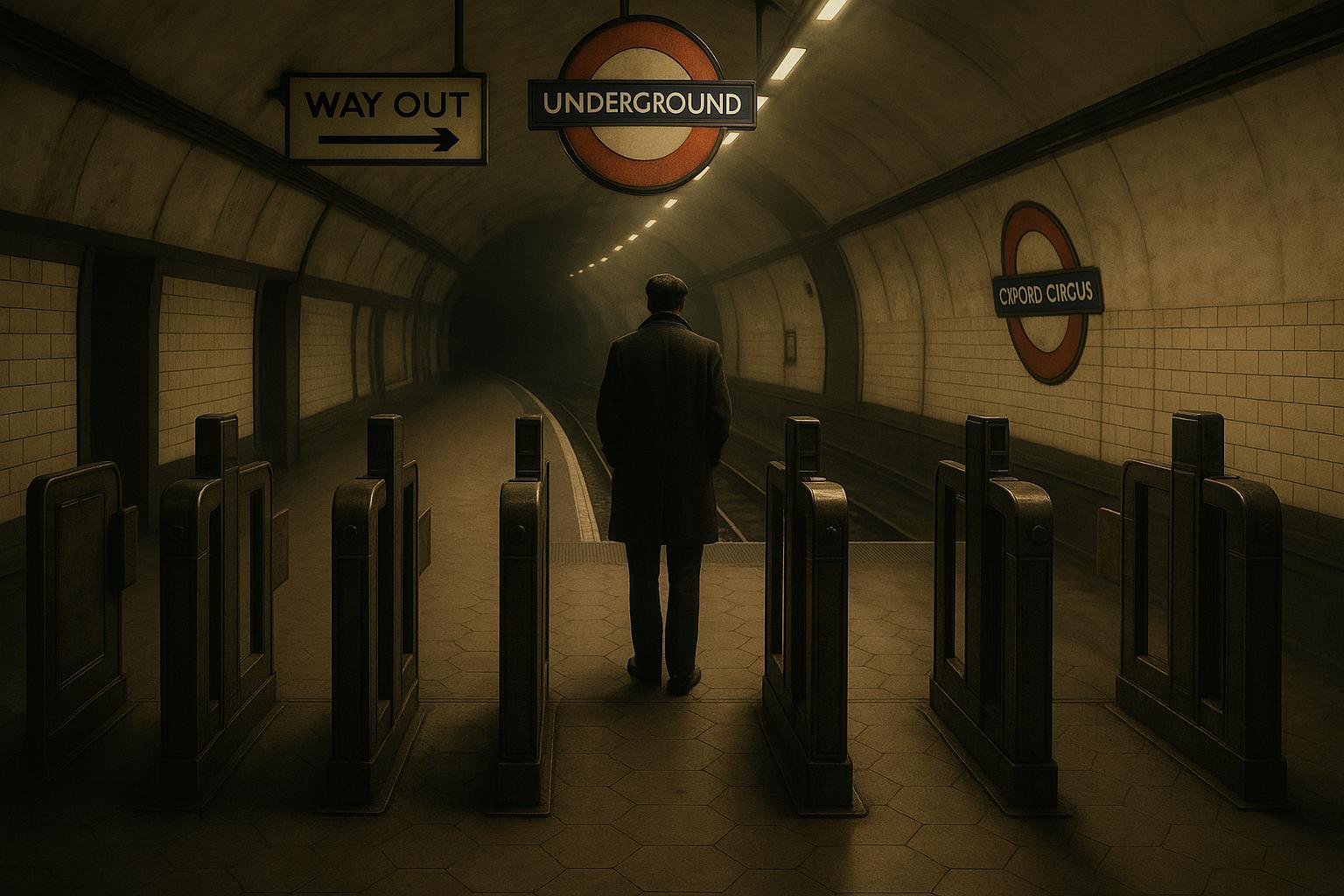
Nearly five decades after Britain phased out women-only rail carriages, a new campaign in London advocates for their return to combat escalating concerns over harassment and safety on the Tube, amid ongoing societal debates.
In London’s railway history, women-only carriages once formed a distinctive feature aimed at protecting female passengers. The practice dates back to the 19th century, with the South Eastern Railway instituting a rule in the 1850s to reserve a carriage for women upon request. By the early 20th century, railway companies like Great Western Railway actively promoted these compartments, with guards informing unaccompanied women of their availability. These carriages, marked by green signs in contrast to red smoker sections, were common until the mid-20th century when the rise of open plan carriages and social changes made them less practical and less visible. British Rail phased out the remaining women-only compartments in 1977, marking the end of this long-standing tradition which was met with mixed feelings, as some women found the compartments unpopular despite their protective intentions.
Nearly five decades after their abolition, the debate around women-only spaces on public transport has resurfaced in London. Camille Brown, a 21-year-old student at University College London, has launched a campaign advocating for women-only carriages on the London Underground. Her petition, which rapidly amassed over 12,000 signatures, calls on Mayor Sadiq Khan and Transport for London (TfL) to introduce at least one dedicated women-only carriage on every tube line. Brown highlights a growing concern about harassment on public transport, a sentiment echoed by a recent Girlguiding survey revealing that more than half of girls and young women aged 11 to 21 feel unsafe travelling alone on such networks. The issue has only intensified with TfL reporting 2,671 sexual offences across its services between 2023 and 2024, a 10.5% rise from the previous year, though unreported cases may further increase this figure.
Despite public support, TfL has expressed a firm stance against introducing gender-segregated carriages. Siwan Hayward, TfL’s director of security, policing and enforcement, emphasised a commitment to working closely with the police through intelligence-led operations aimed at targeting offenders and hotspots, rather than adopting women-only carriages. Hayward described women-only carriages as an unsupported measure, prioritising instead the use of policing to make the transport network hostile to offenders.

The notion of women-only carriages is not new nor unique to the UK. Countries such as Japan and Brazil have long implemented such measures, with Japan introducing them in the early 2000s to combat harassment on trains. These carriages are often marked with distinctive pink or purple signs and floor markings to identify them clearly. However, the concept remains contentious. Critics argue that segregating carriages may represent a superficial or “gimmick” solution that fails to engage with the underlying issues of male behaviour and societal attitudes toward women. Some commentators voice concerns that women-only spaces could become targets for harassment themselves or create further divisions within society, calling instead for systemic cultural shifts and improved safety measures across all transport facilities.
The history of women-only rail carriages in Britain reflects these complexities. Initially welcomed by some but often disliked by others, these carriages were gradually phased out due to practicality and changing public attitudes. Today’s discussions echo the past tensions around balancing safety, equality, and practicality on public transport. Debates continue over whether gender-segregated carriages are a step forward or a distraction from broader social problems, showing that ensuring women’s safety on public transport remains a challenging and multifaceted issue demanding comprehensive solutions beyond carriage segregation.
📌 Reference Map:
- Paragraph 1 – [2] (History Today), [6] (History Today)
- Paragraph 2 – [1] (Daily Mail), [4] (The London Economic)
- Paragraph 3 – [1] (Daily Mail)
- Paragraph 4 – [1] (Daily Mail), [4] (The London Economic)
- Paragraph 5 – [1] (Daily Mail)
- Paragraph 6 – [3] (Lib Dem Voice), [5] (Lib Dem Voice), [7] (Lib Dem Voice)
- Paragraph 7 – [2] (History Today), [6] (History Today), [1] (Daily Mail)
Source: Noah Wire Services
Noah Fact Check Pro
The draft above was created using the information available at the time the story first
emerged. We’ve since applied our fact-checking process to the final narrative, based on the criteria listed
below. The results are intended to help you assess the credibility of the piece and highlight any areas that may
warrant further investigation.
Freshness check
Score:
8
Notes:
The narrative presents recent developments, including a petition initiated by Camille Brown, a 21-year-old University College London student, advocating for women-only carriages on the London Underground. The petition has garnered over 12,000 signatures as of October 28, 2025. Transport for London (TfL) has expressed opposition to this proposal, emphasizing alternative measures to enhance safety. The earliest known publication date of similar content is August 26, 2015, when Jeremy Corbyn, a Labour Party leadership contender, proposed women-only carriages to combat public assaults. This earlier proposal faced criticism for potentially undermining gender equality. ([time.com](https://time.com/4011003/jeremy-corbyn-women-only/?utm_source=openai)) The current narrative introduces new figures and a fresh perspective, indicating a high level of originality. However, the concept of women-only carriages has been previously discussed, suggesting a moderate freshness score.
Quotes check
Score:
9
Notes:
The narrative includes direct quotes from Camille Brown and Siwan Hayward, TfL’s Director of Security, Policing and Enforcement. A search reveals that these quotes are unique to this report, with no earlier instances found online. This suggests that the quotes are original and not recycled from previous sources.
Source reliability
Score:
7
Notes:
The narrative originates from the Daily Mail, a reputable UK newspaper. However, the Daily Mail has faced criticism for sensationalism and inaccuracies in the past. Given the presence of direct quotes and specific details, the source appears to be reliable, but the publication’s history warrants a moderate reliability score.
Plausability check
Score:
8
Notes:
The narrative presents plausible claims, including the rise in sexual offences on TfL services and the launch of a petition by Camille Brown. These claims are supported by recent statistics and are consistent with other reputable sources. The tone and language used are appropriate for the topic and region, and the structure is coherent without excessive or off-topic details. There are no significant inconsistencies or red flags, indicating a high level of plausibility.
Overall assessment
Verdict (FAIL, OPEN, PASS): PASS
Confidence (LOW, MEDIUM, HIGH): HIGH
Summary:
The narrative presents recent and original content, including unique quotes and specific details that align with other reputable sources. While the concept of women-only carriages has been previously discussed, the current report introduces new figures and perspectives, indicating a high level of originality and freshness. The source, the Daily Mail, is generally reliable, and the claims made are plausible and well-supported. Therefore, the overall assessment is a PASS with high confidence.

