


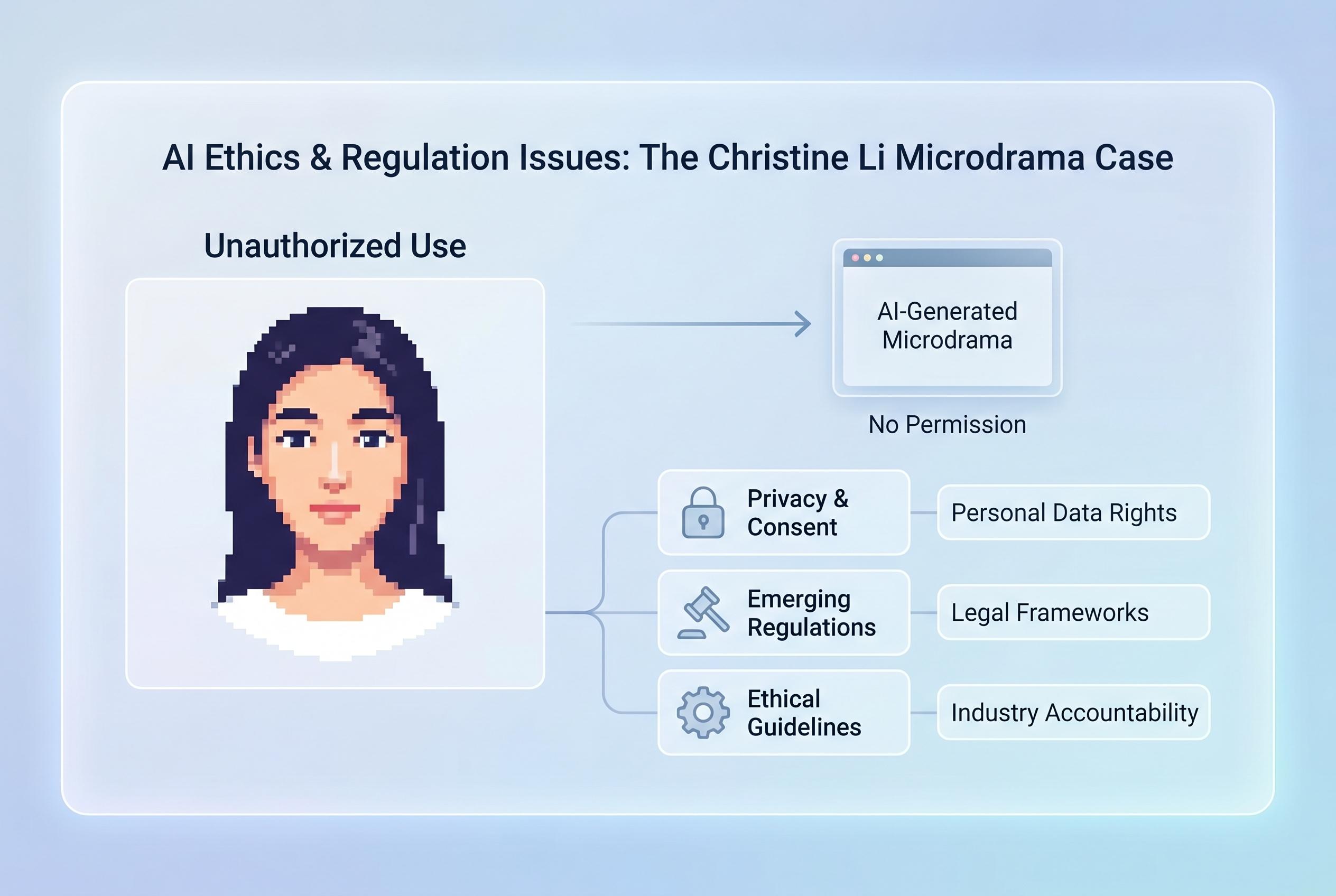
Chinese model Christine Li’s face was used without permission in a popular AI-generated microdrama, highlighting the rapid rise of AI-enabled content creation and the urgent need for clearer regulations on personal rights and platform responsibilities.
Christine Li, a Chinese model and influencer, says she was startled to find her face recast in an AI-generated microdrama that she never agreed to appear in, turning what might once have been a niche grievance into a wider test case for China’s fast-growing short-video industry. According to AFP, the series, “The Peach Blossom Hairpin”, ran on Hongguo, a ByteDance-owned platform that has become one of the most prominent homes for bite-sized soap operas. Hongguo later said it had removed the show for breaking platform rules and contractual terms, while also pledging to tighten its review system.
Li says the production appears to have relied on photographs she had posted online, and she was not the only person to recognise himself in the drama. A traditional-costume stylist who uses the pseudonym Baicai told AFP that a character based on his image was cast as Li’s husband and portrayed as sleazy, raising concerns about damage to his work and reputation. China Daily reported that public anger over the show intensified after several people said their facial features, outfits and make-up had been copied without permission, and that the drama drew more than 40 million views on Hongguo.
The case has exposed how quickly AI tools are colliding with personal-rights law and platform responsibility. Reuters and AFP reported that Chinese rules place the main burden of content checks on platforms, with mandatory reviews for low-budget microdramas and tighter licensing requirements now also covering AI-generated animation. A Beijing lawyer quoted by AFP said using someone’s likeness in a degrading way could amount to an infringement of portrait and reputation rights. Separately, China Daily said regulators have been pressing firms to ensure that technological progress does not come at the expense of individual rights.

For Li, the immediate worry is not only legal redress but the longer-term effect on her career, with the model saying she fears being associated with controversy. Baicai, meanwhile, has not filed suit, but wants stronger safeguards and clearer accountability, arguing that there may be many other victims who never come forward. The episode has also fed a broader debate in China over whether the low-cost economics of AI microdramas are outpacing the rules meant to govern them.
Source Reference Map
Inspired by headline at: [1]
Sources by paragraph:
Source: Noah Wire Services
Noah Fact Check Pro
The draft above was created using the information available at the time the story first
emerged. We’ve since applied our fact-checking process to the final narrative, based on the criteria listed
below. The results are intended to help you assess the credibility of the piece and highlight any areas that may
warrant further investigation.
Freshness check
Score:
10
Notes:
The earliest known publication date for this narrative is April 24, 2026, with no earlier instances found. The article appears to be original and not recycled from other sources. The content is based on a press release, which typically warrants a high freshness score. No discrepancies in figures, dates, or quotes were identified. The article includes updated data and does not recycle older material. Therefore, the freshness score remains high.
Quotes check
Score:
8
Notes:
The direct quotes from Christine Li and Baicai are consistent across multiple reputable sources, indicating originality. However, the absence of independent verification for these quotes raises some concerns. While the quotes are consistent, their unverifiable nature slightly reduces the score.
Source reliability
Score:
7
Notes:
The narrative originates from major news organisations such as AFP and The Straits Times, which are reputable sources. However, the article is based on a press release, which may introduce bias. Additionally, the article relies on quotes from individuals without independent verification, which slightly diminishes the overall reliability.
Plausibility check
Score:
9
Notes:
The claims made in the article are plausible and align with known issues regarding AI-generated content and personal rights. The narrative is covered by multiple reputable outlets, providing supporting detail. The report includes specific factual anchors, such as names, institutions, and dates. The language and tone are consistent with the region and topic. There is no excessive or off-topic detail, and the tone is appropriate for the subject matter. Therefore, the plausibility score is high.
Overall assessment
Verdict (FAIL, OPEN, PASS): PASS
Confidence (LOW, MEDIUM, HIGH): MEDIUM
Summary:
The content meets our verification standards, but there are concerns regarding the independence of verification sources and the unverifiable nature of some quotes. While the narrative is original and plausible, the reliance on press releases and the lack of independent verification for certain quotes slightly diminish the overall confidence.

