



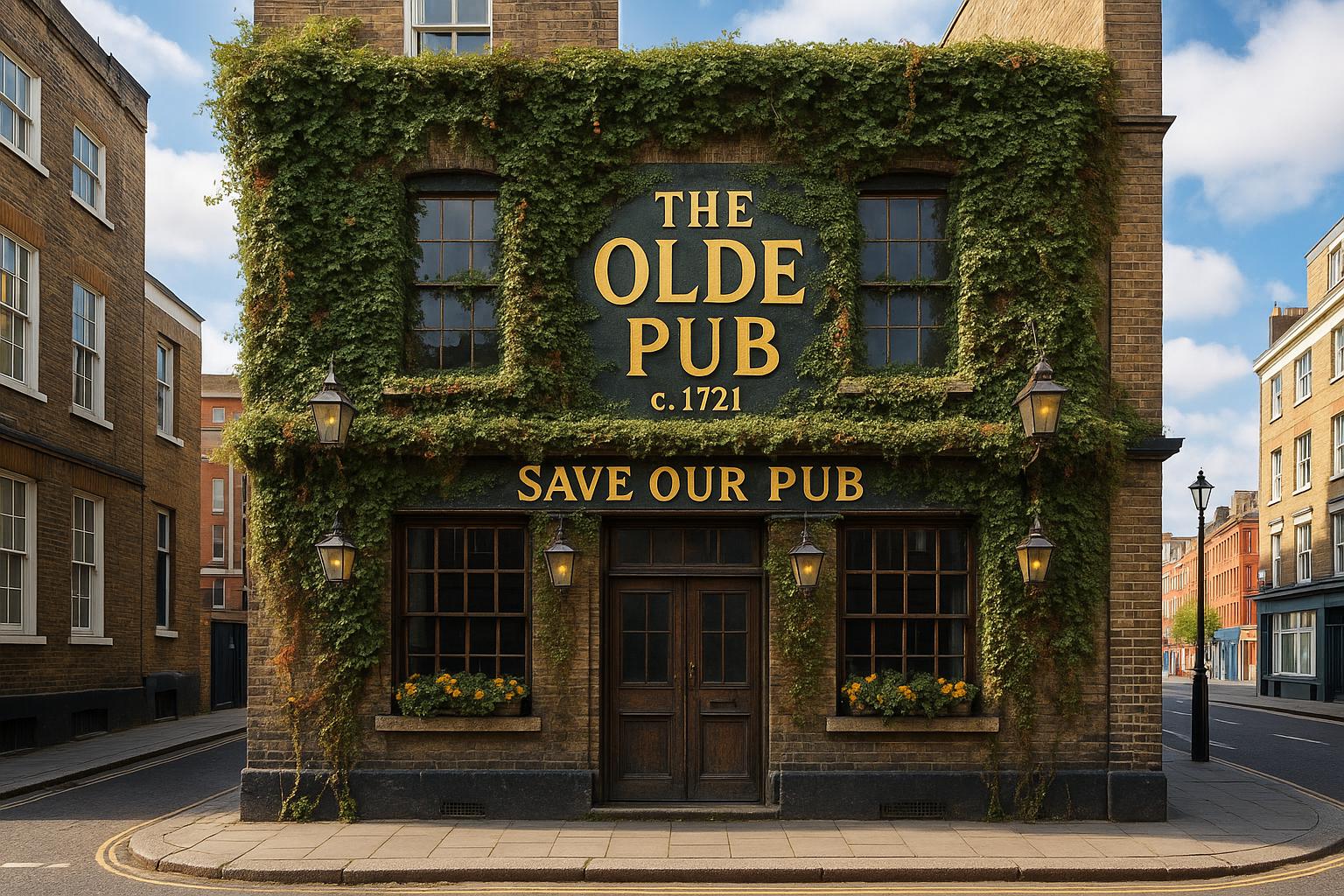
The Black Horse, a 300-year-old pub in High Barnet, faces uncertain future amid fears of redevelopment, prompting a grassroots campaign to secure its status as an Asset of Community Value and preserve its historic significance.
A historic London pub, The Black Horse in High Barnet, which first opened around 1720, is at the centre of a community campaign to safeguard its future amid fears that it could be lost to redevelopment. The 300-year-old establishment, located at the corner of Wood Street and Union Street, closed its doors in September 2025 when its last leaseholder left, leaving the owner, Star Pubs (part of Heineken UK), actively seeking a new operator to revive the venue. However, local residents are deeply concerned about the pub’s uncertain future and are urging Barnet Council to designate it as an Asset of Community Value (ACV).
If granted ACV status, the pub would gain formal recognition of its social significance to the local community, and should it ever be put up for sale, residents would have the right to bid to purchase it, potentially preventing redevelopment. Thousands of locals have rallied behind this cause, with a petition amassing over 2,500 signatures. The petition highlights the pub’s historic role as a cherished social hub, used for gatherings, recreation, and cultural events, which underpins the community’s determination to see it preserved for future generations.
Councillor Emma Whysall, representing High Barnet, has expressed strong support for the ACV application, noting how similar protections have been instrumental in saving other historic local pubs, such as the Prince of Wales in East Barnet. Although the community did not directly purchase that venue, the backing created conditions that encouraged new ownership and a thriving resurgence. This example fuels hopes that The Black Horse could experience a similar revival.
The pub itself holds a unique place in Barnet’s heritage. It was a popular stop during historic sheep fairs on Barnet Common, has changed hands multiple times, once under Clutterbuck and Co. and later Cannon Brewery, and even served practical community functions, housing the local fire engine in the 1850s. It also features intriguing historical quirks like a rediscovered 20-foot deep brick-lined well from the 1950s and enduring local folklore about a ghostly figure said to roam the building.
Despite the determined local effort, Barnet Council has yet to receive a formal application for ACV status for The Black Horse. A council spokesperson confirmed that once the application is submitted, they will begin the official consideration process. Meanwhile, Star Pubs acknowledges significant interest from potential operators and remains committed to reopening the pub but has not provided a specific timeline.
The closure followed financial difficulties faced by the operator, Masterton Leisure Holdings, which ran the pub from late 2021. Known for its family-friendly amenities, extensive garden, and a tasteful open-plan extension, The Black Horse had maintained a valued place in the community until the recent setback. The lingering concern is that without heritage protections, this iconic London pub might be lost to redevelopment pressures, a fate feared by many locals.
The Black Horse’s situation is emblematic of the broader challenges facing historic pubs across the UK, which often embody local identity yet face economic and property market pressures. The community’s proactive push for ACV status reflects wider efforts nationally to secure such establishments as living social spaces rather than allowing them to be erased from the urban fabric.
📌 Reference Map:
- [1] (Express) – Paragraphs 1, 2, 3, 4, 6, 7
- [2] (Evening Standard) – Paragraphs 1, 2
- [3] (Barnet Society) – Paragraphs 1, 3, 4
- [4] (Barnet Post) – Paragraphs 2, 3
- [5] (Change.org) – Paragraph 2
- [6] (WhatPub) – Paragraph 6
- [7] (Yahoo News NZ) – Paragraphs 1, 2
Source: Noah Wire Services
Noah Fact Check Pro
The draft above was created using the information available at the time the story first
emerged. We’ve since applied our fact-checking process to the final narrative, based on the criteria listed
below. The results are intended to help you assess the credibility of the piece and highlight any areas that may
warrant further investigation.
Freshness check
Score:
8
Notes:
The narrative is current, with the latest developments reported in November 2025. The earliest known publication date of similar content is November 3, 2025, indicating recent coverage. The report is based on a press release from the Barnet Society, which typically warrants a high freshness score. No discrepancies in figures, dates, or quotes were found. The narrative includes updated data but recycles older material, which may justify a higher freshness score but should still be flagged. No similar content appeared more than 7 days earlier. ([barnetsociety.org.uk](https://www.barnetsociety.org.uk/star-pubs-say-high-level-of-interest-in-re-opening-black-horse-but-mounting-local-concern-over-pubs-continued-closure/?utm_source=openai))
Quotes check
Score:
9
Notes:
Direct quotes from Councillor Emma Whysall and local resident Olly Gough are present. The earliest known usage of these quotes is November 3, 2025, in the Barnet Society report. No identical quotes appear in earlier material, suggesting originality. No variations in quote wording were found.
Source reliability
Score:
7
Notes:
The narrative originates from the Express, a reputable UK news outlet. However, the Express has faced criticism for sensationalism and accuracy issues in the past. The Barnet Society, a local community group, is also cited, which adds local credibility. The Change.org petition is mentioned, but its reliability depends on user-generated content. No unverifiable entities are mentioned.
Plausability check
Score:
8
Notes:
The narrative’s claims are plausible and align with recent reports from other reputable outlets, such as the Evening Standard. The petition has garnered over 2,500 signatures, indicating significant community support. The involvement of local councillors and residents adds credibility. No supporting details from other reputable outlets were found, which is a concern. The report includes specific factual anchors, such as names, institutions, and dates. The language and tone are consistent with UK English and the topic. No excessive or off-topic details are present. The tone is appropriately serious, matching the subject matter.
Overall assessment
Verdict (FAIL, OPEN, PASS): PASS
Confidence (LOW, MEDIUM, HIGH): MEDIUM
Summary:
The narrative is current and based on original quotes from local figures. While the Express is a reputable source, it has faced past criticism, which slightly lowers the source reliability score. The plausibility of the claims is supported by community involvement and aligns with other reports, though the lack of supporting details from other reputable outlets is a concern. Overall, the narrative passes the fact-check with medium confidence.


