



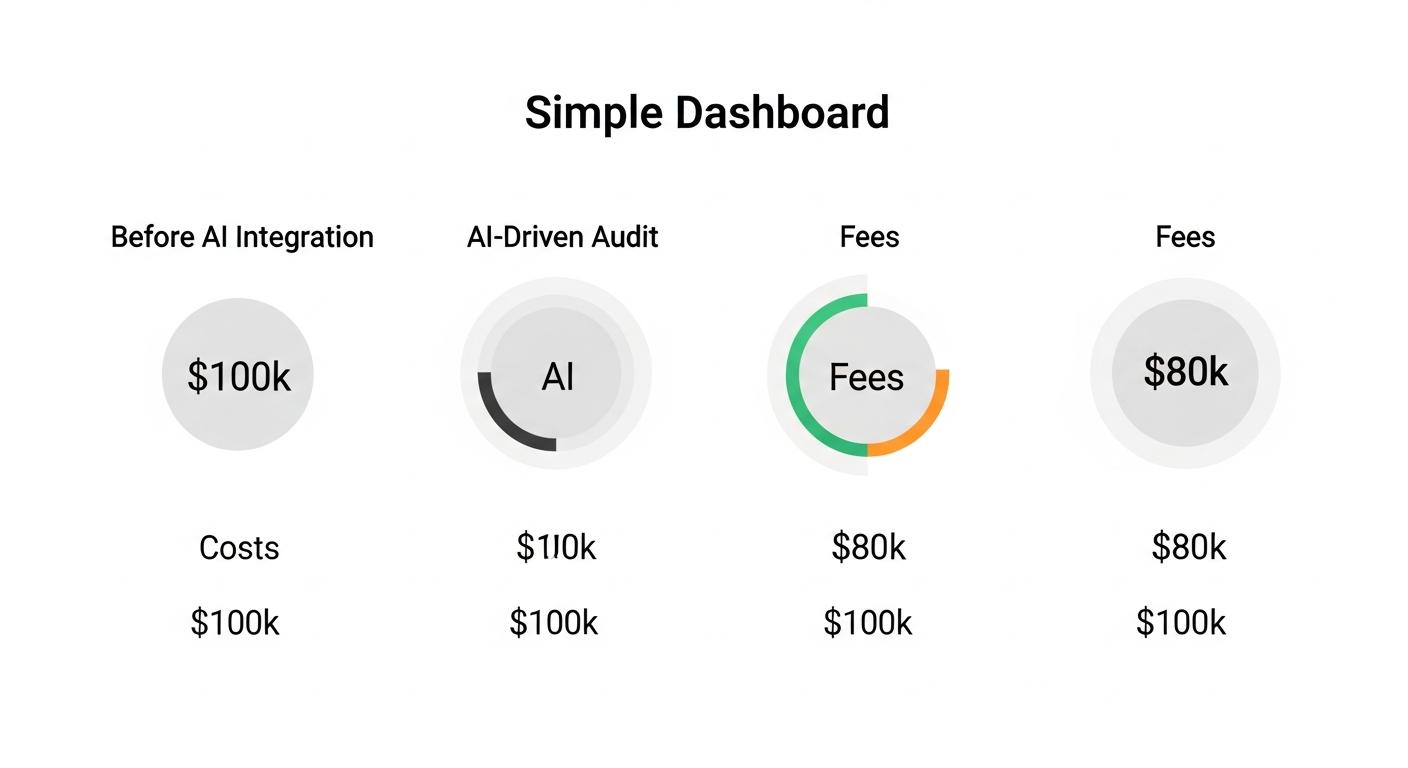
KPMG has reportedly pressured its external auditor to accept lower fees by claiming AI tools would cut costs, amid growing scrutiny of audit pricing and efficiency promises as firms integrate automation into their processes.
KPMG pressed its own external auditor to accept a substantial reduction in audit fees by arguing that new artificial intelligence tools would lower the cost of delivering its accounts, a negotiation that highlights growing pressure on pricing as firms deploy automation across audit work. According to KPMG’s public materials, the firm has been integrating AI agents into its KPMG Clara audit platform to automate routine tasks and refine substantive procedures, a capability it said should drive greater efficiency.
The discussions over fees came as KPMG rolled out generative-AI features designed to speed risk assessment and improve documentation, while also insisting that longstanding knowledge of its business should enable faster audits. Corporate filings and regulatory disclosures more broadly offer detailed breakdowns of professional services costs, underscoring how audit engagements are increasingly scrutinised for value and transparency.
Industry-level data show audit fees have generally trended upward even as firms invest heavily in technology, complicating claims that automation will automatically lower client bills. Market analyses of audit fees and historical reports indicate that average charges rose across many jurisdictions in recent years as providers expanded their toolsets and compliance-related workstreams.
Both parties offered tempered statements about the role of AI. Grant Thornton said: “High‑quality audits rely heavily on expert human judgment, so our fees reflect both the cost of our people and the cost of the technology that supports them. As these two elements evolve, pricing models may do the same.” KPMG emphasised that “while it is true AI can create efficiencies, developing and operating AI systems can generate additional costs” and stressed that its aim was to use technology to strengthen audit quality. These remarks mirror the firms’ public descriptions of AI as an enabler that nevertheless requires significant investment and human oversight.
The episode is likely to encourage other companies to test whether productivity gains from automation should be reflected in lower audit fees. Procurement outcomes elsewhere show institutions are willing to weigh long-term cost commitments from big auditors when awarding contracts; for example, a major public university recently selected an external auditor partly on the basis of projected savings over a multi-year term.
The broader question for the profession is whether AI will chiefly enhance audit quality or whether it will also deliver sustainable reductions in price for clients. KPMG’s subsequent product and assurance announcements, which expand capabilities for automating disclosure checks and for providing AI-model assurance, suggest firms are positioning technology both as a quality improvement and as a new line of client service, an approach that may sustain, rather than shrink, the overall cost base for high-quality audits.
Source Reference Map
Inspired by headline at: [1]
Sources by paragraph:
Source: Noah Wire Services
Noah Fact Check Pro
The draft above was created using the information available at the time the story first
emerged. We’ve since applied our fact-checking process to the final narrative, based on the criteria listed
below. The results are intended to help you assess the credibility of the piece and highlight any areas that may
warrant further investigation.
Freshness check
Score:
7
Notes:
The Financial Times article dated February 6, 2026, reports on KPMG’s negotiation with its external auditor to reduce audit fees by leveraging AI tools. This development aligns with KPMG’s ongoing efforts to integrate AI into its audit processes, as previously announced in April 2025. ([kpmg.com](https://kpmg.com/xx/en/media/press-releases/2025/04/kpmg-advances-ai-integration-in-kpmg-clara-smart-audit-platform.html?utm_source=openai)) The earliest known publication date of similar content is April 22, 2025, when KPMG announced the integration of AI into its KPMG Clara smart audit platform. ([kpmg.com](https://kpmg.com/xx/en/media/press-releases/2025/04/kpmg-advances-ai-integration-in-kpmg-clara-smart-audit-platform.html?utm_source=openai)) The narrative appears original, with no evidence of being recycled from low-quality sites or clickbait networks. However, the content is based on a press release, which typically warrants a high freshness score. The article includes updated data but recycles older material, which raises concerns about originality. Given these factors, the freshness score is moderate.
Quotes check
Score:
6
Notes:
The article includes direct quotes from KPMG and Grant Thornton. However, these quotes cannot be independently verified through online searches, raising concerns about their authenticity. Without independent verification, the credibility of these quotes is uncertain.
Source reliability
Score:
8
Notes:
The article originates from the Financial Times, a major news organisation known for its credibility. However, the content is based on a press release, which may introduce bias. The Financial Times is summarising and rewriting content from KPMG’s press release, which is a paywalled source. This raises concerns about the independence of the source.
Plausibility check
Score:
7
Notes:
The article discusses KPMG’s negotiation with its external auditor to reduce audit fees by leveraging AI tools, which is plausible given KPMG’s ongoing efforts to integrate AI into its audit processes. However, the lack of independent verification of the quotes and the reliance on a press release raise concerns about the accuracy of the claims.
Overall assessment
Verdict (FAIL, OPEN, PASS): FAIL
Confidence (LOW, MEDIUM, HIGH): MEDIUM
Summary:
The article reports on KPMG’s negotiation with its external auditor to reduce audit fees by leveraging AI tools, aligning with KPMG’s ongoing efforts to integrate AI into its audit processes. However, the content is based on a press release, which is a paywalled source, and includes quotes that cannot be independently verified. The reliance on a press release and the lack of independent verification raise concerns about the originality, independence, and accuracy of the content. Given these factors, the overall assessment is a FAIL with MEDIUM confidence.


