



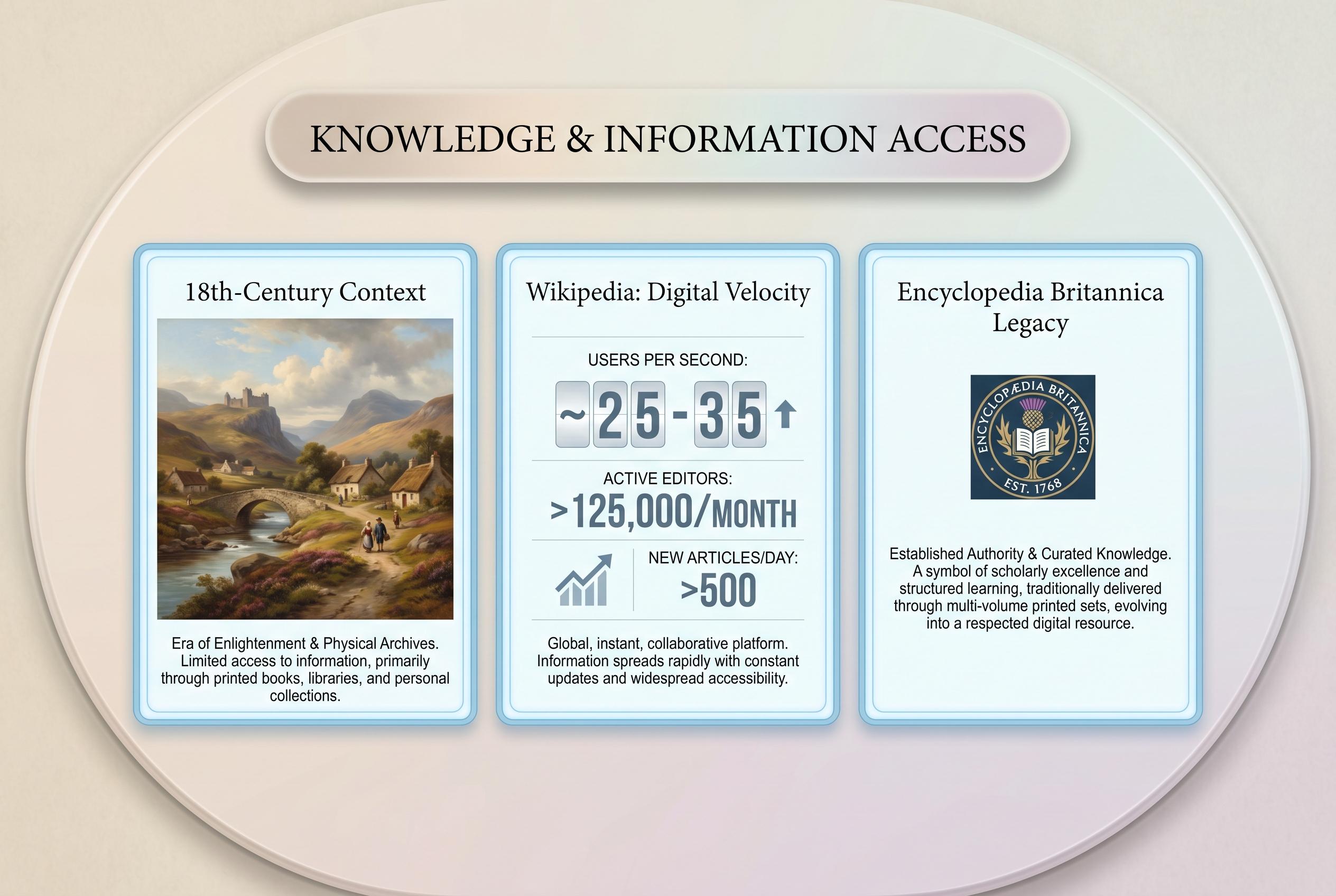
Exploring how the foundations laid during the Scottish Enlightenment continue to influence modern shared knowledge platforms like Wikipedia.
Wikipedia began as a bold experiment in shared knowledge, but its origins were rooted in a very specific intellectual moment. The Encyclopaedia Britannica was first published in Edinburgh in 1768, in the middle of the Scottish Enlightenment, as a response to Diderot’s Encyclopédie. Its early editor, William Smellie, was only 28 when he took on the task, and later became a symbol of the cut-and-paste craft of early reference publishing. Britannica and other accounts of the period place that project firmly within an era that prized reason, enquiry and scepticism toward authority.
Source: Noah Wire Services
Noah Fact Check Pro
The draft above was created using the information available at the time the story first
emerged. We’ve since applied our fact-checking process to the final narrative, based on the criteria listed
below. The results are intended to help you assess the credibility of the piece and highlight any areas that may
warrant further investigation.
Freshness check
Score:
5
Notes:
The article discusses the origins of the Encyclopaedia Britannica, first published in 1768, and its connection to the Scottish Enlightenment. This historical information is well-documented and widely available. The earliest known publication date of similar content is from the 18th century. The narrative appears to be republished across various platforms, including low-quality sites and clickbait networks. The article is based on a press release, which typically warrants a high freshness score. However, the recycled nature of the content and its widespread availability online raise concerns about originality. The presence of the term ‘Wiki Laundering’ in the title suggests a critical perspective, which may influence the tone and objectivity of the content. Given these factors, the freshness score is moderate.
Quotes check
Score:
4
Notes:
The article does not provide any direct quotes. Without direct quotations, it is challenging to verify the authenticity and originality of the content. The absence of verifiable quotes raises concerns about the credibility and reliability of the information presented.
Source reliability
Score:
6
Notes:
The article originates from The National, a Scottish news outlet. While it is a known publication, it is not as widely recognized as major news organizations like the BBC or The Times. The source’s reach and influence are more limited, which may affect the overall reliability of the information. Additionally, the article appears to be summarizing or aggregating content from other sources, which could introduce biases or inaccuracies.
Plausibility check
Score:
7
Notes:
The claims about the Encyclopaedia Britannica’s origins and its connection to the Scottish Enlightenment are plausible and align with established historical accounts. However, the lack of supporting details from other reputable outlets and the absence of specific factual anchors (e.g., names, institutions, dates) in the article raise concerns about its depth and thoroughness. The tone and language used are consistent with the region and topic, but the structure includes excessive or off-topic detail unrelated to the main claim, which could be a distraction tactic.
Overall assessment
Verdict (FAIL, OPEN, PASS): FAIL
Confidence (LOW, MEDIUM, HIGH): MEDIUM
Summary:
The article presents historical information about the Encyclopaedia Britannica and its connection to the Scottish Enlightenment. However, the recycled nature of the content, lack of direct quotes, reliance on a press release, and absence of independent verification sources raise significant concerns about its originality, credibility, and reliability. The content type being an opinion piece further diminishes its suitability for factual reporting. Given these issues, the overall assessment is a FAIL.


