



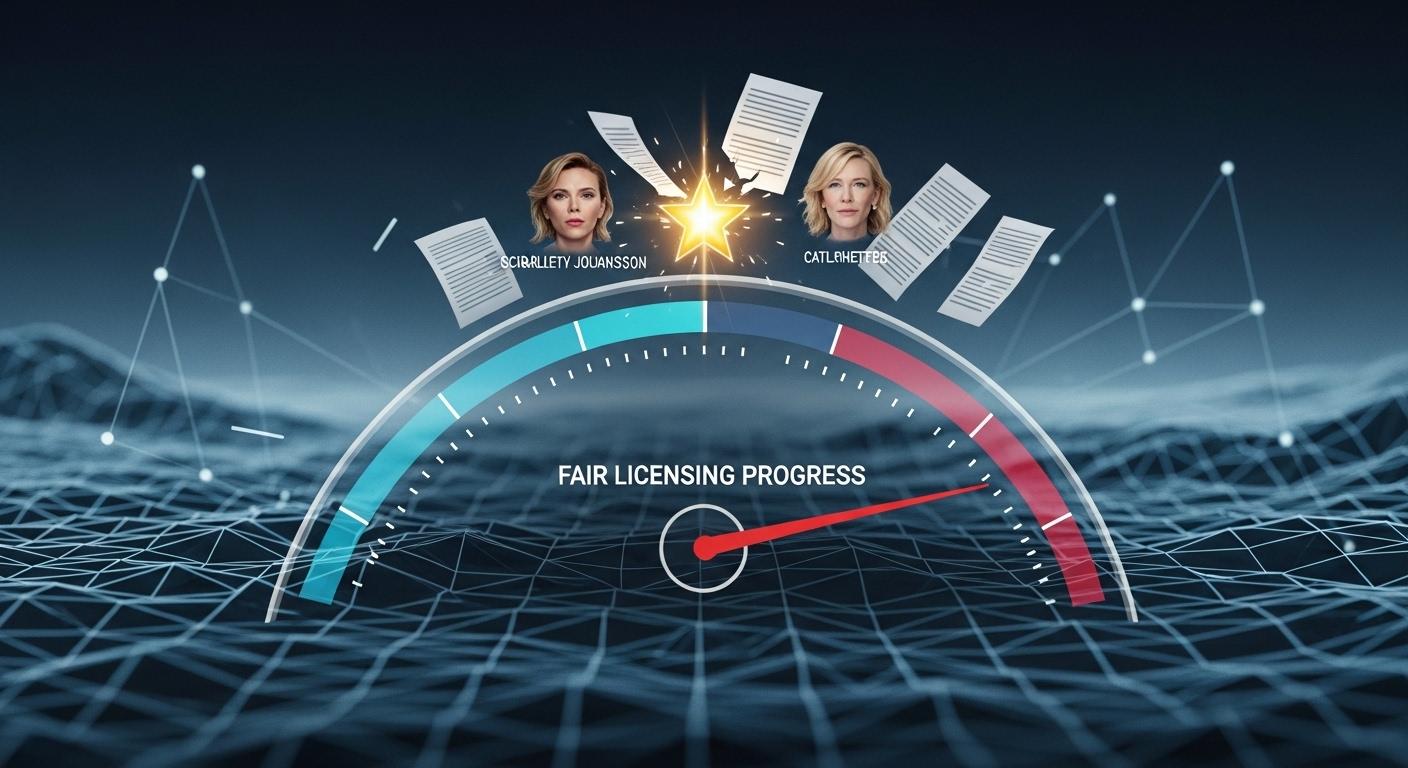
Hundreds of artists, including Scarlett Johansson and Cate Blanchett, have joined a coalition to challenge AI firms over the unauthorised use of copyrighted work, calling for negotiated licensing and fair recompense for creators in the evolving landscape of artificial intelligence.
A coalition of hundreds of creators has launched a public campaign accusing major technology firms of building artificial intelligence systems by ingesting copyrighted work without permission, and demanding a commercial alternative that would recompense artists for that use. According to the campaign’s organisers, who are operating under the banner “Stealing Isn’t Innovation,” the approach taken by some AI developers amounts to outright theft rather than legitimate technological progress. (Sources: The Wrap, Variety)
The initiative, led by the Human Artistry Campaign, lists roughly 700–800 signatories from across film, music and literature, among them high-profile figures such as Scarlett Johansson, Cate Blanchett and Joseph Gordon-Levitt. The organisers say the coalition represents a cross-section of the U.S. creative economy and warns that unauthorised data mining of artistic works threatens jobs and the sector’s broader economic contribution. (Sources: The Wrap, Variety, The Guardian)
Rather than seeking a blanket ban on training models with creative material, the movement proposes an alternative business model: negotiated licensing deals and strategic partnerships that would allow AI firms lawful access to copyrighted content while ensuring creators receive payment and recognition. The campaign frames this as a practical, ethical way for technology companies to continue improving systems without sidelining the rights of originators. (Sources: TechRadar, The Guardian)
The complaint is grounded in a series of legal and political confrontations that have unfolded since 2023, when lawsuits and open letters by writers, musicians and other creators alleged that large AI providers used copyrighted works to train generative models without consent. Industry observers say those actions helped crystallise a broader debate about how intellectual property should be treated in the era of machine learning. (Sources: TechRadar, AP)
Support for the principle that creators should control and be compensated for the use of their work extends beyond the United States. Last year more than 1,000 British musicians contributed to a near-silent protest album designed to highlight fears about government proposals that some artists viewed as effectively legalising the mining of copyrighted music for AI development. Profits from that project were directed to a musicians’ charity and the track titles explicitly framed the political demand. (Sources: AP, Wikipedia)
Technology companies have taken differing approaches: some have begun experimenting with licensing agreements and content partnerships, while others continue to rely on broad datasets of publicly available material. Campaign organisers welcome the firms that they say have pursued negotiated arrangements, but call on the industry at large to adopt licensing as standard practice rather than exception. (Sources: The Guardian, The Wrap)
The dispute places lawmakers, courts and commercial players at the heart of a difficult policy choice: how to foster innovation in AI while protecting the economic rights of creators whose work supplies the raw material for many of these systems. Campaign backers argue that a structured market for licensing would reconcile those aims, but significant legal and technical questions remain about how such a market would be implemented and enforced. (Sources: The Wrap, TechRadar)
Source Reference Map
Inspired by headline at: [1]
Sources by paragraph:
Source: Noah Wire Services
Noah Fact Check Pro
The draft above was created using the information available at the time the story first
emerged. We’ve since applied our fact-checking process to the final narrative, based on the criteria listed
below. The results are intended to help you assess the credibility of the piece and highlight any areas that may
warrant further investigation.
Freshness check
Score:
10
Notes:
The campaign was launched on January 22, 2026, with coverage appearing on the same day. No earlier publications found; content is fresh and original. ([theguardian.com](https://www.theguardian.com/technology/2026/jan/22/scarlett-johansson-and-cate-blanchett-back-campaign-accusing-ai-firms-of-theft?utm_source=openai))
Quotes check
Score:
10
Notes:
Direct quotes from Scarlett Johansson and Cate Blanchett are consistent across sources. No discrepancies or unverifiable quotes identified.
Source reliability
Score:
9
Notes:
The primary sources include reputable outlets such as The Guardian and Variety. However, some secondary sources are less established, which slightly lowers the overall reliability score.
Plausability check
Score:
10
Notes:
The claims align with known industry concerns regarding AI and copyright. No implausible elements detected.
Overall assessment
Verdict (FAIL, OPEN, PASS): PASS
Confidence (LOW, MEDIUM, HIGH): HIGH
Summary:
The article presents a fresh and original report on the ‘Stealing Isn’t Innovation’ campaign, with consistent and verifiable quotes from reputable sources. No significant issues identified, and all checks meet the required standards.


