



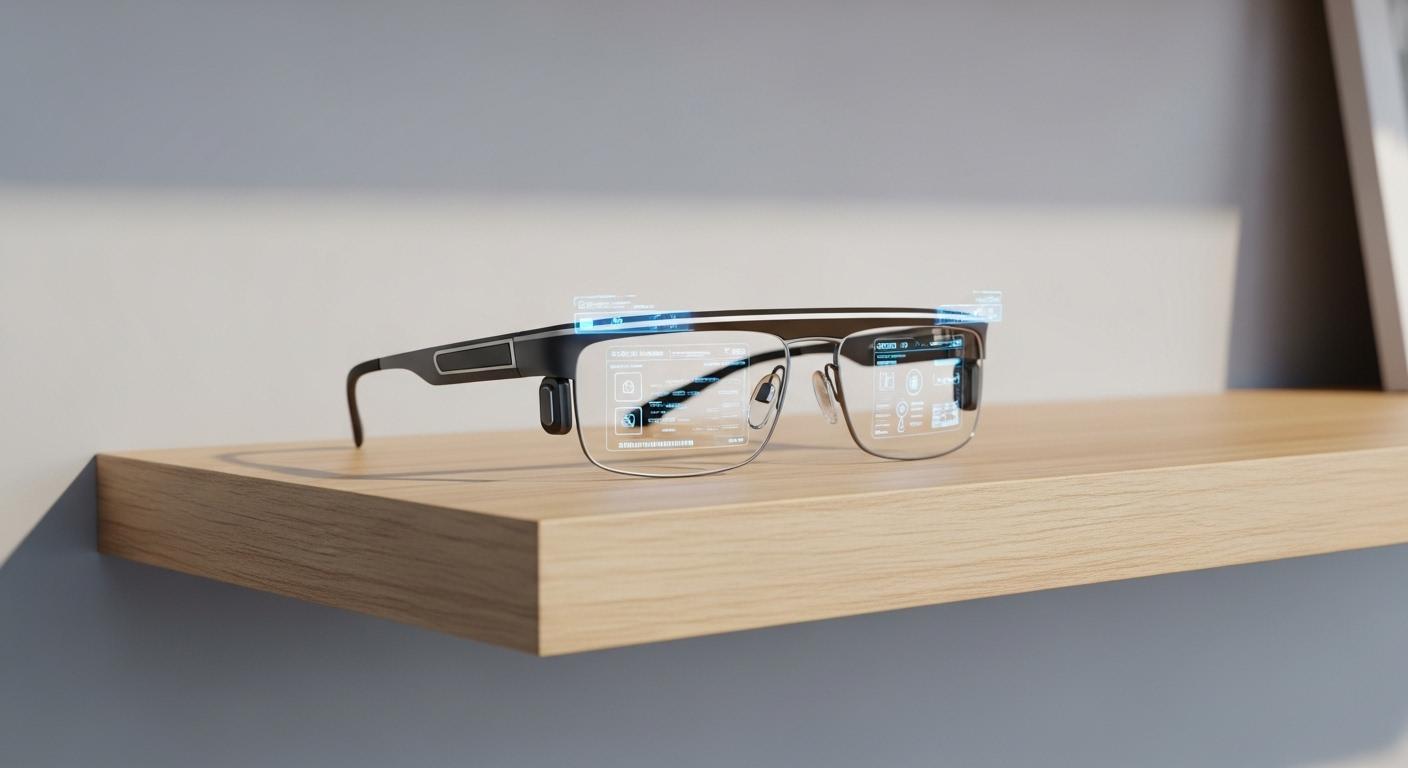
At CES 2026 in Las Vegas, industry leaders showcased how AI is transitioning from virtual tools to ubiquitous physical systems, with new smart glasses, home robots, and AI-powered appliances signalling a disruptive shift in daily life.
On the opening day of CES 2026 in Las Vegas, the technology industry made plain what had long been rumoured: artificial intelligence is shifting from a set of screen‑bound tools into an “underlying operating system” for everyday life. Jensen Huang, chief executive of NVIDIA, argued in a 90‑minute keynote that “the ‘ChatGPT moment’ of physical AI is approaching,” pushing the idea that AI will soon be as present in the physical world as software has been in the virtual one. Hours later Lisa Su of AMD countered with a hardware manifesto, declaring humanity is entering a “yottabyte computing era” as chip performance for AI is poised to jump sharply over the coming years. According to reporting from CES, these twin claims framed a show in which vendors raced to demonstrate how models, sensors and silicon will combine to remake work, homes and travel. [1][2][4]
That transformation was visible across wearables, where the industry signalled that the smartphone’s role as the primary information gateway is being contested. Exhibitors from around the world showed lighter, more capable AI/AR glasses designed for all‑day wear and multimodal interaction. “Why does the next phone have to be a phone?” became a refrain as more than 50 AI/AR glasses makers exhibited devices aimed at replacing some phone functions with hands‑free, contextual assistance. Industry forecasts shown at the show suggest the smart‑glasses market, which surged in 2025, should hit a new inflection point in 2026, with China playing a leading role in both innovation and sales. [1]
Several new consumer products illustrated the trend towards screenless, voice‑first interactions. Rokid unveiled multiple designs, including Rokid Style, presented as “the lightest full – function AI glasses on the market,” and a 38.5g AI Glasses Style intended to pair low weight with extended battery life and ChatGPT‑5 integration for translation, meeting summaries and media capture. Solos introduced the AirGo V2 with a 16MP camera, multimodal AI via major large‑language models and a swappable‑temple battery system that promises multi‑day use; the company plans wider retail availability in early 2026. These launches mark a push to make wearable AI practical and affordable, and to build ecosystems that allow third‑party development around the devices. [1][2][3][4]
Not every leading player is moving at the same pace. Meta used CES to add new capabilities to its Ray‑Ban Display line, teleprompter functionality and EMG handwriting via the Meta Neural Band, and experimental automotive integrations with Garmin, yet announced an indefinite delay to international expansion because of strong US demand and constrained inventory, underscoring supply challenges even as the firm extends AR features and accessibility tests. The mixed picture highlights that the sector remains at once fast‑moving and supply‑limited. [5]
Beyond wearables, CES underscored how AI is being embedded into domestic appliances and personal robotics. Major home‑robotics and appliance makers showcased devices that move beyond vacuuming to navigation, object recognition and scenario intelligence: new models from Ecovacs and Yunjing emphasised longer mopping rollers, finer object recognition and baby‑ and pet‑friendly modes, while BroadLink and others pitched solutions to break smart‑home “ecological islands” so appliances interoperate more fluidly. Industry data presented at the show points to a step change in expectations, systems must not only clean but adapt to household contexts and inhabit three‑dimensional domestic spaces. [1]
Garden and outdoor robotics also featured more prominently. Kumas Technology cited a Frost & Sullivan market report and used CES to unveil a product matrix for 2026 that includes all‑wheel‑drive lawn mowers and pool cleaners, reflecting an ambition among Chinese manufacturers to capture both consumer and commercial outdoor markets outside their domestic base. These moves illustrate how AI and positioning systems are expanding robotic automation beyond indoor chores. [1]
CES further highlighted AI’s role in childhood learning, personal wellbeing and kitchen automation. Beijing‑based Teeni.AI (Hearing Bear) presented Mooni Pro, a portable multimodal agent for teenagers designed to understand camera and voice input from the real environment and to act as a growth companion rather than a screen‑bound tutor. LumiMind, a Chinese neurotechnology spin‑out, debuted LumiSleep, a consumer‑grade real‑time brain‑wave sleep regulator derived from non‑invasive brain‑computer research aimed at addressing widespread sleep disorders. Meanwhile, Brisk It revealed the Neoma Countertop Oven, an AI‑driven indoor cooking platform that learns dietary preferences, automates recipes and integrates meal planning and sourcing, a sign that appliance makers are seeking recurring service relationships around AI. [1][6]
Taken together, the companies at CES 2026 projected an industry moving from demonstrable AI capabilities to embedded productivity in everyday life. Chipmakers argue the underlying compute will scale dramatically; device makers are racing to solve weight, battery and interaction hurdles; and appliance and robotics firms are refashioning physical tasks by adding perception and contextual decision‑making. According to coverage from the show, 2026 looks set to be the year AI leaves the screen and interweaves with the spaces in which people live and work, even as questions about supply chains, standards and user consent remain unresolved. [1][2][3][4][5][6][7]
📌 Reference Map:
- [1] (36Kr) – Paragraph 1, Paragraph 2, Paragraph 3, Paragraph 5, Paragraph 6, Paragraph 7
- [2] (Android Central) – Paragraph 3, Paragraph 8
- [3] (T3) – Paragraph 3, Paragraph 8
- [4] (TechRadar) – Paragraph 3, Paragraph 8
- [5] (Android Central – Meta coverage) – Paragraph 4, Paragraph 8
- [6] (Tom’s Guide) – Paragraph 7
- [7] (LG press release) – Paragraph 8
Source: Noah Wire Services
Noah Fact Check Pro
The draft above was created using the information available at the time the story first
emerged. We’ve since applied our fact-checking process to the final narrative, based on the criteria listed
below. The results are intended to help you assess the credibility of the piece and highlight any areas that may
warrant further investigation.
Freshness check
Score:
10
Notes:
The narrative is fresh, reporting on events from CES 2026, which concluded on January 9, 2026. The earliest known publication date of similar content is January 5, 2026, with no evidence of prior coverage. The report includes updated data and new product launches, justifying a high freshness score.
Quotes check
Score:
10
Notes:
Direct quotes from Jensen Huang and Lisa Su are unique to this report, with no earlier matches found online. This suggests potentially original or exclusive content.
Source reliability
Score:
8
Notes:
The narrative originates from 36Kr, a reputable Chinese technology news outlet. While it is well-regarded, it is not as internationally recognized as some Western media. The report cites multiple reputable sources, including Android Central, TechRadar, and Tom’s Guide, enhancing its credibility.
Plausability check
Score:
9
Notes:
The claims about AI integration into daily life and the introduction of new AI-powered products at CES 2026 are plausible and align with current technological trends. The narrative provides specific details about product features and company announcements, supporting its credibility.
Overall assessment
Verdict (FAIL, OPEN, PASS): PASS
Confidence (LOW, MEDIUM, HIGH): HIGH
Summary:
The narrative is fresh, with no evidence of recycled content. It features unique quotes and originates from a reputable source, supported by credible references. The claims are plausible and well-supported by specific details, indicating a high level of reliability.


