



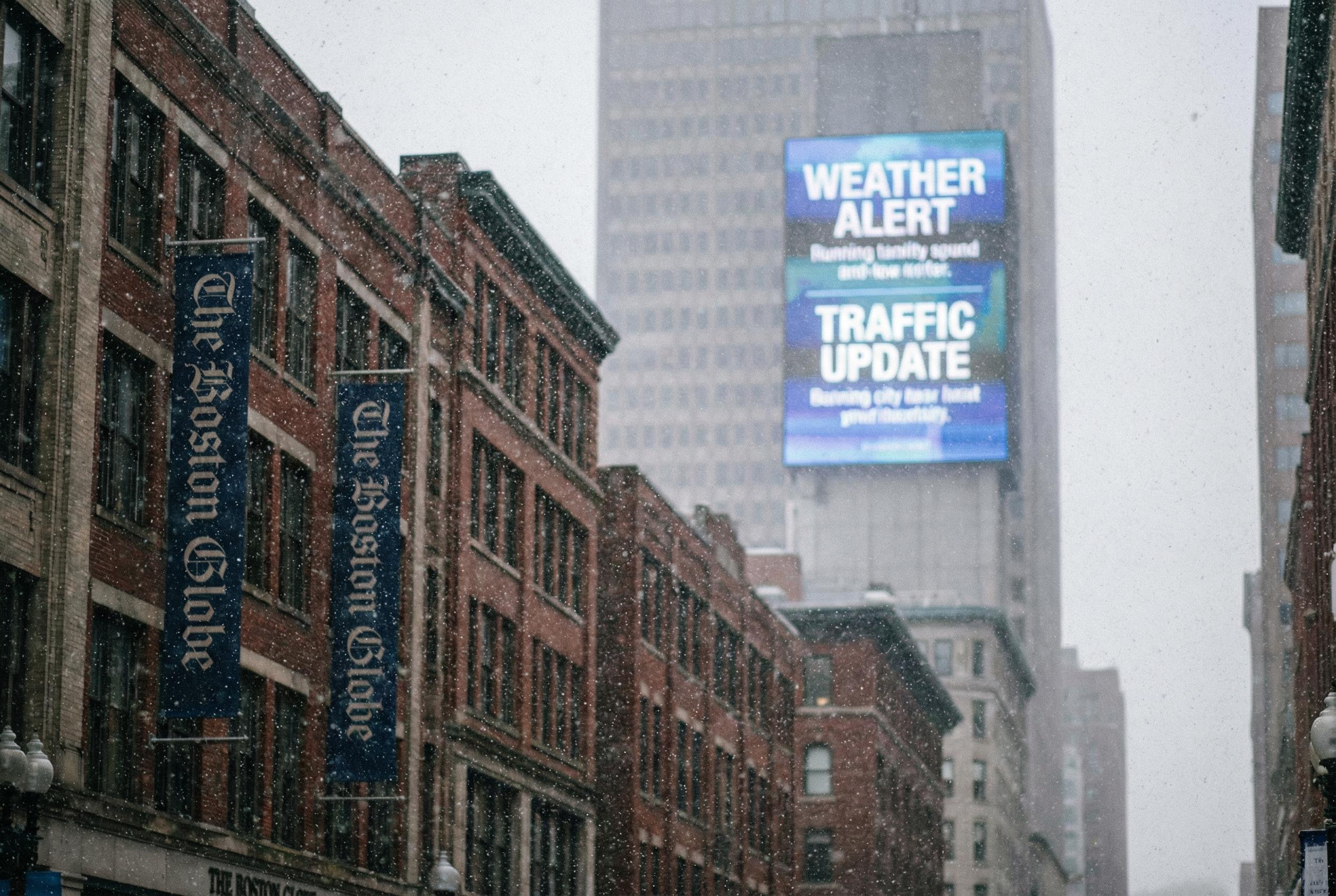
For the first time since its founding in 1872, The Boston Globe suspended daily print production because of a winter storm, ending a 153-year run of publishing through pandemics, power outages and previous record blizzards.
The decision underscores both the scale of the storm and the changing economics of print. While past disruptions , including labour disputes in the 1950s and 1960s , led to missed editions, this is the first weather-related suspension in the paper’s history.
Executives concluded that Monday’s whiteout conditions made Tuesday morning delivery impossible. “We don’t take the decision lightly,” said Josh Russell, Vice President of Print Operations. “We weren’t confident that even if we got a crew in tonight, that we could get the papers on our trucks safely. That ‘last mile’ just wasn’t doable.”
The disruption centred on the Globe’s printing plant in Taunton, Massachusetts. By Monday night, the National Weather Service reported 32 inches of snow in parts of Bristol County. In neighbouring Rhode Island, T.F. Green International Airport recorded nearly 38 inches, surpassing totals from the Blizzard of ’78.
The episode highlights how far the industry has shifted toward digital distribution. A 2025 Pew Research survey found 7% of US adults rely primarily on print, while 56% access news via mobile devices. For the Globe, online publishing continued uninterrupted.
Print subscribers are set to receive the missed Tuesday edition bundled with Wednesday’s paper.
For a regional news organisation that bills itself as New England’s paper of record, the absence of a printed edition marks a symbolic break – and a reminder that even long-running print operations remain vulnerable to physical constraints.


