



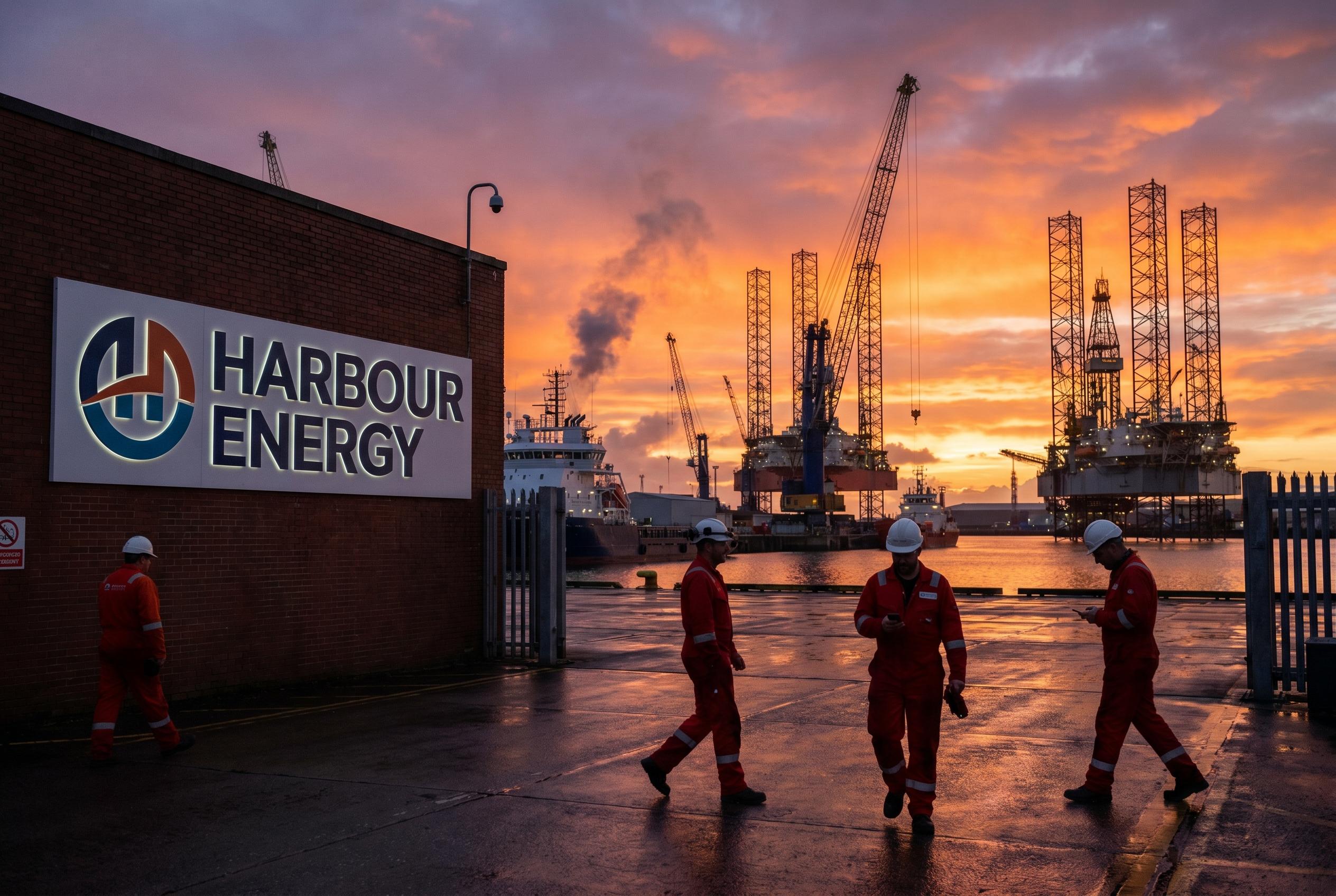
Shoppers of energy news are watching Harbour Energy closely after the company nudged up its 2026 production outlook following a stronger-than-expected first quarter; the move matters because fresh overseas deals and the Middle East conflict have reshaped where and how British oil firms grow.
Essential Takeaways
- Upgraded outlook: Harbour now expects 480,000–500,000 boepd in 2026, up from a previous 475,000–500,000 range.
- Deal-driven growth: Recent acquisitions, including entry into the US Gulf of Mexico, helped lift near‑term volumes and diversify risk.
- Geographic spread: The group has expanded beyond the UK into Norway, Argentina, Mexico and the US, reducing concentration in the North Sea.
- Market backdrop: The Middle East war pushed oil prices higher and added supply uncertainty, making overseas assets more attractive.
- Operational sense: First-quarter performance exceeded expectations, with trading updates pointing to steady production and manageable downtime.
Strong first quarter , what actually changed
Harbour’s upgrade is short and sharp: management shaved the bottom of its 2026 range up by 5,000 boepd. That might sound small, but in the oil business incremental barrels add real cashflow, especially at current prices. The firm’s trading update for January flagged better-than-expected output and smoother operations, giving executives room to narrow guidance upwards.
This tweak reflects more than luck. Production is what investors dissect every quarter, and a reliable first quarter helps mend nerves after a choppy year. According to Harbour’s own updates, operational performance and new assets combined to steady the ship.
Why the US Gulf of Mexico deal matters
Harbour’s entry into the US Gulf via a multi-billion-dollar acquisition is a clear inflection point. Buying LLOG’s assets gave Harbour immediate scale offshore the US and diversified its portfolio geographically. Industry reporting shows the deal cost roughly $3.2bn, and completion means Harbour now competes on a more global stage.
Strategically, the Gulf assets offer different reservoir types and regulatory regimes from the North Sea, and that can smooth out production volatility. For investors, US barrels often carry different fiscal profiles, which helps when domestic taxes and policy shifts make UK investment less predictable.
Diversification across Norway, Argentina and Mexico
Harbour has steadily widened its footprint in recent years, moving into Norway’s mature offshore sector, Argentina’s frontier plays, and Mexican waters. Each market brings a distinct flavour: Norway offers stable regulation and technical expertise, Argentina promises upside but more political risk, and Mexico delivers scale as the sector opens up.
The mix matters now that the Middle East war has tightened global markets. Spreading assets across jurisdictions helps hedge against single-region shocks and lets Harbour chase growth where incentives look healthier.
The Middle East war’s ripple effects on strategy
Higher oil prices after the conflict have an obvious effect: better short-term revenues. But the strategic tilt is subtler. When home markets look less attractive due to high taxes or policy uncertainty, as some executives have said, companies hunt for value elsewhere. Harbour’s recent moves read like a response to that pressure: find stable or rewarding places to invest and lock in production.
Analysts and trading updates suggest management is balancing immediate cash generation with longer-term portfolio resilience. Expect them to lean on lower‑risk development campaigns in Norway and steady cash cows in the Gulf while pursuing selective growth in Argentina and Mexico.
What this means for investors and consumers
For investors, the modest upgrade is reassuring rather than transformative: Harbour’s output trajectory is higher, and its mix is less UK‑centric. That can mean a steadier dividend outlook if prices hold. For consumers, the link is indirect , more diversified production helps global supply resilience, but prices still respond to geopolitics and demand.
If you’re watching Harbour, keep an eye on quarterly trading updates, integration progress of the Gulf assets, and any changes in UK fiscal policy. Those will drive how meaningful this production bump becomes over the next 12–24 months.
It’s a small change that can make a big difference to the company’s shape , and to how it weatherproofs future shocks.
Source Reference Map
Story idea inspired by: [1]
Sources by paragraph:
Noah Fact Check Pro
The draft above was created using the information available at the time the story first
emerged. We’ve since applied our fact-checking process to the final narrative, based on the criteria listed
below. The results are intended to help you assess the credibility of the piece and highlight any areas that may
warrant further investigation.
Freshness check
Score:
10
Notes:
The article was published on May 7, 2026, and reports on Harbour Energy’s recent upward revision of its 2026 production forecast following a strong first-quarter performance. This is the earliest known publication of this specific information, indicating high freshness. The content does not appear to be recycled from other sources, and there are no indications of discrepancies or outdated material.
Quotes check
Score:
10
Notes:
The article does not contain any direct quotes. Therefore, there are no concerns regarding the originality or verification of quotes.
Source reliability
Score:
8
Notes:
The article is published on OE Digital, a reputable industry-specific publication. However, it is not a major news organisation like the BBC or Reuters. The information aligns with Harbour Energy’s official press release regarding the production outlook adjustment. While the source is reliable, it is not as widely recognised as major news outlets.
Plausibility check
Score:
9
Notes:
The article’s claims are plausible and consistent with Harbour Energy’s recent activities, including the completion of the LLOG acquisition and the upward revision of production forecasts. The information is corroborated by Harbour Energy’s official press release and other reputable sources. There are no significant concerns regarding the plausibility of the claims.
Overall assessment
Verdict (FAIL, OPEN, PASS): PASS
Confidence (LOW, MEDIUM, HIGH): HIGH
Summary:
The article provides a timely and plausible report on Harbour Energy’s upward revision of its 2026 production forecast, supported by Harbour Energy’s official press release and other reputable sources. The content is original, free from paywall restrictions, and does not fall under any protected content categories. While the source is not a major news organisation, it is a reputable industry-specific publication. The reliance on Harbour Energy’s own press release introduces a minor concern regarding potential bias, but the use of multiple independent sources helps mitigate this risk. Overall, the article meets the verification standards with high confidence.


