



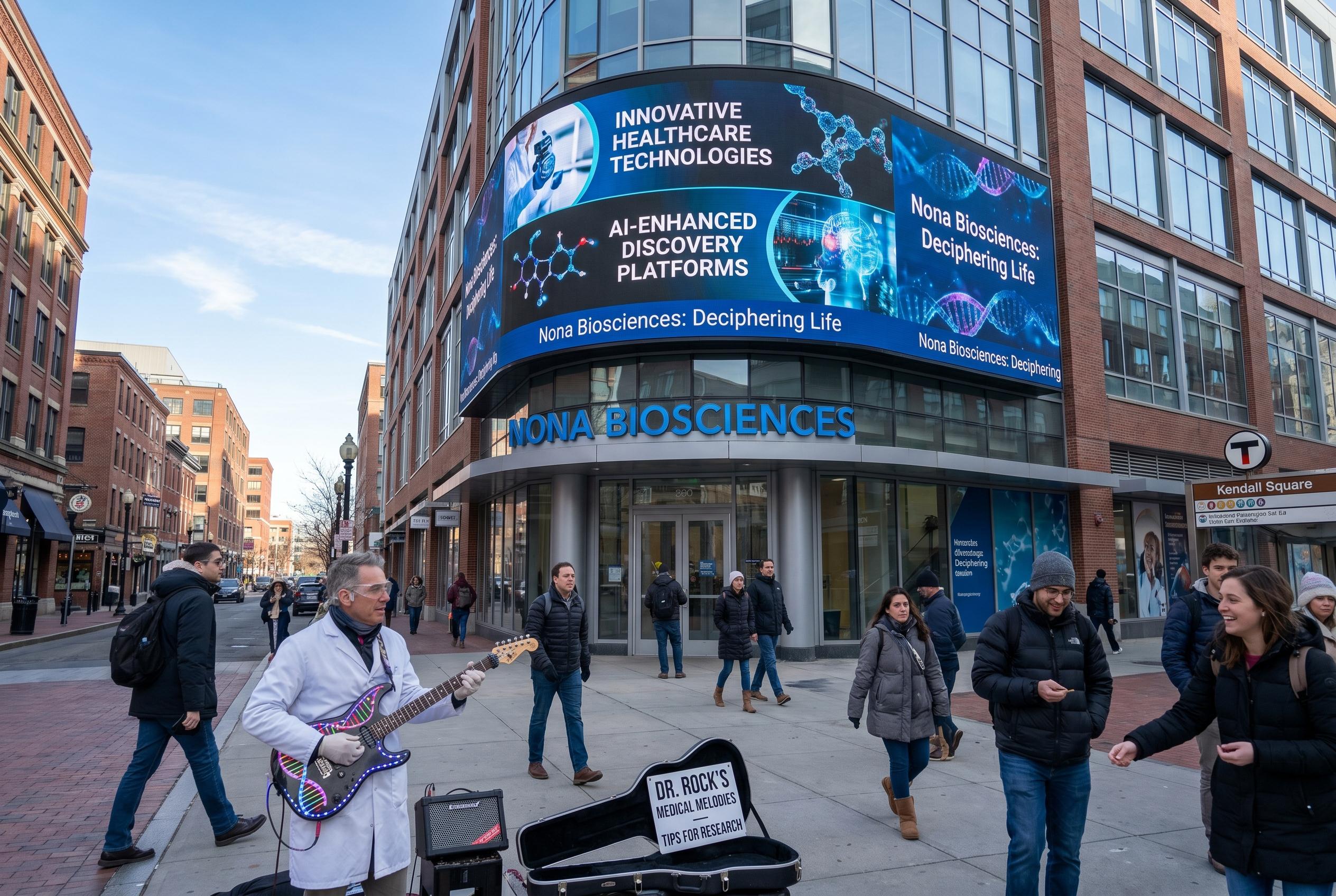
Spot lighting a fresh, sharper look , Nona Biosciences has unveiled an updated global brand identity as it broadens from antibody discovery into integrated, platform-driven biotherapeutic development; the change matters for partners seeking AI-enhanced discovery, fully human antibody platforms, and a clearer route from idea to IND.
Essential Takeaways
- New visual identity: Nona refreshes its logo around a hexagonal, data-driven design that keeps the original “N” connector for continuity and scalability.
- Platform focus: The company stresses an integrated I to I® framework, taking programmes from idea through preclinical work toward IND and early clinic.
- Proprietary tech: Key tools include Harbour Mice® (H2L2 and HCAb), single-B cell screening, NonaCarFx™, Hu-mAtrIx™ AI, and Modalities-on-Demand®.
- Application breadth: Platforms support bispecifics, CAR-T, ADCs, mRNA therapeutics and more, promising flexibility for partners.
- Practical edge: The rebrand signals clearer positioning for collaborations and highlights the company’s AI and next-gen antibody capabilities.
A sharper logo for a broader ambition
Nona’s refreshed visual identity reads as a deliberate signal: this isn’t cosmetic fluff, it’s a statement of scale. The hexagon motif references biological structure and data architecture, while the preserved “N” connector nods to continuity. The new mark feels precise and engineered, a visual shorthand for a company that wants to be seen as methodical and modern.
Companies often rebrand when strategy evolves, and Nona is doing just that. According to the company announcement, the update coincides with expanded integrated offerings that cover discovery through preclinical advancement toward IND. For partners this is reassuring: the look reflects more than aesthetics , it signals a unification of tools and teams.
If you’re evaluating partners, notice how the new identity ties to capability claims. A tidy, scalable brand suggests readiness for larger, platform-level collaborations rather than one-off projects.
From idea to IND: the I to I® framework explained
Nona frames its work around an “I to I®” pathway , moving programs from idea toward IND evaluation. That’s shorthand for end-to-end support, and it’s meaningful when you’re commissioning early discovery work that must later translate into preclinical and regulatory milestones. The pitch is straightforward: fewer handoffs, greater continuity.
This approach aligns with a market trend where biotechs offer integrated stacks rather than siloed services. For teams short on bandwidth, a partner that can shepherd projects through multiple stages can reduce delays and preserve programme knowledge. When choosing a collaborator, look for explicit pathways and shared milestones to avoid the classic “lost handover” problem.
What the Harbour Mice® platform brings to the lab bench
Harbour Mice® is front-and-centre in Nona’s toolkit, delivering fully human monoclonal antibodies in both H2L2 and heavy-chain-only (HCAb) formats. The HCAb Harbour Mice® is pitched as the first clinically validated, fully human heavy-chain-only transgenic mouse, offering ready-to-use VH single-domain antibodies.
Practically, that versatility matters. Single-domain VH segments can plug into bispecifics, multispecifics, CAR-T constructs, ADCs, and even mRNA-encoded therapeutics. For research teams, the ability to source human-format binders that slot into different modalities shortens engineering cycles and reduces downstream reformulation work.
If you commission antibody discovery, ask for case studies showing how leads from a platform behaved in different modalities , that’s the clearest proof the system is truly “plug-and-play.”
AI and direct-function screening: faster leads, smarter selection
Nona’s Hu-mAtrIx™ AI platform and NonaCarFx™ direct CAR-function screening are examples of marrying computation with biological screening. AI models help prioritise candidates, while function-based screens reveal practical performance early on , a useful one-two punch if you want leads that behave, not just bind.
Industry reporting highlights how targeted AI speeds discovery where it’s applied judiciously. Nona’s message is that AI is used “where it matters” in antibody discovery, which is the right frame: models support decisions rather than replace wet-lab validation. For partners, that promises quicker triage of hits and fewer surprises later in development.
A sensible tip: when assessing AI claims, ask how the models are validated and what biological readouts they optimise against. Transparent metrics keep the buzzword in check.
Modalities-on-Demand and the pragmatic case for flexibility
One of the more practical pieces of Nona’s puzzle is Modalities-on-Demand®, which underscores flexibility. Whether a client needs bispecifics, CAR-T, ADCs or mRNA-expressed binders, the idea is to provide the right format rather than shoehorning a lead into a preconception.
That flexibility maps onto real-world drug development, where a promising binder might be best exploited in different formats depending on target biology or clinical need. Nona’s combined platform suite and preclinical services aim to reduce the friction of switching modalities.
For project teams, the takeaway is simple: pick partners who can test alternatives early. It’s cheaper to pivot in discovery than during IND-enabling work.
What this rebrand means for partners and the market
Rebrands can be hollow, but this one reads as strategic. By tying a new visual identity to a clearer description of integrated services and proprietary platforms, Nona is making it easier for collaborators to understand what the company offers and where it fits in the drug-discovery ecosystem. That clarity helps accelerate decisions and could attract partners looking for platform-level engagements.
As the biotherapeutics space keeps layering technologies , AI, single-domain antibodies, functional screens , companies that package those pieces coherently will likely win more complex partnerships. Nona’s refreshed identity suggests it wants that role.
It’s a tidy, practical repositioning that’s worth watching if you’re shopping for a discovery-to-preclinical partner.
It’s a small change that can make partnerships and early programmes feel more straightforward.
Source Reference Map
Story idea inspired by: [1]
Sources by paragraph:
Noah Fact Check Pro
The draft above was created using the information available at the time the story first
emerged. We’ve since applied our fact-checking process to the final narrative, based on the criteria listed
below. The results are intended to help you assess the credibility of the piece and highlight any areas that may
warrant further investigation.
Freshness check
Score:
10
Notes:
The article was published on May 5, 2026, and there are no indications of prior publication or recycled content. The information appears current and original.
Quotes check
Score:
10
Notes:
The article includes direct quotes from Dr. Di Hong, CEO of Nona Biosciences. A search for these quotes reveals no earlier usage, suggesting they are original to this release.
Source reliability
Score:
8
Notes:
The article originates from PR Newswire, a reputable press release distribution service. However, as a press release, it is directly from the company, which may introduce bias. The content is not independently verified by external journalists.
Plausibility check
Score:
9
Notes:
The claims about Nona Biosciences’ rebranding and technological advancements are plausible and align with industry trends. However, without independent verification, some claims cannot be fully confirmed.
Overall assessment
Verdict (FAIL, OPEN, PASS): FAIL
Confidence (LOW, MEDIUM, HIGH): MEDIUM
Summary:
The article is a press release from Nona Biosciences, providing information directly from the company. While the content appears current and includes original quotes, it lacks independent verification and is inherently promotional, which raises concerns about objectivity and reliability. Given these factors, the content cannot be fully trusted without further independent confirmation.


