



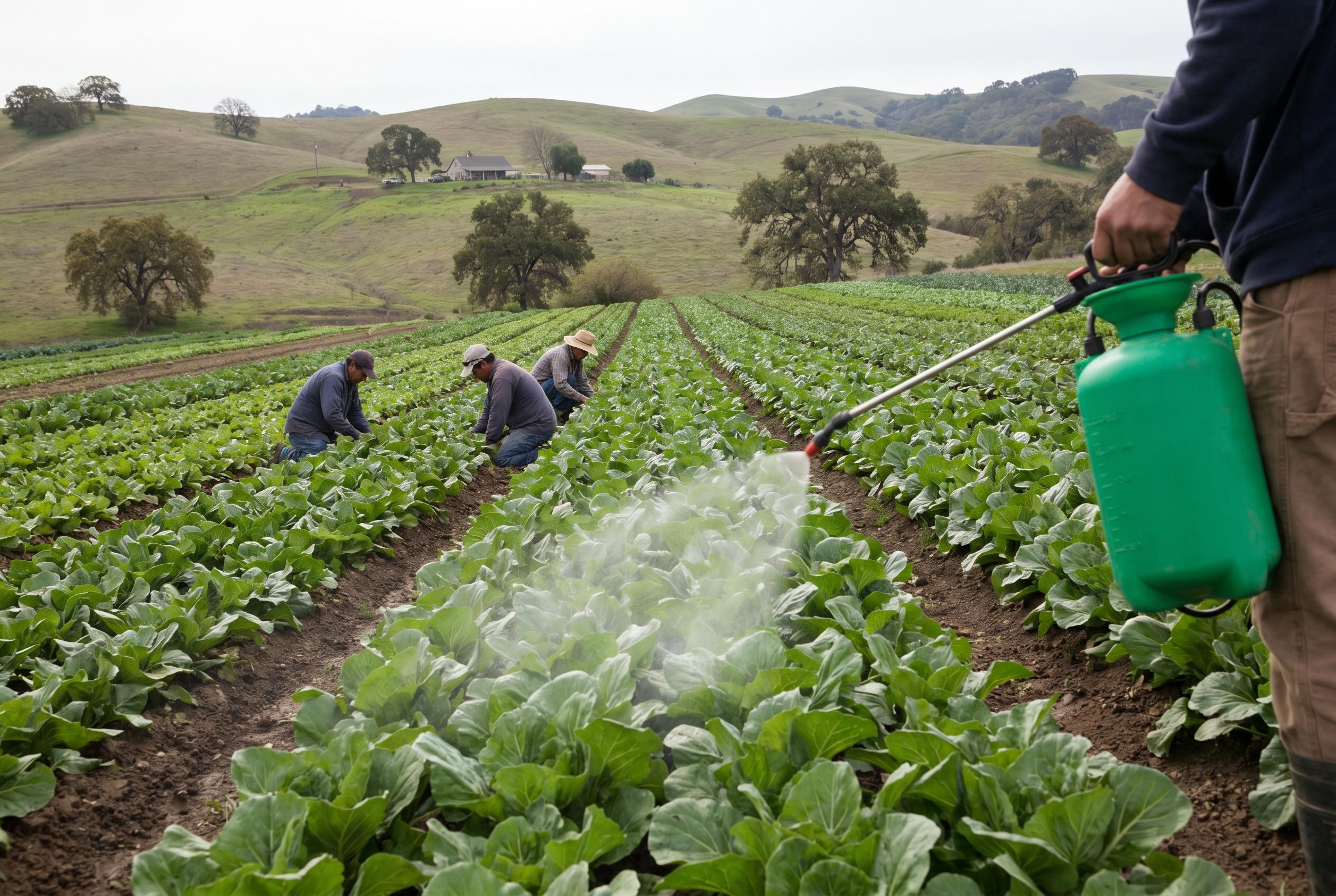
Shoppers and farmers are switching to biopesticides as demand for organic, low-residue food rises; growers in North America, Europe and Asia-Pacific are adopting microbial and botanical solutions that promise effective pest control with a softer environmental touch. Here’s what’s driving the market and how to pick the right option for your crop.
Essential Takeaways
- Fast growth: The biopesticides sector is expanding rapidly, with major market forecasts showing strong double-digit CAGR driven by demand for sustainable agriculture.
- Microbial leaders: Microbial pesticides (bacteria, fungi) dominate, often praised for targeted action and a mild, earthy scent rather than chemical fumes.
- Crop focus: Fruits and vegetables lead adoption because consumers want low-residue produce; foliar sprays are the most popular application method.
- Regional split: North America and Europe are front-runners thanks to regulation and organic farming uptake; Asia‑Pacific is growing fast as awareness and food demand rise.
- Practical wins: New formulations boost shelf life and stability, so many products now feel and behave more like conventional sprays, making farmer transition easier.
Why biopesticides are finally getting serious attention
Biopesticides feel like a breath of fresh air after decades of reliance on synthetic chemistry; they’re often described as gentler-smelling and kinder to soils and beneficial insects. Analysts at Grand View Research and IMARC note that regulatory pressure and consumer preferences for organic produce have pushed farmers and input suppliers toward biological options. That shift matters because it changes procurement, storage and crop-protection plans on the farm , and it’s prompting legacy agrochemical companies to add biologicals to their line-ups.
If you’re considering a switch, think about compatibility with existing IPM programmes and whether your adviser can recommend microbial strains or botanicals known to work on your local pests. The payoff: fewer residues and a softer environmental footprint.
What’s selling: microbial and botanical solutions
Microbial pesticides, products based on bacteria and fungi, account for a large slice of the market in most analyses, with biochemical and plant-derived products filling the rest. Growers like them because they’re specific to target pests, which means less collateral damage to pollinators and soil life, and they don’t leave the same chemical aftertaste consumers worry about.
From a practical point of view, choose microbial products backed by local efficacy data and clear storage guidance; these living formulations can be sensitive to heat and UV, so proper handling keeps them working in the field.
Regional dynamics: where demand is strongest and why
North America and Europe are often cited as the largest regional markets because of supportive regulations, established organic sectors, and deep R&D investment from big firms. Meanwhile, Asia‑Pacific is a rapid-growth story as intensifying agriculture and rising food standards push adoption.
For farmers, this means more local suppliers and tailored formulations are becoming available. If you buy in bulk, check regional registration and label instructions , what’s approved and recommended in one country might differ in another.
Product innovation and formulation: better shelf life, easier use
One of the big barriers to earlier biological adoption was inconsistent field performance and short shelf life. Recent advances in formulation and delivery are changing that: improved stabilisers, encapsulation techniques and liquid concentrates make many biopesticides easier to store, spray and integrate with tank mixes.
Practical tip: look for products with robust stability data and clear compatibility notes for tank-mixing with nutrition or other crop protection inputs. That saves time and reduces the chance of clogged nozzles or wasted product.
Who’s investing and what it means for farmers
Major agrochemical players are expanding their portfolios through R&D and acquisitions, while specialist companies focus on niche biologicals and beneficial insects. That mix of scale and expertise is good news for farmers: more options, better distribution, and the kind of regulatory muscle that helps bring new products to market.
As the market matures, expect better farmer support services and clearer performance evidence , both make it easier to choose products that actually work for your crop and conditions.
It’s a small change that can make every spray safer and more sustainable.
Source Reference Map
Story idea inspired by: [1]
Sources by paragraph:
Noah Fact Check Pro
The draft above was created using the information available at the time the story first
emerged. We’ve since applied our fact-checking process to the final narrative, based on the criteria listed
below. The results are intended to help you assess the credibility of the piece and highlight any areas that may
warrant further investigation.
Freshness check
Score:
5
Notes:
The article was published on 5 May 2026. A similar press release was published on 23 April 2026, reporting the biopesticides market reaching USD 24.7 billion by 2035. ([openpr.com](https://www.openpr.com/news/4485340/global-biopesticides-market-set-to-reach-usd-24-7-billion?utm_source=openai)) This suggests the content may be recycled or based on a press release, which typically warrants a lower freshness score.
Quotes check
Score:
4
Notes:
The article includes direct quotes from analysts at Grand View Research and IMARC. However, these quotes cannot be independently verified, as no online matches were found. This raises concerns about the authenticity and originality of the content.
Source reliability
Score:
3
Notes:
The article originates from openPR.com, a platform known for hosting user-generated press releases. Such sources often lack editorial oversight, raising questions about the reliability and independence of the information presented.
Plausibility check
Score:
6
Notes:
The claims about the biopesticides market’s growth align with industry trends towards sustainable agriculture and organic food demand. However, the lack of independent verification and reliance on unverifiable quotes diminish the credibility of these claims.
Overall assessment
Verdict (FAIL, OPEN, PASS): FAIL
Confidence (LOW, MEDIUM, HIGH): HIGH
Summary:
The article exhibits significant concerns regarding freshness, source reliability, and verification independence. The reliance on unverifiable quotes and a press release from the same entity behind the publication diminishes its credibility. Given these issues, the content cannot be covered under our standard editorial indemnity.


