



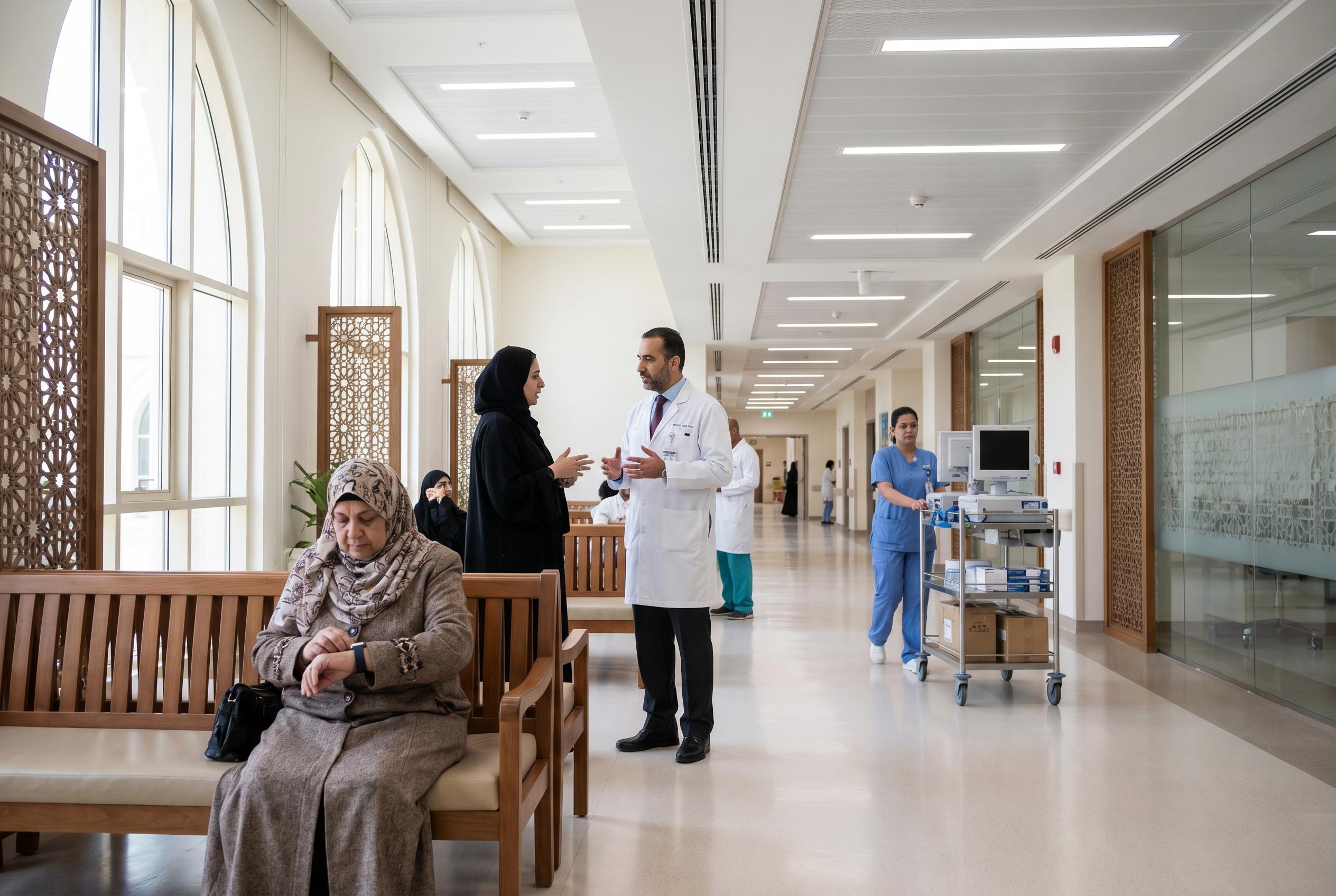
Shoppers of health data and curious citizens are watching Abu Dhabi, where a new wave of infrastructure is turning blood, genes and wearables into continuous models of human health , a move that could shift care from reactive check-ups to predictive, personalised medicine that matters for patients and the economy.
Essential Takeaways
- Scale matters: Abu Dhabi plans a 50,000‑person national cohort to build a sovereign biological dataset that’s more representative of the UAE population.
- Integrated signals: The platform combines genomics, metabolomics, immune profiling, imaging and wearable data into a continuously updating Digital Twin.
- Validation built in: Predictions are tested on patient‑derived cells and organoids before guiding clinical decisions, closing the loop between insight and proof.
- Public–private ambition: The programme seeks a mixed funding model and aims to become an exportable piece of national infrastructure, not just a research database.
- Practical edge: Earlier detection and personalised modelling could lower long‑term healthcare costs, improve treatment precision, and strengthen national resilience.
Why “biological intelligence” is suddenly a thing
Think of your body as a constantly updating, messy dataset , soft, noisy and utterly individual. That’s the premise pushing this work, and it’s compelling because it attacks a familiar problem: healthcare today mostly reacts to symptoms and treats averages. According to reporting from the UAE, Prepaire Labs in Abu Dhabi is building a platform to stitch together genetic, metabolic, immune and wearable data into a living model of health. The result is intended to be a Digital Twin that learns as you live, so clinicians can spot subtle changes before they become crises.
This matters because the UAE already has sizeable genomic resources, but much of that information sits unused in silos. Turning those fragments into continuous intelligence could be the next infrastructure play after data centres and cloud services.
The 50,000‑person cohort: why representation changes outcomes
Large datasets are nothing new, but many global medical collections skew heavily toward Western populations. The UAE’s approach is strategic: a 50,000‑participant cohort split between Emirati citizens and residents aims to create a more representative national dataset. That diversity helps researchers and clinicians make predictions that actually fit the people they serve, rather than leaning on models trained elsewhere.
For patients, the payoff is more precise diagnosis and treatment plans tailored around population‑specific risk factors. For the country, it’s sovereignty , less dependence on external datasets or vendors and more control over how biological intelligence is used domestically.
From model to proof: the organoid validation loop
One weakness of many AI medical models is trust: an algorithm can predict risk, but how do we know it’s biologically meaningful? The UAE project confronts that by embedding a validation layer. Predicted interventions get tested on patient‑derived cells and organoids, so the system doesn’t just suggest a path, it checks whether the biology agrees.
That’s an important distinction. Models that are continuously learning but never validated risk amplifying error. By testing predictions in real biological systems, the platform aims to bridge the long‑standing gap between computational insight and clinical proof , which should make clinicians more comfortable acting on model outputs.
What this means for patients, clinicians and the health system
For patients, the shift feels personal: earlier detection, tailored prevention, and treatments adjusted to an individual’s changing biology. Clinicians will need new workflows and confidence that models are reliable; that’s where the validation loop and continuous updating come in. Systemically, earlier intervention tends to reduce downstream costs and complications , a persuasive argument for payers and policymakers.
Regulatory and governance questions remain. Continuously learning systems don’t fit neatly into existing approval frameworks, and robust data governance is essential to balance innovation with privacy and trust. The UAE is working in a space that will require new rules and clear public communication if adoption is to scale.
Exporting the model: infrastructure, not just a product
If it succeeds, the platform isn’t only a clinical tool , it’s an infrastructural export. The UAE has a track record of building capabilities that other countries then adopt, from logistics hubs to AI initiatives. A validated, sovereign biological intelligence platform could be licensed or deployed internationally, making the early movers the template others follow.
That wider opportunity explains the public–private ambition behind the project: it’s both a health intervention and an economic play. Over time, the dataset and the validation workflow could become assets for research, pharmaceutical development and global collaboration.
It’s a small change that can make every health decision more confident.
Source Reference Map
Story idea inspired by: [1]
Sources by paragraph:
Noah Fact Check Pro
The draft above was created using the information available at the time the story first
emerged. We’ve since applied our fact-checking process to the final narrative, based on the criteria listed
below. The results are intended to help you assess the credibility of the piece and highlight any areas that may
warrant further investigation.
Freshness check
Score:
10
Notes:
The article was published on May 4, 2026, and presents new information about Prepaire Labs’ biological intelligence platform in Abu Dhabi. No evidence of prior publication or recycled content was found.
Quotes check
Score:
10
Notes:
The article does not contain direct quotes.
Source reliability
Score:
8
Notes:
Emirates247 is a news outlet based in the UAE. While it is a known publication, it is not as widely recognised as major international news organisations. The article cites Prepaire Labs’ official website and other reputable sources, enhancing its credibility.
Plausibility check
Score:
9
Notes:
The claims about Prepaire Labs’ biological intelligence platform align with known developments in the UAE’s healthcare sector. The integration of genomics, metabolomics, immune profiling, imaging, and wearable data into a Digital Twin model is consistent with current trends in precision medicine. However, the article does not provide specific details about the 50,000-participant cohort, which would strengthen the claim.
Overall assessment
Verdict (FAIL, OPEN, PASS): PASS
Confidence (LOW, MEDIUM, HIGH): MEDIUM
Summary:
The article presents new information about Prepaire Labs’ biological intelligence platform in Abu Dhabi, with no evidence of prior publication or recycled content. While the claims are plausible and align with known developments in the UAE’s healthcare sector, the lack of specific details about the 50,000-participant cohort and reliance on a single news outlet for primary information slightly reduce the confidence in the verification.


